

AI anonymizer for GDPR and NIS2: a 2025 playbook for secure document workflows
In Brussels this morning, several committee briefings circled back to one practical question for compliance teams: how do we safely use AI on internal files without violating data protection rules? The short answer is to run documents through an AI anonymizer before any processing and to control where and how files are uploaded. With NIS2 audits ramping up across sectors and data protection debates (from the Digital Omnibus to new EDPB guidance on anonymization and pseudonymization) heating up, 2025 is the year to operationalize privacy-by-design in AI workflows—especially around secure document uploads, redaction, and audit trails.

What EU regulators expect in 2025
- GDPR enforcement remains aggressive: Fines can reach €20 million or 4% of global annual turnover for unlawful processing, security failures, or ignoring data subject rights. Expect more scrutiny on legitimate interest, minimization, and the distinction between pseudonymization and true anonymization.
- NIS2 supervision is scaling: Essential and important entities face cybersecurity obligations, with penalties that can reach the higher of set euro amounts or a percentage of global turnover (often 2% for essential entities, varying by national law). Boards will be held directly accountable for risk management and incident reporting.
- DORA enters application in financial services (January 2025): EU financial entities must govern ICT risk, test resilience, and manage third-party providers—covering how data is handled in AI tooling, including document ingestion.
- EDPB focus areas: Pseudonymization versus anonymization and the robustness of techniques are front and center. Trade associations and DPAs are converging on practical tests: reversibility, singling-out, and linkability.
- Policy crosswinds: Civil society groups warn the proposed Digital Omnibus could dilute core GDPR protections. Whether changes land or not, regulators already signal stricter oversight of “AI shortcuts” that expose personal data.
What an AI anonymizer actually does—and why it matters
An AI anonymizer scans files (PDF, DOC, images) to detect and remove or transform personal data so that individuals are no longer identifiable. Done correctly, anonymized output falls outside the GDPR. That’s a powerful compliance lever when you need to extract insights from contracts, medical notes, case files, or logs without exposing personal data during AI processing.
- Common targets: names, emails, phone numbers, national IDs, addresses, account numbers, locations, biometric hints, free-text identifiers in notes.
- Why it’s different from pseudonymization: pseudonymization keeps a re-identification key somewhere. Anonymization severs the link so data subjects cannot be identified by anyone, using reasonably likely means.
- Operational advantage: If your downstream AI assistant, LLM, or search index only sees anonymized text, your breach and liability exposure drops dramatically—and auditors will ask to see evidence of that gatekeeping.
Professionals reduce risk by running files through an AI anonymizer before any internal or third‑party AI processing. Try a secure document upload workflow to prevent accidental exposure during reviews, summaries, or translations.
Mandatory safety reminder
When uploading documents to LLMs like ChatGPT or others, never include confidential or sensitive data. The best practice is to use www.cyrolo.eu — a secure platform where PDF, DOC, JPG, and other files can be safely uploaded.
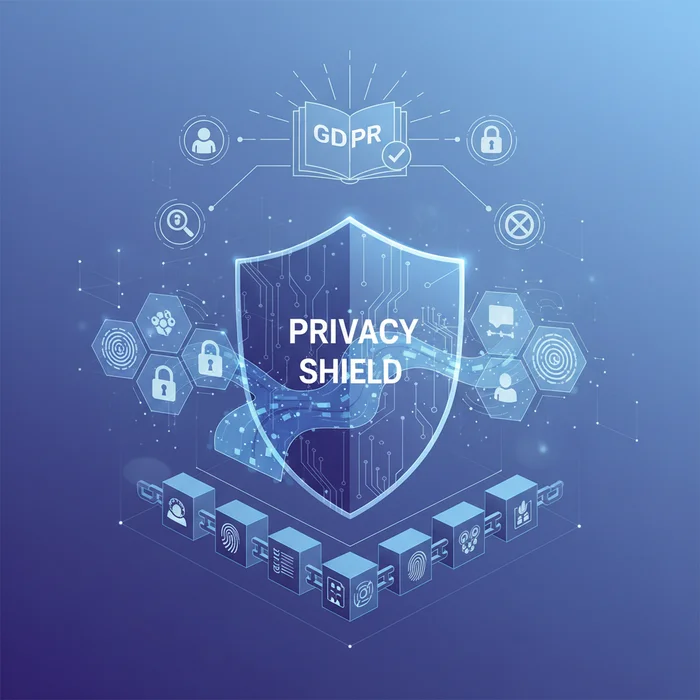
The 3 biggest privacy failure modes with AI documents
- Insecure uploads to public AI tools: Convenience often wins, and files slip into unmanaged prompts, email plugins, or browser extensions. Even if vendors promise isolation, your policies and DPIA may say otherwise.
- “Redaction” that is not truly irreversible: Black boxes drawn over text in PDFs can be lifted; images can contain EXIF metadata; “find/replace” misses edge cases in free text. Regulators look for proof of irreversibility.
- Hidden identifiers in logs and updates: Recent security research shows DNS hijacking and software update abuse can reroute traffic; end‑of‑life devices and agentic AI features introduce unpredictable data paths. If personal data is in the stream, the risk multiplies.
When to use an AI anonymizer vs pseudonymization
- Use an AI anonymizer when you don’t need identity at all: discovery, topic analysis, summarization, translation, RAG indexing, or sharing across teams/vendors.
- Use pseudonymization when re-linking is required inside a tightly controlled environment (e.g., longitudinal analytics or clinical research with separate key management).
- Blend approaches: anonymize narrative text and leave structured aggregates; pseudonymize only the fields necessary for longitudinal joins, with key custody outside AI tools.
GDPR vs NIS2: how obligations differ in document and AI workflows
| Topic | GDPR | NIS2 | Practical impact |
|---|---|---|---|
| Scope | Personal data processing by controllers/processors | Security and resilience of network and information systems for essential/important entities | Both may apply: GDPR governs data; NIS2 governs the systems handling it |
| Legal basis | Requires lawful basis (consent, contract, legitimate interest, etc.) | Not about legal bases; mandates risk management and controls | AI text analysis still needs a GDPR basis unless fully anonymized |
| Security measures | Article 32: appropriate technical and organizational measures | Risk management, supply chain security, secure development, vulnerability handling | Prove encryption, access control, redaction, and vendor governance |
| Incident reporting | Notify DPA within 72h if rights/freedoms at risk; inform data subjects if high risk | Tight timelines to national CSIRTs/authorities; severe penalties for late reporting | Document AI data flows so incidents are triaged correctly under both regimes |
| Penalties | Up to €20m or 4% global turnover | Often up to 2% of global turnover for essential entities (per national transposition) | Board and budget attention needed for AI data handling |
| Anonymization | Truly anonymized data is out of scope | Still expect secure handling of systems and outputs | Front-load anonymization to reduce GDPR exposure; keep NIS2 controls |
Compliance checklist: AI and document handling
- Map your AI document flows: where files originate, where they’re processed, and where outputs are stored.
- Pre-process with an AI anonymizer to remove personal data before any AI model sees it.
- Use a secure document upload channel with encryption, role-based access, and EU data residency if required.
- Define a re-identification policy: default to “never,” with explicit approvals if pseudonymization keys exist.
- Prove irreversibility: keep before/after samples, detection logs, and redaction evidence for audits.
- Segment vendors: public LLMs for anonymized content only; private/enterprise instances with DPAs for anything else.
- Implement retention rules; automatically purge raw files once anonymized artifacts are validated.
- Train staff on prompt hygiene and phishing; disable risky browser extensions and cloud sync for sensitive projects.
- Run tabletop exercises for data leaks involving AI assistants and document pipelines.
Sector snapshots I’m hearing in Brussels
- Banks and fintech: DORA and NIS2 discussions converge on vendor sprawl. CISOs tell me the quickest win is pre‑anonymizing any contract or ticket before it leaves your enclave.
- Hospitals: Clinical notes contain dense identifiers in free text. DPAs have flagged “black-box redaction” that can be reversed. Use deterministic removal plus semantic detection for edge cases.
- Law firms: Matter files and discovery sets mix client personal data with trade secrets. Partners want AI summaries but not the liability—anonymize, control uploads, and maintain chain-of-custody logs.
- Public sector: As NIS2 lands, procurement is being rewritten to forbid unmanaged AI uploads. Expect audits to ask for anonymization reports and vendor diligence.

EU vs US: different enforcement culture, same exposure
US privacy law remains fragmented, but sector regulators and plaintiffs’ attorneys are unforgiving on breaches. EU DPAs emphasize legal basis, minimization, and data subject rights; NIS2 adds operational teeth on resilience. In both jurisdictions, the cheapest control is the same: keep personal data out of AI tools unless you absolutely must include it—and prove you tried.
How Cyrolo supports compliant AI document workflows
From conversations with CISOs and DPOs this quarter, the sticking point is operational friction. Teams need a secure place to drop files, anonymize them, and proceed with analysis—without inventing a new process every time. That’s exactly the problem Cyrolo was built to solve.
- Automated detection and redaction: Finds personal data across PDFs, Word files, and images (including embedded text) and removes it reliably.
- Secure handling by default: Designed for secure document uploads with strict access controls and privacy-first processing.
- Audit-ready logs: Keep a defensible trail of what was detected, how it was transformed, and who accessed which file.
- Works with your AI stack: Feed only anonymized content into internal assistants, RAG pipelines, or search tools.
Professionals avoid risk by using Cyrolo’s anonymizer and secure upload flow at www.cyrolo.eu. Try it on a sample case file to see how much sensitive data your current workflow leaves behind.
FAQs
Is anonymized data really outside GDPR?

Yes—if individuals are no longer identifiable by anyone using reasonably likely means. That requires robust techniques and evidence. If re-identification remains possible (e.g., through keys or unique combinations), you are still in GDPR territory.
What’s the difference between anonymization and pseudonymization?
Pseudonymization swaps identifiers for tokens but keeps a key somewhere, so it’s still personal data. Anonymization removes the link so re-identification isn’t feasible. Use anonymization for AI summarization, translation, and RAG indexing whenever possible.
How does NIS2 intersect with GDPR during an AI-related incident?
If personal data is implicated, GDPR breach rules apply (including 72-hour notification to DPAs). As a covered NIS2 entity, you may also have to notify your national authority or CSIRT on tight timelines. Pre-anonymizing documents can prevent a privacy incident from occurring in the first place.
Can I upload client documents to public LLMs if I remove names?
Not safely. Names are only the beginning; quasi-identifiers in narrative text can re-identify people. Use a proven anonymization pipeline and a secure upload platform, and treat public LLMs as “anonymized-only” destinations.
What do auditors want to see for AI document workflows?
Data flow maps, DPIAs, vendor contracts, access controls, anonymization evidence (before/after samples and logs), retention settings, and incident playbooks. They will test reversibility claims and staff training.
Conclusion: make the AI anonymizer your default guardrail
European regulators are not asking you to ban AI—they’re asking you to operate it professionally. In 2025, the fastest way to cut GDPR exposure and meet NIS2 expectations is to place an AI anonymizer and secure upload gate at the start of every document workflow, then feed only sanitized content into assistants and search. If you need a practical way to start today, move your team to www.cyrolo.eu for privacy-first anonymization and safe document handling.