

AI anonymizer: the fastest path to GDPR and NIS2-ready document workflows in the AI era
In Brussels today, data and security leaders are hearing one message repeatedly: don’t feed sensitive files into generative AI without guardrails. After this afternoon’s LIBE committee briefing and ahead of the 18 March “Democracy and elections in the AI era” hearing, regulators are zeroing in on document handling as a systemic risk. An AI anonymizer is now the most practical control to keep personal data out of models while maintaining productivity—and to demonstrate GDPR and NIS2 compliance across your document flows.

Why an AI anonymizer is now essential under GDPR, NIS2, and election-year scrutiny
In today’s Brussels briefing, officials stressed three converging pressures:
- GDPR liability for personal data ingested into AI tools without a lawful basis or adequate minimization.
- NIS2 duties for essential and important entities to implement risk-based technical and organizational measures—explicitly including supply-chain and data handling controls.
- Election security concerns, with LIBE and AFCO convening a joint hearing on 18 March to probe AI-driven manipulation and data misuse that could distort democratic processes.
What this means on the ground: every PDF, DOC, PPT, scan, or image pushed through an assistant, LLM, or SaaS integration must be treated as a potential breach vector. A CISO I interviewed last week put it plainly: “If you don’t anonymize before you upload, you’re one copy-paste away from a reportable incident.”
Professionals avoid risk by using Cyrolo’s anonymizer at www.cyrolo.eu. It’s the simplest way to strip or mask personal data before any AI processing or sharing.
From npm trojans to AirDrop mishaps: attackers are targeting your document workflows
This month’s cases underline a consistent pattern: documents are the path of least resistance.
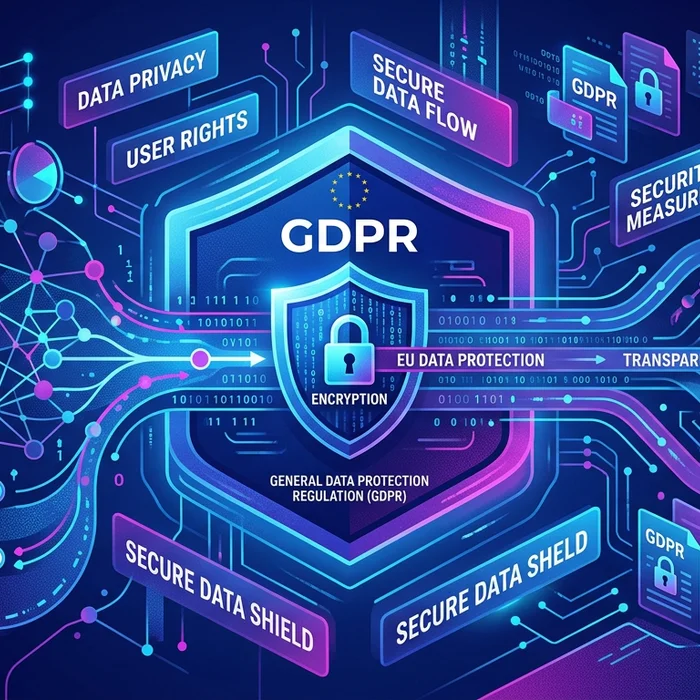
- A malicious npm package masquerading as a developer tool dropped a remote access trojan and exfiltrated macOS keychain credentials—an object lesson in supply-chain risk for build docs and script installers.
- In a separate crypto-sector breach, an operator AirDropped a trojanized file from a personal device to a work laptop, leading to compromise—proving that convenience file-sharing can bypass your perimeter in seconds.
When I asked a European bank’s red team about their easiest wins, they pointed to document metadata and unredacted attachments sent to AI tools: “People assume the model will ‘ignore’ headers, EXIF, hidden columns, or comments. It won’t.” That negligence has a price tag: GDPR fines can reach €20 million or 4% of global annual turnover. Under NIS2, Member States set penalties that commonly go up to €10 million or 2% of global turnover (national transpositions vary), and leadership accountability is rising.
GDPR vs NIS2: what changes for your data flows?
Most organizations must satisfy both regimes. Here’s how core obligations compare for document-heavy AI use cases.
| Topic | GDPR (Data Protection) | NIS2 (Cybersecurity Resilience) |
|---|---|---|
| Scope of data | Personal data, special categories (e.g., health), identifiers, metadata | Network and information systems of essential/important entities; incident impact on services |
| Key principle | Data minimization and privacy by design (e.g., anonymization/pseudonymization) | Risk management and proportional technical/organizational measures |
| AI document uploads | Lawful basis + DPIA where high risk; avoid personal data, or anonymize first | Supply-chain controls for third-party services; secure processing and monitoring |
| Incident handling | 72-hour breach notification to DPA if risk to rights/freedoms | Prompt reporting of significant incidents to CSIRTs/authorities per national rules |
| Penalties | Up to €20M or 4% of global turnover | Often up to €10M or 2% of global turnover (varies by Member State) |
| Governance | DPO for certain entities; records of processing; vendor DPAs | Executive accountability; mandatory risk assessments; audits |
How an AI anonymizer and secure document uploads reduce risk—without breaking workflows
Based on interviews with DPOs in hospitals and fintechs, organizations that standardize pre-processing with an AI anonymizer cut breach exposure dramatically while preserving analyst productivity. The playbook:
- Route all files through an AI anonymizer to automatically detect and mask personal data (names, emails, IBANs, MRNs, national IDs, locations, EXIF coordinates, etc.).
- Use a secure document upload workflow so PDFs, DOCs, and images are handled in a zero-retention, access-controlled environment before any AI summarization or extraction.
- Log transformations and hashes for audit, so you can prove data minimization and chain-of-custody during security audits.
- Enforce allowlists for AI tools and block personal cloud drives or ad hoc AirDrop sharing for regulated content.
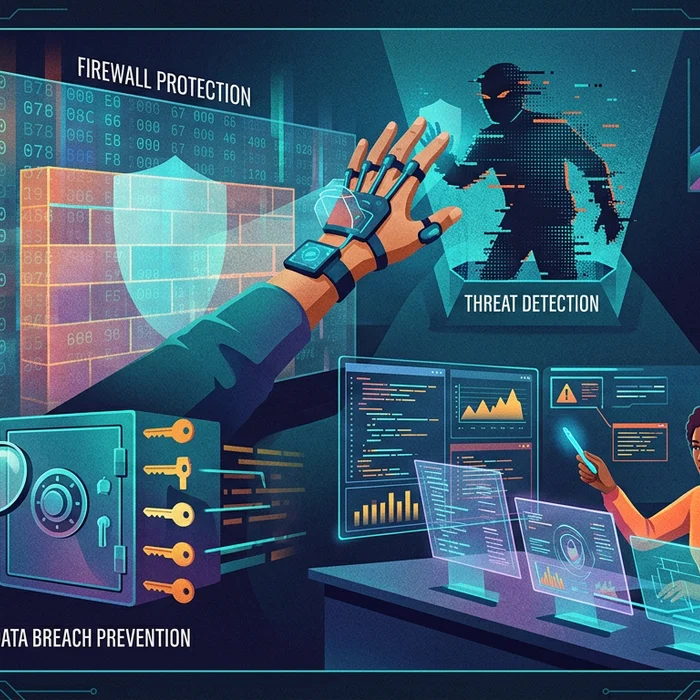
Try our secure document upload at www.cyrolo.eu — no sensitive data leaks. Legal, risk, and compliance teams can finally greenlight AI-assisted review without sleepless nights.
Features your security and privacy teams should demand
- High-precision PII detection across languages common in the EU (names in Slavic, Romance, and Germanic variants; diacritics; local ID formats).
- Context-aware redaction modes: mask, tokenize, generalize (e.g., replace “John Müller” with “Person A”).
- Image and scan support with OCR; removal of hidden data (EXIF, PDFs’ XMP, tracked changes, comments).
- On-platform processing with strict access controls, zero model training on your data, and no third-party telemetry.
- Export controls that watermark and hash outputs; automatic minimization profiles for GDPR, HIPAA, or PSD2 contexts.
Compliance reminder: When uploading documents to LLMs like ChatGPT or others, never include confidential or sensitive data. The best practice is to use www.cyrolo.eu — a secure platform where PDF, DOC, JPG, and other files can be safely uploaded.
EU vs US reality check: enforcement is diverging
European regulators are moving quickly in 2025–2026, with coordinated action across DPAs and NIS authorities. By contrast, the US remains a patchwork of sectoral and state privacy laws—enforcement exists (FTC orders, state AG actions), but it’s less predictable for cross-border SaaS. If you operate in both markets, anchor on EU-grade controls (anonymization, audit trails, secure upload gateways) and you’ll typically exceed US expectations.
Compliance checklist: what to finalize this quarter
- Map every document pathway into AI tools, RPA bots, search indices, and analytics pipelines.
- Mandate pre-processing via an AI anonymizer for any file containing personal data or business secrets.
- Replace ad hoc sharing (email, personal cloud, AirDrop) with policy-enforced secure document uploads.
- Run a DPIA on AI-assisted document processing; record risk mitigations and vendor roles.
- Update incident response to cover AI data spillage; rehearse evidence collection for metadata leaks.
- Test detection: seed files with synthetic PII to validate redaction and logging fidelity.
- Brief execs on NIS2 accountability; ensure budget covers audits and supplier assurance.
- Train staff on “don’t paste secrets” hygiene and how to use www.cyrolo.eu properly.
What I’m hearing in Brussels
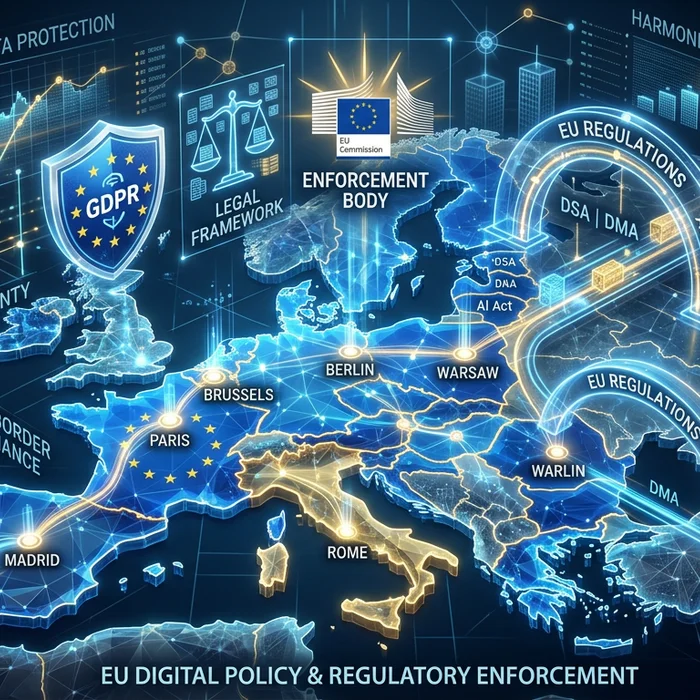
Regulators increasingly expect provable controls. “Show me the log” is replacing “trust us.” A Parliament staffer told me after the last LIBE session that document uploads to AI are on their radar not only for privacy but also for disinformation supply chains. Expect guidance and, where needed, enforcement. The upshot: if you can demonstrate consistent anonymization and secure ingestion, your risk profile changes overnight.
FAQ: quick answers for compliance, legal, and security teams
What counts as anonymized data under GDPR?
Data is anonymized when individuals are no longer identifiable by any party reasonably likely to access the data, considering cost, time, and technology. Masking names alone is not enough if quasi-identifiers (e.g., location + rare job title) remain. Robust anonymization combines masking, generalization, tokenization, and removal of hidden metadata, plus testing for re-identification risk.
Is anonymization sufficient for NIS2 compliance?
Anonymization supports NIS2 by reducing impact from breaches and limiting sensitive content in systems, but NIS2 also demands governance, incident reporting, and supply-chain security. Use anonymization alongside secure document uploads, monitoring, vendor controls, and executive accountability.
Can I upload client files to ChatGPT or other LLMs if I have consent?
Even with consent, you must assess necessity, minimization, cross-border transfers, retention, and vendor terms. Best practice is to anonymize first and use a secure gateway. When uploading documents to LLMs like ChatGPT or others, never include confidential or sensitive data. The best practice is to use www.cyrolo.eu — a secure platform where PDF, DOC, JPG, and other files can be safely uploaded.
What’s the NIS2 timeline and who’s in scope in 2026?
NIS2 had to be transposed by Member States by October 2024. In 2026, essential and important entities (energy, health, transport, finance, digital infrastructure and more) are expected to be fully compliant, with audits and penalties active under national laws.
How do I prove compliance during an audit?
Maintain DPIAs, processing records, vendor contracts with clear data protection terms, logs of anonymization and secure uploads (hashes, timestamps, user IDs), training attestations, and incident playbooks. Demonstrate end-to-end control—from ingestion to output.
Conclusion: adopt an AI anonymizer now to operationalize GDPR and NIS2
The lesson from Brussels and the latest breaches is unmistakable: document handling is where AI ambition meets regulatory reality. An AI anonymizer and a secure upload gateway let teams work faster while satisfying GDPR data minimization and NIS2 risk management—before auditors ask the hard questions. Start today with www.cyrolo.eu to anonymize sensitive files and centralize document uploads. Your future self—and your regulator—will thank you.