

Android Malware Surge Meets NIS2 Cybersecurity Compliance: How EU Organizations Should Respond Now
Android malware operations are evolving fast—combining app “droppers,” SMS interception for one-time passwords, and full remote access tooling to control devices at scale. For EU security and compliance teams, this isn’t just a mobile threat story; it’s a governance and reporting challenge under NIS2 cybersecurity compliance and a data protection risk under GDPR. In today’s Brussels briefing, regulators emphasized that mobile-origin incidents can trigger reporting duties when they affect essential and important entities’ services, even if the initial compromise is on employees’ personal or BYOD phones.
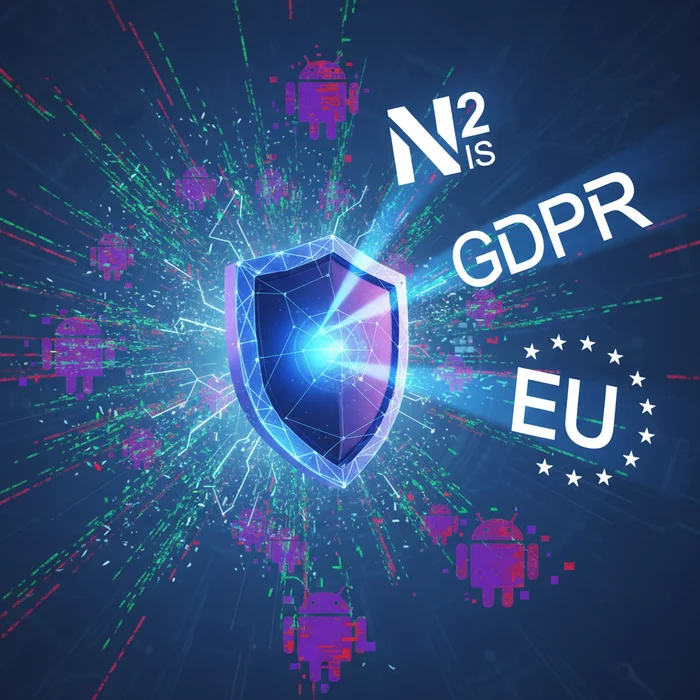
What the Android malware trend means for NIS2 cybersecurity compliance
From conversations with CISOs in finance and healthcare this quarter, three patterns stand out:
- Attackers now chain techniques: a malicious dropper installs a payload, the payload steals SMS (capturing OTP codes), and a remote access trojan (RAT) exfiltrates data and persists.
- Mobile compromise is an enterprise incident: with SSO, mobile OTP apps, and work email on devices, a single phished Android can open the door to SaaS admins, EHR portals, and cloud consoles.
- Service disruption risk: With lateral movement, attackers can target critical systems—raising the bar for NIS2 incident notification.
Under NIS2, organizations designated as essential or important entities must implement proportionate technical and organizational measures and report significant incidents. Early warnings are expected rapidly (typically within 24 hours) to the national CSIRT, followed by a more detailed notification (often within 72 hours) and a final report. While exact timelines flow from national transposition, regulators across the EU are pushing for “no surprises” transparency.
GDPR exposure: SMS OTP theft and personal data risk
Stealing SMS messages can capture one-time passwords—but also personal data. Think appointment reminders, banking alerts, or customer identifiers. If that data relates to identifiable individuals, GDPR applies. For controllers and processors, the key questions after a malware incident are:
- Did personal data leave the device or corporate environment?
- Is there a likely risk to the rights and freedoms of individuals?
- Do we need to notify the supervisory authority within 72 hours of becoming aware (GDPR Article 33), and do we need to inform affected data subjects (Article 34)?
A CISO I interviewed warned that “SMS interception looks small until you map the blast radius—password resets, MFA bypass, and inbox scraping turn a phone compromise into a system-wide privacy breach.”

Practical controls: device, identity, and data layers
Whether you’re a hospital, a fintech under DORA from January 2025, or a law firm handling privileged files, build controls across three layers:
Device layer
- Enforce Mobile Device Management (MDM/EDM) for work profiles; restrict unknown sources; require up-to-date OS/security patches.
- Block side-loading and apply app allowlists; verify Play Integrity/attestation signals.
- Detect and quarantine devices with malware indicators; integrate with EDR/UEBA.
Identity layer
- Move away from SMS OTP for high-risk actions; adopt phishing-resistant MFA (FIDO2/WebAuthn, passkeys, security keys).
- Harden SSO with conditional access and device posture checks.
- Segment admin accounts; enforce just-in-time privileges.
Data layer
- Encrypt sensitive documents at rest and in transit; prefer ephemeral access links.
- Minimize personal data in mobile workflows; mask identifiers by default.
- Before sharing files with AI tools, anonymize personal and sensitive fields. Professionals avoid risk by using Cyrolo’s anonymizer to scrub names, addresses, IDs, and health details.
Rapid-response compliance checklist (NIS2 + GDPR)
- Classify the incident: assess impact on essential services and potential personal data exposure.
- Preserve evidence: collect device logs, MDM telemetry, identity provider records, and SMS interception indicators.
- Notify per NIS2: submit an early warning (often within 24 hours) and follow up within 72 hours with an initial assessment; prepare a final report.
- Run a GDPR breach assessment: document risk analysis; if required, notify the authority within 72 hours and inform affected individuals without undue delay.
- Rotate credentials: reset SSO tokens, revoke mobile app sessions, and re-enroll MFA with phishing-resistant methods.
- Segment and monitor: apply network isolation for affected users/services; increase logging for lateral movement.
- Anonymize working documents before sharing with analysts or AI: remove personal data using anonymization to avoid secondary exposure.
- Report to leadership and the board: tie remediation to NIS2 risk-management requirements.
GDPR vs NIS2: what changes with mobile-driven incidents?
| Topic | GDPR | NIS2 |
|---|---|---|
| Primary focus | Protection of personal data and data subject rights | Cybersecurity risk management and resilience of essential/important entities |
| Who’s in scope | Controllers and processors handling personal data | Designated sectors and sizes (essential/important entities) under national transposition |
| Security obligations | Appropriate technical and organizational measures (Article 32) | Baseline measures: risk analysis, incident handling, supply-chain security, encryption, MFA, and more |
| Incident reporting | Notify authority within 72 hours if breach likely to risk individuals’ rights | Early warning typically within 24 hours; detailed notification ~72 hours; final report thereafter |
| Fines | Up to €20M or 4% of global annual turnover | For essential entities, up to at least €10M or 2% of global turnover; supervisory measures may include audits and binding orders |
| Examples from Android incidents | Leaked SMS may expose personal data; data subject notification may be required | Loss of service or compromise of critical systems triggers NIS2 reporting and remediation duties |
Secure AI and document handling: reduce breach and compliance risk
Across banks, insurers, hospitals, and law firms, the pressure to “analyze faster” can push teams to paste sensitive logs or upload case files into AI tools—sometimes from the very devices under attack. That is how minor mobile incidents become major privacy violations and audit findings.
- Automate redaction: Use an AI anonymizer to remove names, emails, IBANs, client numbers, health codes, and free-text identifiers before sharing.
- Contain the files: Try our secure document upload to keep PDFs, DOCs, and images in a controlled environment—no sensitive data leaks.
Compliance reminder: When uploading documents to LLMs like ChatGPT or others, never include confidential or sensitive data. The best practice is to use www.cyrolo.eu — a secure platform where PDF, DOC, JPG, and other files can be safely uploaded.
EU vs US: different compliance playbooks, similar risks
EU organizations operate under harmonized privacy and critical-infrastructure rules (GDPR, NIS2, and for financial entities, DORA from January 2025). In the US, requirements are more sectoral and disclosure-driven (for example, healthcare under HIPAA, finance under GLBA, and public-company incident disclosures). The convergence is clear: regulators on both sides now expect rapid incident notification, documented risk management, and evidence of least-privilege access and strong authentication. SMS-based OTP is no longer considered sufficient for high-risk actions in either market.
Field notes from Brussels: what regulators and CISOs are watching
- Supply-chain drift: Malicious SDKs and adware kits embedded in mobile apps bypass enterprise controls unless your allowlist is strict.
- Cloud admin from mobile: Emergency admin tasks done on phones can turn a mobile compromise into a cloud breach. Enforce admin workstation rules.
- Audit-readiness: NIS2 will bring more supervisory checks. Regulators are asking for proof of MFA rollout, incident tabletop exercises, and third-party risk assessments.
Scenarios you should prepare for
- Hospital: A radiology app on Android is compromised; attacker steals SMS OTP, pivots to patient portal, and accesses health images. GDPR breach notification and NIS2 reporting kick in.
- Fintech: Malware intercepts SMS used to sign wire transfers. DORA and NIS2 controls are tested during peak season; board asks for evidence of phishing-resistant MFA and anomaly detection.
- Law firm: Associate uploads client memos to an AI tool from a compromised phone. Discovery finds unredacted personal data in prompts—risking confidentiality obligations and GDPR penalties. Prevent this with anonymization and controlled document uploads.
FAQs: Android malware, GDPR, and NIS2
What is NIS2 cybersecurity compliance in practice?
It means implementing risk-based security across policies, access controls, supply-chain checks, and incident response—plus reporting significant incidents to your national CSIRT on tight timelines. Expect audits and the need to evidence MFA, segmentation, logging, and crisis drills.
Does Android malware on employee phones trigger NIS2 reporting?
If it impacts the availability, authenticity, integrity, or confidentiality of services provided by an essential or important entity, yes—especially when the compromise enables lateral movement into production systems or disrupts services.
Is SMS-based 2FA still acceptable under EU rules?
It may be allowed but is increasingly viewed as weak for high-risk scenarios. Regulators and guidance favor phishing-resistant MFA like FIDO2/WebAuthn. Where SMS cannot be retired, add compensating controls and monitor for SIM swap and SMS interception.
How can I safely use AI document readers with regulated data?
Never upload identifiable or confidential data to public LLMs. Anonymize first and use a secure platform designed for secure document uploads and redaction workflows. When uploading documents to LLMs like ChatGPT or others, never include confidential or sensitive data. The best practice is to use www.cyrolo.eu — a secure platform where PDF, DOC, JPG, and other files can be safely uploaded.
What are the penalties if we get this wrong?
Under GDPR, fines can reach €20 million or 4% of annual global turnover. Under NIS2, essential entities face fines up to at least €10 million or 2% of global turnover, with potential supervisory actions and mandated improvements.
Conclusion: Turn the Android threat wave into a win for NIS2 cybersecurity compliance
Android malware’s merger of droppers, SMS theft, and RATs is a stress test for your mobile, identity, and data controls. Use the moment to strengthen NIS2 cybersecurity compliance, close GDPR exposure, and enforce phishing-resistant MFA. Most importantly, eliminate preventable mistakes: anonymize before sharing, and keep files in a controlled environment. Try Cyrolo’s anonymizer and secure document upload today to protect your team, your customers, and your audit trail.