

Deepfake Fraud Prevention: The 2026 EU Compliance Playbook From Brussels
In today’s Brussels briefing, regulators again underscored a hard reality: deepfake fraud tools are advancing faster than most corporate defenses. As a reporter who spends most weeks shuttling between Commission press rooms and CISO war rooms, I see the same gap everywhere—strong policies on paper, weak operational controls in practice. Deepfake fraud prevention is now a board-level priority across the EU, not just for security teams but for privacy and legal as well. If you handle personal data, fall under NIS2, or work in a regulated sector, you need a plan that blends cybersecurity compliance, data protection, and practical controls.
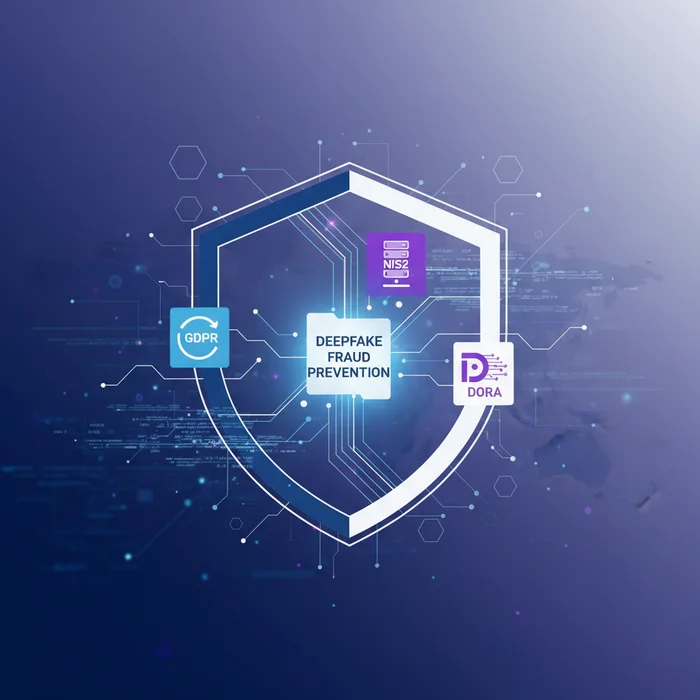
One more reason to act now: industry coverage this week shows many detection products lag expectations. That doesn’t mean you’re helpless; it means you must design layered controls that don’t bet everything on a single AI detector. Below is the playbook EU organizations are using to stay ahead—what auditors will ask for, how GDPR and NIS2 intersect, and where to deploy tools like an AI anonymizer and secure document uploads to reduce risk with minimal friction.
Why Deepfake Fraud Prevention Is Now a Board-Level Priority
- Attackers shifted from mass phishing to precision “facsimile” scams—voice clones of CFOs, CEO video messages, and synthetic vendor invoices that look perfect in a hurry-up end-of-quarter context.
- A banking CISO I interviewed last month described a wire-transfer attempt where a voice-cloned “group treasurer” pressured a junior controller. The fraud was only caught because payment controls enforced a second-channel verification.
- Privacy exposure is quietly rising. Synthetic media can capture, process, or mishandle personal data in new ways. Under GDPR, misuse of biometric data (like voice) or lack of transparency invites regulatory scrutiny and fines up to €20M or 4% of global turnover.
- NIS2 raises the bar on risk management and incident reporting for essential and important entities. A deepfake-enabled intrusion or payment diversion can trigger 24-hour early warning duties and demonstrate failure of organizational and technical measures.
- Costs are compounding: investigations, clawbacks, vendor disputes, and reputational loss can easily run into the millions—even when losses are recovered.
EU Rules You Can’t Ignore: GDPR, NIS2, and DORA
GDPR: Protecting Personal Data in Synthetic Media Workflows
- Lawful basis and transparency: If you process personal data (names, images, voices) to detect or block deepfakes, be clear about lawful bases and notices. Security is a legitimate interest, but document your assessment.
- Data minimization: Don’t store more than necessary in detection pipelines. Store hashes, signals, and audit evidence—not raw, sensitive media when you can avoid it.
- DPIAs: If you deploy monitoring, biometrics, or high-risk AI, conduct Data Protection Impact Assessments. Regulators will ask for them after incidents.
- Vendor governance: Verify where detection tools send data and for how long they retain it. Cross-border transfers and shadow logging are recurring audit findings.
NIS2: Risk Management and Reporting Discipline
- Risk-based controls: Map deepfake threats into your risk register and security program (training, MFA, payment verification, content authentication, anomaly detection).
- Incident reporting: Expect early warning within 24 hours for significant incidents and a detailed report shortly after. Keep a crisp evidence trail.
- Management accountability: Leadership must be able to explain the chosen controls and budget adequacy given the threat environment.
DORA: Financial Sector Operational Resilience
- Scenario testing: Include deepfake-enabled fraud in operational resilience exercises. Test what happens when a vendor invoice or voice approval is synthetic.
- ICT third-party risk: Assess AI-based services that process customer or transaction data. Ensure logging, segmentation, and exit strategies.
GDPR vs NIS2: What Auditors Expect If Deepfakes Hit
| Area | GDPR | NIS2 |
|---|---|---|
| Scope | Personal data protection across controllers and processors | Cybersecurity risk management for essential/important entities |
| Primary Trigger | Processing or breach of personal data (incl. biometric) | Security incidents impacting services, continuity, or trust |
| Key Duties | Lawfulness, transparency, minimization, DPIA, vendor controls | Risk management, technical/organizational measures, reporting |
| Incident Reporting | Notify authority within 72 hours if personal data breach | Early warning typically within 24 hours; follow-up reports |
| Third Parties | DPAs, SCCs, processing records, transfer assessments | ICT supply-chain risk management and oversight |
| Penalties | Up to €20M or 4% of global annual turnover | For essential entities, up to €10M or 2% of global turnover (whichever higher) |
Deepfake Fraud Prevention That Works in Practice
Based on interviews with CISOs in banking, healthcare, and professional services, here is the pragmatic stack that reduces risk without over-promising on detection accuracy.
1) Harden Approvals and Payments
- Out-of-band verification: Any urgent payment or credential reset requires a second channel (not email or the same chat thread) with a known-verified contact.
- Dual control: Two human approvers for non-routine transfers, with time-based holds that can’t be overridden by “VIP” requests.
- Template whitelisting: Vendors and bank details must be changed through formal workflows, not ad hoc messages.
2) Content Authentication and Provenance
- Watermark and signature checks where available; treat unsigned or degraded media as suspect for high-risk actions.
- Use lightweight liveness prompts during executive approvals—short verification codes spoken live, not in recordings.
3) Detection With Guardrails
- Use multiple detectors (audio, visual, behavioral). Require corroborating signals before triggering high-friction workflows.
- Store minimal artifacts: retain cryptographic hashes and decision logs, not raw biometric samples unless strictly necessary.
4) Employee Training that Mirrors Real Attacks
- Simulate voice and video deepfakes of internal personas (with HR and legal signoff). Reward correct escalation; don’t punish caution.
- Teach staff to slow down and verify when “authority + urgency + secrecy” cues appear—especially near reporting deadlines.
5) Data Protection by Design
- Strip personal data where feasible before analysis. Professionals avoid risk by using Cyrolo’s AI anonymizer to redact names, IDs, case numbers, and health details before internal sharing or vendor testing.
- Keep sensitive files off chatbots. Try our secure document upload—no sensitive data leaks, private processing for PDF, DOC, JPG, and more.
Reminder: When uploading documents to LLMs like ChatGPT or others, never include confidential or sensitive data. The best practice is to use www.cyrolo.eu — a secure platform where PDF, DOC, JPG, and other files can be safely uploaded.
Compliance Checklist: Ready for Your Next Audit
- Documented deepfake threat model in your risk register, reviewed quarterly.
- Payment and approval policy requiring second-channel verification for high-risk actions.
- Employee training program with realistic deepfake simulations and measured outcomes.
- DPIA covering detection tools, data flows, retention, and cross-border transfers.
- Vendor assessments for any AI or media-processing services, including data residency and logging.
- Incident playbooks for suspected deepfake events—who to call, how to preserve evidence, when to report (24h/72h).
- Minimal-retention logging strategy preserving audit value without hoarding personal data.
- Tools for pre-sharing redaction and secure handling of evidence (e.g., anonymization and secure uploads).
Known Blind Spots (and How to Fix Them)
- Over-reliance on detection accuracy: This week’s industry reporting shows many tools underperform in the wild. Treat detectors as tripwires, not truth oracles.
- PII in detection pipelines: Teams often keep raw voice/video “just in case.” Minimize, hash, or anonymize by default and align retention with necessity.
- Executive exceptions: “VIP bypass” habits undo controls precisely where deepfakes aim. Enforce the same rules for the C-suite.
- LLM leakage: Staff paste contracts or IDs into public models. Deploy guardrails and provide a sanctioned alternative. Use www.cyrolo.eu to anonymize and upload documents securely.
EU vs US: What Multinationals Should Expect
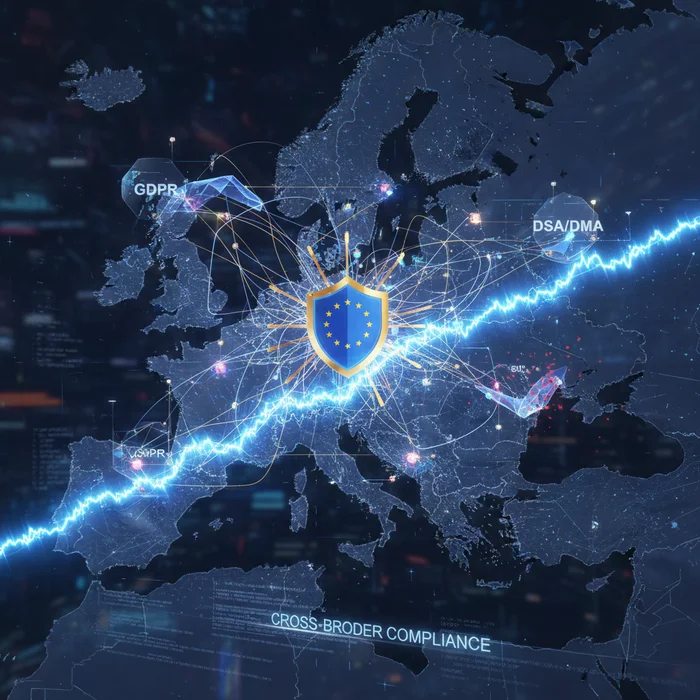
- EU: GDPR and NIS2 create an integrated privacy-security regime with explicit reporting timelines and high fines. Financial entities also face DORA operational resilience testing.
- US: Patchwork obligations—SEC incident disclosure for public companies, FTC/CFPB enforcement for deceptive practices, state breach laws, sectoral rules (GLBA, HIPAA). Less prescriptive on deepfakes, more on outcomes and deception.
- Practical tip: Engineer to EU standards (minimization, logging discipline, fast reporting) and you’ll generally meet or exceed US expectations.
Case Files From the Front Line
- Hospital: A “surgeon” voice clone requested last-minute credential resets. The helpdesk stopped it using callback verification to a directory number and logged the attempt for NIS2 assessment.
- Law firm: A client “video” pushed to release a draft before conflicts checks. The associate flagged lighting artifacts and ran an evidence workflow that preserved hashes without storing the full clip.
- Fintech: Synthetic vendor invoice slipped past AP but failed dual approval; anomaly detection flagged an IBAN region mismatch. Training data showed the controller recognized the “urgency + secrecy” pattern.
FAQs: Your Most Searched Questions, Answered
What is deepfake fraud prevention in a compliance context?
It’s a layered set of controls—verification, approvals, detection, training, logging—that reduces the chance a synthetic voice/video or fabricated document triggers harmful actions. It must align with GDPR (data protection) and NIS2 (security and reporting).
Is detection technology alone enough to stop deepfakes?
No. Detection is one signal. Enforcement of second-channel verification, dual approvals, and trained employees prevents most costly outcomes even when detectors miss.
Do GDPR and NIS2 require using AI detectors?
Neither mandates a specific tool. They require appropriate technical and organizational measures. You can meet that standard with layered controls, documented risk assessments, and evidence of effectiveness.
How should we share evidence with investigators without violating GDPR?
Minimize personal data, redact where possible, and use secure channels. Anonymize first and use a secure document upload that limits retention and access.
What’s the safest way to use LLMs with client documents?
Never paste confidential data into public models. Anonymize and use a controlled platform. The best practice is to use www.cyrolo.eu to safely upload and process files.
Conclusion: Deepfake Fraud Prevention That Actually Reduces Risk
Deepfake fraud prevention isn’t about buying a silver-bullet detector; it’s about building verifiable controls that regulators recognize and attackers can’t easily bypass. Combine dual approvals, provenance checks, realistic training, and privacy-first data handling to satisfy GDPR and NIS2 while cutting real-world loss. And when evidence or collaboration demands sharing files, keep sensitive data out of harm’s way—professionals avoid risk by using Cyrolo’s AI anonymizer and secure document upload at www.cyrolo.eu.