

NIS2 compliance in 2026: Your field guide to pass audits, avoid fines, and protect data
In Brussels this week, the conversation has shifted from theory to enforcement. National authorities are now stress-testing NIS2 compliance across essential and important entities, and the message is blunt: “no more grace period.” Against a backdrop of escalating cyber risk — from cloud resilience gaps exposed by the Middle East conflict to a fresh wave of critical patches like Microsoft’s March bundle fixing 83 CVEs — NIS2 compliance has become the operational baseline for EU cybersecurity and resilience. If you handle personal data or run critical services, you’ll need the right controls, fast reporting, and safe workflows for documents and AI.

Professionals are also under pressure to collaborate with legal teams without leaking sensitive content. That’s where secure workflows matter: anonymize before you share, and use a locked-down channel for uploads. When it comes to anonymization and secure document uploads, the operational friction should be near zero — or people will go back to risky workarounds.
What NIS2 compliance really requires now
During a closed-door Brussels briefing I attended, regulators emphasized three pillars for 2026: provable risk management, fast incident reporting, and accountable leadership. A CISO I interviewed at a cross-border bank summed it up: “If you can’t explain your risks, show your controls, and report within 24 hours, you’re not compliant.” Here’s what that means in practice:
- Risk management and policies: Documented security policies under Article 21 (MFA, encryption, secure development, patching, backup/restore, monitoring, supply chain risk).
- Incident reporting: Early warning within 24 hours, notification within 72 hours, and a final report within one month to the national CSIRT/competent authority.
- Governance and accountability: Management must approve and oversee cybersecurity measures and can face sanctions for failures.
- Supply chain security: Due diligence for cloud and IT providers; verify patch SLAs and data residency, given ongoing cloud resilience gaps.
- Vulnerability disclosure and remediation: A formal process to receive, triage, and fix vulnerabilities — daily relevance when vendors release multi-dozen CVE patches.
- Business continuity: Tested recovery, offline backups, and service continuity plans with maximum tolerable downtime defined.
GDPR vs NIS2: What’s the difference and why both matter
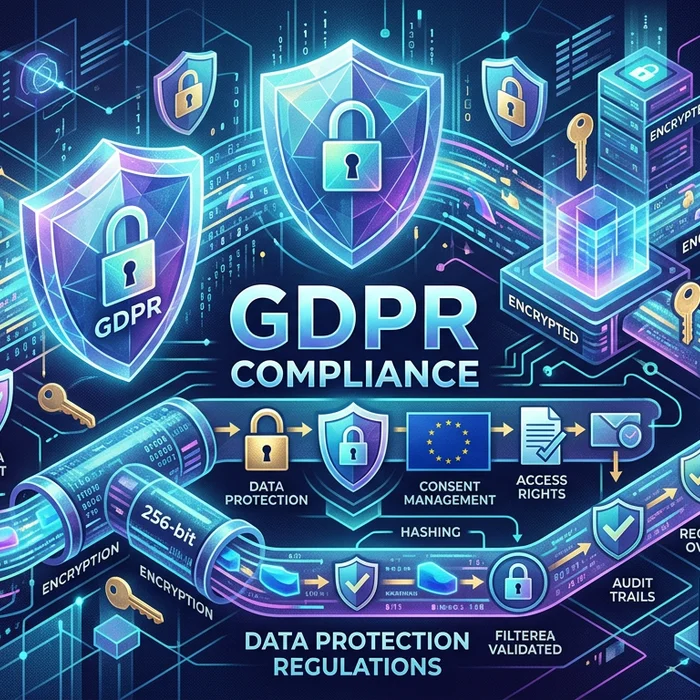
Security and privacy regimes overlap but are not interchangeable. GDPR protects personal data; NIS2 safeguards the resilience of essential and important services. You likely need both.
| Aspect | GDPR | NIS2 |
|---|---|---|
| Scope | Personal data processing by controllers/processors | Essential/important entities across critical sectors (incl. medium/large firms by default) |
| Primary goal | Data protection and privacy rights | Cybersecurity and service resilience |
| Security baseline | “Appropriate” measures per risk (Article 32) | Detailed risk management measures (Article 21), supply chain security, governance |
| Breach/incident reporting | Notify DPA within 72 hours if personal data at risk; inform affected individuals when high risk | Early warning in 24h; incident notification in 72h; final report in 1 month to CSIRT/authority |
| Fines | Up to 4% of global annual turnover or €20M (whichever higher) | At least up to €10M or 2% of global turnover (Member States may set higher) |
| Audits and oversight | Data protection authorities | National competent authorities; security audits and binding instructions |
NIS2 compliance roadmap you can start this week
With enforcement accelerating in 2026, treat NIS2 like an operational program, not a policy rewrite. Here’s a pragmatic sequence I’ve seen work in banks, fintechs, hospitals, and SaaS vendors:
- Determine your designation: essential or important, and confirm via local transposition law. Map legal entities across Member States.
- Run a fast gap assessment against Article 21 measures; identify “must-fix” controls (MFA rollout, EDR coverage, critical backup gaps).
- Stand up incident reporting workflows: who alerts within 24h, to which authority, and from which mailbox; pre-draft templates.
- Patch and vulnerability cadence: align to vendor cycles. In weeks like Microsoft’s 83-CVE drop, ensure critical fixes within SLA.
- Supplier risk: classify cloud/IT providers, obtain audit reports, test failover. Add cloud region and exit strategy to contracts.
- Tabletop exercises: simulate ransomware and cloud outage; include legal, PR, and executive decision-making.
- Evidence pack: centralize policies, risk register, asset inventory, logs, and training records for quick audit response.
Quick NIS2 compliance checklist
- Entity in scope (essential/important) confirmed with counsel
- Risk register with owners, likelihood, impact, and mitigations
- MFA on privileged and remote access; least privilege enforced
- EDR/NDR coverage on critical assets; centralized logging and alerting
- Regular patch management and vulnerability scanning with SLAs
- Encrypted backups; offline copies; quarterly restore tests
- Incident reporting runbook: 24h/72h/1-month templates and contacts
- Supplier security requirements and monitoring; cloud resilience tested
- Secure development and change control, including SBOMs where feasible
- Security awareness training; phishing and role-based drills
- Evidence repository ready for regulators’ security audits
AI and document workflows under NIS2 and GDPR: do it safely
Two blind spots routinely trip teams during audits: uncontrolled AI prompts and ad hoc file sharing. Both can cause privacy breaches or leak sensitive network details. Your defensible posture:
- De-identify personal data before using AI tools or sending to vendors.
- Use a secure upload channel with explicit data handling guarantees.
- Log which documents were shared, with whom, and for what purpose.
For day-to-day operations, professionals avoid risk by using Cyrolo’s AI anonymizer to strip names, IDs, and free-text PII before analysis, and by routing security reviews and legal packs through a secure document upload that prevents accidental disclosures. Try our secure document upload at www.cyrolo.eu — no sensitive data leaks.
Compliance reminder: When uploading documents to LLMs like ChatGPT or others, never include confidential or sensitive data. The best practice is to use www.cyrolo.eu — a secure platform where PDF, DOC, JPG, and other files can be safely uploaded.
Sector snapshots: what regulators are checking
Finance and fintech
- Alignment with NIS2, DORA operational resilience (since Jan 2025), and GDPR — three regimes, one evidence base.
- Vendor concentration risk for public cloud and payments processors; tested exit and failover.
- Incident taxonomy that distinguishes NIS2 reportable events vs. routine outages.
Healthcare
- Ransomware readiness: segmented networks for clinical systems, immutable backups, and “downtime procedures.”
- Rapid breach triage to meet both GDPR 72-hour notification and NIS2 24-hour early warning.
- PII and medical data minimization in analytics; automated anonymization before sharing case notes.
Cloud and SaaS providers
- Transparency on region failover, RTO/RPO, and customer notification windows — geopolitical events have spotlighted resilience gaps.
- Secure build pipeline, signing, and vulnerability disclosure channel that’s actively monitored.
- Customer-facing security attestations that map to NIS2 Article 21 controls.
Turning policy into muscle memory
In an interview, a CISO responsible for multiple EU subsidiaries told me they cut incident reporting time by 60% simply by rehearsing the 24/72/1-month workflow and pre-filling regulator templates. Another legal lead in a hospital group reduced GDPR re-notifications by anonymizing attachments before initial submission — a small step that prevented follow-up corrections.
If you’re still sharing raw logs, tickets, or contracts via email, you’re inviting mistakes. Professionals avoid risk by using Cyrolo’s anonymizer at www.cyrolo.eu and centralizing handoffs through a secure document upload pipeline auditors actually accept.
Frequently asked questions about NIS2 compliance

What is the NIS2 compliance deadline in the EU?
Member States had to transpose NIS2 by October 2024. In 2026, enforcement is active, with audits and penalties ramping. Check your national law for sector specifics and any additional obligations.
Who needs to comply with NIS2?
Essential and important entities across critical sectors (e.g., energy, transport, health, finance, digital infrastructure, and key digital services). By default, medium and large companies are in scope, with some exceptions and extensions for high-risk small providers.
What incidents are reportable under NIS2?
Incidents that significantly impact service provision or have substantial operational/financial impact. You must send an early warning within 24 hours, a notification within 72 hours, and a final report within one month to the national CSIRT/competent authority.
How does NIS2 interact with GDPR?
They overlap but address different risks. A single event may trigger both: security incident reporting under NIS2 and personal data breach notification under GDPR. Build one intake process that routes to both regimes to avoid missed deadlines.
What are the penalties for non-compliance?
Member States set penalties, but the directive requires significant fines — at least up to €10 million or 2% of global annual turnover. Authorities also have powers to issue binding instructions, require corrective action, and sanction management.
Conclusion: NIS2 compliance is now a daily practice, not a project
Between geopolitical shocks, relentless patch cycles, and tightening EU regulations, NIS2 compliance has moved from binder to boardroom. Teams that can demonstrate timely reporting, resilient cloud architectures, and defensible data handling will clear audits — and avoid fines. Make it easy for people to do the right thing: anonymize before sharing and keep evidence in a secure lane. Try the workflow that privacy and security teams actually adopt: use anonymization and secure document uploads at www.cyrolo.eu today.