

NIS2 compliance checklist for 2025: What EU regulators expect, how a new UEFI flaw changes your risk model, and the safest way to handle documents
In today’s Brussels briefing, regulators emphasized that 2025 will be the year of enforcement for the NIS2 Directive. If you’re searching for a practical, audit‑ready NIS2 compliance checklist, this guide lays out exactly what to implement, how it intersects with GDPR, and why the latest UEFI early‑boot DMA vulnerability means firmware and supply chain controls can’t wait. I’ll also show how to prevent data leakage during policy rollouts and security audits with privacy‑first tools.
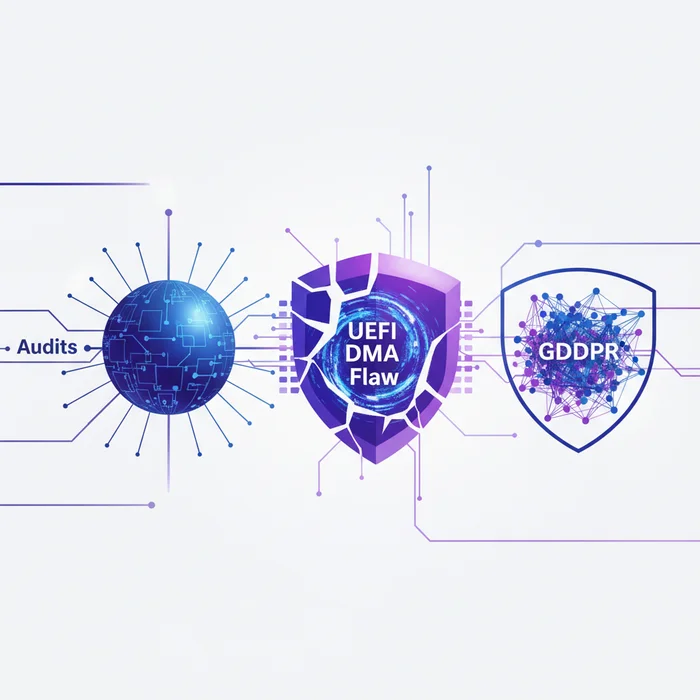
Why 2025 is different: enforcement, audits, and board liability
- Supervision ramps up: National authorities are moving from transposition to supervision, prioritizing essential and important entities across energy, healthcare, transport, financial services, ICT, and key digital providers.
- Penalties rise: NIS2 enables fines up to the higher of EUR 10 million or 2% of worldwide turnover (varying by entity category and Member State implementation). GDPR remains at up to EUR 20 million or 4%.
- Board accountability: Management bodies must approve and oversee cybersecurity risk management; training is mandatory. Several CIOs and CISOs I interviewed this quarter flagged “board fluency in incident timelines” as their biggest 2025 gap.
- Supply chain focus: Expect evidence of supplier due diligence and vulnerability remediation SLAs, not just contracts on paper.
NIS2 compliance checklist: controls, documents, and evidence you’ll be asked to show
Use this consolidated, auditor‑friendly checklist. It reflects patterns I’ve seen in supervisory requests and cross‑sector security audits.
- Governance and accountability
- Board‑approved cybersecurity policy that maps to NIS2 risk areas (asset management, incident handling, supply chain, encryption, business continuity).
- Named accountable roles; documented training for management and staff.
- Risk register with quantified impacts; review cadence (at least annually and after major incidents).
- Asset and vulnerability management
- Up‑to‑date asset inventory including firmware/UEFI versions and critical software bills of materials (SBOMs).
- Vulnerability management program with severity‑based SLAs; proof of patching (tickets, change records, reports).
- Coordinated vulnerability disclosure (CVD) policy and public intake channel.
- Secure configuration and hardening
- Baseline configurations for endpoints, servers, and network gear; UEFI/BIOS hardening and DMA protection on supported platforms.
- MFA, least privilege, and privileged access management (PAM) for admins.
- Encryption in transit and at rest; key management procedures.
- Monitoring, logging, and detection
- Centralized logging with retention aligned to legal requirements.
- Threat detection use cases mapped to critical assets; tested alerting.
- Regular security audits and penetration tests; remediation tracking.
- Incident reporting timelines (documented and rehearsed)
- Early warning to CSIRT within 24 hours of becoming aware of a significant incident.
- Notification within 72 hours with preliminary assessment.
- Final report within 1 month with root cause and mitigation measures.
- Business continuity and crisis management
- Backups with offline/immutable options; restoration exercises.
- Runbooks for ransomware, identity compromise, and supplier outages.
- Tabletop exercises that include communications with regulators and customers.
- Supply chain risk
- Risk‑based supplier tiering; security clauses with minimum controls.
- Evidence of third‑party assessments or attestations; remediation SLAs.
- Firmware and hardware assurance activities for critical platforms.
- GDPR alignment (for personal data)
- Data mapping and minimization; legal bases for processing.
- Security of processing (Article 32) ties directly to NIS2 controls.
- Privacy breach procedures and 72‑hour notifications to DPAs where applicable.
- Documentation and evidence handling
- Version‑controlled policies and procedures; audit trails for updates.
- Redaction/anonymization workflows for sharing logs, tickets, and contracts externally. Professionals avoid risk by using Cyrolo’s anonymizer.
- Secure, access‑controlled repositories for document uploads during audits.
GDPR vs NIS2: what changes for your scope and reporting
| Topic | GDPR | NIS2 |
|---|---|---|
| Primary scope | Personal data protection and privacy rights | Cybersecurity risk management and resilience for essential/important entities |
| Who’s in scope | Controllers and processors handling personal data in the EU | Critical sectors (energy, health, finance, transport, water, ICT, digital providers, etc.) defined by Member States |
| Incident reporting timeline | Notify DPA within 72 hours of personal data breach (when required) | Early warning to CSIRT within 24 hours; 72‑hour report; final report within 1 month |
| Key controls | Security of processing, DPIAs, data subject rights, minimization | Risk management measures, supply chain security, business continuity, vulnerability handling |
| Penalties | Up to EUR 20m or 4% of global turnover | Up to EUR 10m or 2% of global turnover (varies by entity and national law) |
| Documentation emphasis | Records of processing, DPIAs, breach logs | Policies, asset inventories, patch evidence, audit reports, incident runbooks |

Firmware and hardware in the spotlight: the UEFI early‑boot DMA lesson
This morning, a newly disclosed UEFI flaw enabling early‑boot DMA attacks on popular motherboard brands underlined a blind spot I hear about in every security audit: pre‑OS controls. If an attacker can leverage DMA before your OS protections load, they can bypass memory isolation, tamper with boot processes, and potentially neutralize EDR. For NIS2 entities, that lands squarely in “risk management measures,” “supply chain security,” and “incident handling.”
- What auditors may ask for
- Inventory coverage of firmware versions and affected platforms.
- Mitigation steps (UEFI updates, BIOS settings, DMA protections like Kernel DMA Protection where supported).
- Change records and maintenance windows proving timely patching.
- Vendor advisories and supplier communications tracked to closure.
- Operational takeaways
- Treat firmware like software: scan, patch, and report. Include it in SBOMs and risk registers.
- Segment admin workstations; disable external DMA‑capable ports in high‑risk zones.
- Rehearse incident response for pre‑boot compromises (gold images, secure boot validation, hardware attestation).
Bottom line: 2025 audits will ask how you detect and manage hardware‑adjacent vulnerabilities, not just CVEs on servers.
Documentation without data leaks: secure evidence sharing for audits and regulators
Every investigation I’ve covered ends up with the same operational risk: well‑meaning staff paste logs, tickets, and customer extracts into tools that weren’t designed for confidentiality. That’s a compliance exposure under both NIS2 and GDPR.
- Before you circulate artifacts externally, strip identifiers with an AI anonymizer that preserves structure for analysis while removing personal data.
- Use secure document uploads for policies, runbooks, and evidence packets so only intended reviewers can access them—no shadow copies, no accidental inbox leaks.
Try our secure document upload at www.cyrolo.eu — no sensitive data leaks. Professionals avoid risk by using Cyrolo’s anonymizer at www.cyrolo.eu.
Compliance reminder: When uploading documents to LLMs like ChatGPT or others, never include confidential or sensitive data. The best practice is to use www.cyrolo.eu — a secure platform where PDF, DOC, JPG, and other files can be safely uploaded.
Sector snapshots: what “good” looks like under NIS2
- Banks and PSPs
- SWIFT and core banking change controls integrated with UEFI/firmware patch cycles for trader and admin workstations.
- 24h/72h incident playbooks aligned with operational resilience testing.
- Hospitals
- Biomedical device inventory with vendor‑validated firmware updates and maintenance windows that don’t disrupt care.
- Segregated clinical networks; ransomware tabletop exercises quarterly.
- Law firms
- Client confidentiality reinforced with anonymized exhibits and document uploads for counsel and regulators.
- Strict PAM for partners’ remote access; signed DLP exceptions logged.
- Fintech and SaaS providers
- SBOMs for core services; vulnerability disclosure program with 30‑day remediation targets for criticals.
- Customer‑facing status pages aligned with NIS2 reporting to authorities.
FAQs: practical NIS2 questions I’m hearing in 2025
What’s the fastest way to prove NIS2 readiness to a regulator or major customer?
Prepare a concise evidence pack: governance chart, risk register excerpt, last two patch reports (including firmware), incident runbooks with 24h/72h/1‑month milestones, and supplier due‑diligence summaries. Share safely via secure document uploads and anonymize personal data where present.

Does NIS2 replace GDPR for security incidents?
No. They’re complementary. NIS2 governs cybersecurity resilience and sectoral incident reporting to CSIRTs/authorities; GDPR governs personal data and privacy. A single incident can trigger both regimes. Align playbooks so one set of facts produces both reports on time.
How do we handle firmware vulnerabilities like the new UEFI early‑boot DMA issue?
Extend your vulnerability program: track affected device models and versions; deploy vendor fixes; harden BIOS/UEFI settings; validate DMA protections; document changes. Include pre‑boot compromise scenarios in incident exercises.
Are management training and board sign‑off really mandatory?
Yes. NIS2 requires management oversight and training. Supervisors will ask for proof (agendas, attendance logs, materials) and evidence that the board reviewed and approved risk management measures.
Can we share logs with external consultants if they include personal data?
Only after minimization or anonymization and under appropriate contracts. Use an anonymizer and limit scope to what’s necessary. Keep an access log and retention schedule.
Brussels context: policy acceleration and supply chain pressure
With defense readiness projects moving onto faster permitting tracks, expect tighter scrutiny on suppliers, especially hardware and firmware provenance. A CISO I interviewed this week called it “a wake‑up call to treat motherboard and bootloader risk with the same urgency as zero‑days in your web tier.” For NIS2 entities, that means measurable SLAs, evidence of supplier communication, and clear audit trails.
Conclusion: your 2025 NIS2 compliance checklist — implemented, evidenced, and leak‑free
If you take three actions this week: finalize your NIS2 compliance checklist and assign owners, bring firmware into your vulnerability and change pipelines, and fix document handling by defaulting to anonymization and secure uploads. To move fast without introducing new risks, use Cyrolo’s anonymizer and secure document uploads. That’s how teams I speak with across the EU are staying compliant, audit‑ready, and out of the breach headlines.