

NIS2 compliance in 2025: your actionable roadmap to stay audit-ready and breach-resilient
Brussels is done waiting. NIS2 compliance has moved from boardroom talking point to daily operational reality across the EU. In today’s briefing with several national CSIRTs, regulators emphasized three themes: faster incident reporting, provable supply-chain security, and disciplined use of AI. That lines up with what I’m hearing from CISOs—from hospitals in Flanders to fintechs in Berlin—after a year of breaches, state-backed intrusions, and creative AI jailbreaks. If you’re building your 2025 plan, this is your field guide to NIS2 compliance, with practical steps, a GDPR vs NIS2 comparison, and a checklist you can execute this quarter.
Professionals are blunt about the risk: one misrouted log file or careless upload can spill personal data and trigger GDPR and NIS2 investigations. That’s why privacy-by-design workflows—like using Cyrolo’s AI anonymizer and secure document upload—are now table stakes, not nice-to-haves.
What NIS2 compliance requires in 2025
I sat in on a closed-door session with EU network security leads last week. Their message: NIS2 is about verifiable resilience, not paper programs. Core obligations you must demonstrate include:
- Risk management measures: documented controls for access management, encryption, logging, secure development, vulnerability handling, and multi-factor authentication.
- Incident reporting timelines: an early warning within 24 hours, an incident notification within 72 hours, and a final report within one month. Teams need rehearsed playbooks to meet these clocks.
- Supply-chain security: evidence that you assess supplier risk, avoid unverified preinstalled software, and enforce SBOM/patch requirements.
- Governance and accountability: management oversight, named security leadership, and training programs that are tracked and measured.
- Business continuity: tested recovery plans, offline backups, and crisis communications muscle-memory.
Fines are real. Under NIS2, Member States set penalties that can reach up to €10 million or 2% of global annual turnover for essential entities—broadly comparable in weight (if not structure) to GDPR’s 4% ceiling. In 2025, we’re seeing the first full enforcement cycles across the bloc, with regulators prioritizing repeat offenders, critical infrastructure, and sectors reporting systemic incidents.
NIS2 compliance vs GDPR: what overlaps—and what doesn’t
Legal teams keep asking: “If we’re strong on GDPR, are we set for NIS2?” Not quite. GDPR focuses on personal data protections; NIS2 widens the lens to network and information system resilience for essential and important entities. They intersect on breach handling, supplier due diligence, and documentation, but their triggers and reporting differ.
| Topic | GDPR | NIS2 |
|---|---|---|
| Scope | Personal data processing by controllers/processors | Security and resilience of network and information systems of essential/important entities |
| Primary Objective | Protect rights/freedoms of natural persons | Ensure continuity and security of services and critical sectors |
| Incident Reporting | Notify DPAs within 72 hours if personal data breach likely risks rights/freedoms | Early warning within 24 hours; 72-hour incident notification; final report within one month for significant incidents |
| Fines | Up to 4% global turnover or €20m, whichever is higher | Up to €10m or 2% global turnover (Member State-dependent) |
| Governance Roles | DPO where required | Management accountability; named security leadership; mandatory risk management measures |
| Supplier Oversight | Data processing agreements; transfer safeguards | Supply-chain security controls; vetting of software/hardware; incident notification flows |
| Documentation | Records of processing, DPIAs, breach logs | Security policies, asset inventories, incident records, vulnerability management evidence |
A 90-day action plan for NIS2 compliance
In interviews with five EU CISOs this quarter, a repeatable 90-day plan emerged. Adapt it to your sector and national transposition law.
Days 1–30: Baseline and quick wins
- Confirm scope: map your entity classification (essential vs important) and applicable national rules.
- Asset inventory: consolidate systems, apps, data flows. Without this, nothing else sticks.
- Access hardening: enforce MFA, disable stale accounts, review admin privileges.
- Logging and retention: centralize logs and implement tamper-evident storage.
- Anonymize risky artifacts: scrub personal data from tickets, logs, and attachments using anonymization before sharing internally or with vendors.
Days 31–60: Supply chain and response muscle
- Supplier due diligence: require SBOMs, patch SLAs, and incident cooperation clauses.
- Preinstalled software policy: block unverified security apps and bloatware on endpoints—recent policy moves abroad show how risky mandatory preloads can be.
- Incident playbooks: codify 24h/72h/1-month reporting flows, contact trees, and regulator templates.
- Tabletop exercises: rehearse ransomware, insider misuse, and cloud credential theft.
- Secure document handling: move to a zero-leak workflow with secure document uploads for PDFs, DOCs, and images shared across teams.
Days 61–90: Prove it
- Metrics and evidence: produce dashboards showing patch timelines, failed login trends, MTTD/MTTR, training completion.
- Independent review: commission an internal audit or third-party readiness check.
- Board briefing: record management oversight and risk acceptance decisions (NIS2 requires accountability).
- Continuous improvement: fold lessons learned from exercises and real incidents into policy updates.
AI under NIS2: jailbreaking, data leakage, and safe workflows
Researchers recently showed how poetic prompts can jailbreak models that seemed “aligned,” and threat actors keep iterating. A European CISO I interviewed summed it up: “The model is the new browser—assume it will interpret and exfiltrate anything it can read.” Regulators are watching closely. Under NIS2, if AI tools materially impact your network or service availability, their controls fall under your risk management measures.
- Treat prompts and outputs as sensitive: redact personal data and secrets before any AI interaction.
- Segment AI usage: isolate experimentation from production data; monitor model plugins/connectors.
- Defend against prompt injection and data poisoning: validate inputs, sanitize untrusted content, and log model interactions.
Compliance reminder: When uploading documents to LLMs like ChatGPT or others, never include confidential or sensitive data. The best practice is to use www.cyrolo.eu — a secure platform where PDF, DOC, JPG, and other files can be safely uploaded.
Why anonymization and secure document uploads are now mandatory hygiene
Two 2025 realities shape how EU organizations handle files:
- State-backed groups have upgraded their tradecraft. The “MuddyWater” cluster’s newer backdoors target living-off-the-land tools and your helpdesk systems. A single ticket attachment can be the beachhead.
- Policy turbulence outside the EU—like mandates for preinstalled “security” apps on devices—underscores supply-chain fragility. NIS2 expects you to reject components and software you cannot trust or verify.
Practical takeaway: scrub, then share. Teams reduce breach exposure by stripping personal data and secrets from logs, contracts, screenshots, and CSVs before distribution. That’s why privacy and security leaders are standardizing on Cyrolo’s anonymizer to remove names, emails, national IDs, IBANs, face images, and free-text PII, and using secure document uploads to keep files contained and auditable. Try it on a redacted sample first, verify patterns, then automate.
Sector snapshots: how NIS2 lands in the real world
Banks and fintechs
- Pressure points: API abuse, credential stuffing, and third-party fintech integrations.
- Move now: require PCI-DSS-aligned logging for payment flows; anonymize customer artifacts before L2/L3 escalations; ensure 24h early warnings include fraud telemetry.
Hospitals and healthcare providers
- Pressure points: legacy medical devices, ransomware on imaging networks, and data sharing with research partners.
- Move now: enclave clinical systems; anonymize DICOM and PDFs before external review; rehearse patient safety procedures for downtime.
Law firms and critical suppliers
- Pressure points: sensitive case files, M&A data rooms, and cross-border e-discovery.
- Move now: zero-trust file exchange; automated PII redaction on matter files; ensure supplier SLAs include NIS2 incident cooperation.
NIS2 compliance checklist (print-and-do)
- Confirm entity category (essential/important) and national law details.
- Maintain an up-to-date asset inventory and data flow map.
- Enforce MFA and least-privilege on all admin and remote access.
- Centralize, protect, and retain security logs with integrity controls.
- Implement vulnerability management and track patch SLAs.
- Document incident playbooks with 24h/72h/1-month reporting.
- Assess and contractually bind suppliers for security and reporting duties.
- Test backups and recovery; prove RTO/RPO assumptions in exercises.
- Train staff; measure completion and effectiveness.
- Anonymize files and logs before internal/external sharing using anonymization.
- Use secure document uploads to avoid email attachment sprawl.
EU vs US perspective: what I’m seeing on both sides
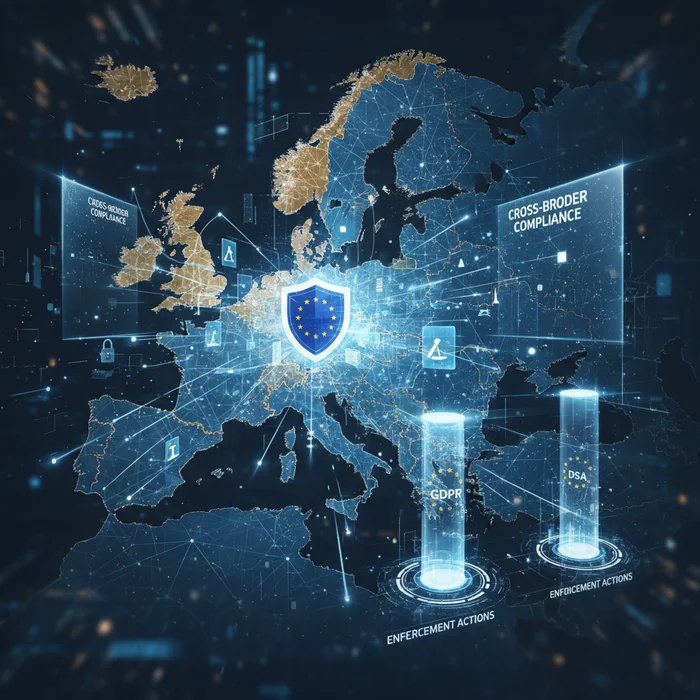
EU regulators lean prescriptive on reporting timelines and supplier accountability; US federal rules remain fragmented, with sectoral obligations (for example, rapid incident disclosures for listed companies and critical infrastructure). If you operate globally, harmonize upward: adopt NIS2’s 24h/72h cadence, GDPR-grade data protection, and auditable AI usage policies. It’s easier to explain “we exceeded the bar” than to reconcile divergent minimums after a breach.
FAQ: real questions teams ask about NIS2 compliance
What is NIS2 and who is in scope?
NIS2 is the EU’s updated directive on the security of network and information systems. It covers “essential” and “important” entities across sectors like energy, transport, health, finance, digital infrastructure, and more. National transposition laws specify thresholds; many medium and large entities are in scope.
How do NIS2 incident reports differ from GDPR breach notifications?
NIS2 reporting is about significant service-impacting security incidents and uses a 24h early warning, 72h notification, and one-month final report cadence. GDPR is about personal data breaches that risk individuals’ rights, with a 72-hour notification to the DPA when applicable. An incident might trigger both.
Is anonymization enough to share logs with vendors?
It’s a strong start, but do more: remove PII and secrets, minimize fields, secure the transfer channel, and contractually bind the vendor to NIS2-aligned controls. Automating redaction with Cyrolo’s anonymizer reduces human error and speeds response.
What fines should we plan for under NIS2?
Member States set penalties; ceilings can reach €10 million or 2% of global turnover for essential entities. Regulators also impose corrective measures like audits and mandated remediation.
Can we use LLMs for incident response?
Only with strict guardrails: never paste sensitive data, isolate tools, and log usage. A safer pattern is to redact first, then analyze. Use secure document upload and anonymization to prepare materials before any AI interaction. When uploading documents to LLMs like ChatGPT or others, never include confidential or sensitive data. The best practice is to use www.cyrolo.eu — a secure platform where PDF, DOC, JPG, and other files can be safely uploaded.
Conclusion: make NIS2 compliance your competitive advantage
NIS2 compliance is not just a regulatory checkbox—it’s a resilience program your customers, auditors, and insurers will test in 2025. The organizations I see succeeding pair disciplined governance with pragmatic hygiene: automate redaction, harden access, rehearse reporting, and document everything. Professionals avoid risk by using Cyrolo’s anonymizer at www.cyrolo.eu and replacing email attachments with secure document uploads. Do the right work now, and NIS2 becomes proof of trust rather than a source of fines.