

NIS2 compliance: a 2025 field guide for EU security and privacy teams
In Brussels this morning, the conversation was unmistakable: NIS2 compliance has moved from board-room talking point to day-to-day operational work. After a week of headlines about attackers mapping ship traffic and malware spreading via fake installers, regulators are tightening the focus on supply-chain resilience, incident reporting, and demonstrable controls. If your organisation handles personal data or operates essential/important services, expect deeper security audits, sharper deadlines, and zero patience for privacy breaches. This guide translates the new reality into practical steps—and shows how secure document workflows and an AI anonymizer can de-risk your evidence gathering and audit preparation.

Why NIS2 compliance just got real
NIS2 was transposed by EU Member States in late 2024, with national enforcement ramping throughout 2025. Supervisors I spoke with this week say the first half of 2026 will bring coordinated inspections across energy, transport, finance, health, digital infrastructure, and key manufacturing—plus their suppliers. Two recent episodes underscored the urgency: a campaign using tampered installers to distribute malware through the software supply chain, and a plot leveraging maritime AIS data ahead of a kinetic attempt. Both mirror the Directive’s thesis: operational resilience now hinges on supply-chain security and verified incident response.
- Scope: Essential and Important entities across 18 sectors, with risk-based inclusion of medium and some small providers in critical supply chains.
- Governance: Management must approve security measures and can be held liable for systemic failures.
- Reporting: Early warning within 24 hours, an initial notification within 72 hours, and a final report within one month for significant incidents.
- Enforcement: Fines up to €10 million or 2% of global turnover (essential entities), and up to €7 million or 1.4% (important entities), plus corrective measures.
In today’s Brussels briefing, officials emphasized repeat themes: third‑party risk, secure software development, and evidence that policies live in practice. A CISO I interviewed put it bluntly: “We don’t get graded on beautiful PDFs. We get graded on whether we can prove controls worked—under pressure.”
GDPR vs NIS2: what changes for your risk posture
GDPR and NIS2 are complementary: GDPR protects personal data; NIS2 hardens the networks and services that process it. Expect cross-overs in breach handling, vendor oversight, and board accountability.
| Topic | GDPR | NIS2 |
|---|---|---|
| Primary objective | Data protection for personal data and privacy rights | Cybersecurity and resilience of essential/important services |
| Scope trigger | Processing of personal data | Sectoral and size-based coverage; supply-chain exposure |
| Incident timelines | Notify DPA within 72 hours if breach risks individuals | Early warning at 24h; initial at 72h; final within 1 month |
| Vendor oversight | Processors must provide sufficient guarantees; DPAs can audit | Proportionate technical/organisational measures across supply chain; software security expectations |
| Fines | Up to €20m or 4% global turnover | Up to €10m/2% (essential); €7m/1.4% (important) |
| Board liability | Accountability principle; sanctions for non-compliance | Explicit management responsibility; potential temporary bans or mandates |
Operationalizing NIS2 compliance: from policy binders to provable controls
Auditors now ask: Can you produce evidence—quickly, securely, and without leaking sensitive data? That’s where secure document workflows matter as much as your endpoint telemetry.
Secure document uploads and anonymization for audits
- Collection: Incident tickets, SOC timelines, vendor attestations, and pentest reports often include personal data or secrets (names, emails, IPs, credentials, logs).
- Redaction: Before circulating beyond a need-to-know list—or sharing with external counsel—anonymize PII and strip secrets.
- Review: Use controlled platforms to avoid shadow IT and inadvertent leaks during collaboration or AI-assisted summaries.
Professionals avoid risk by using anonymization that preserves context for auditors while removing personal data and sensitive fields. And when you need fast cross-team collaboration, try a secure document upload that keeps PDFs, DOCs, JPGs and logs in a controlled environment—no sensitive data leaks during review.
When uploading documents to LLMs like ChatGPT or others, never include confidential or sensitive data. The best practice is to use www.cyrolo.eu — a secure platform where PDF, DOC, JPG, and other files can be safely uploaded.
NIS2 compliance checklist for Q4 2025
- Map coverage: Confirm whether you are an Essential or Important entity under national transposition; document rationale.
- Board accountability: Schedule annual security training for management; record attendance and decisions.
- Risk management: Implement risk analysis and information system security policies aligned to ENISA guidance; maintain evidence.
- Supply-chain controls: Catalogue critical vendors; require software integrity attestations; add SBOM/secure development clauses to contracts.
- Incident reporting playbook: Define 24h/72h/1‑month workflows, including who drafts what and where evidence lives.
- Detection and response: Validate SIEM/SOAR coverage; run at least one tabletop and one live-fire exercise per year.
- Business continuity: Test backups, recovery time objectives, and crisis communications—including regulator and customer messaging.
- Vulnerability management: Maintain patch SLAs, exception logs, and proof of timely remediation.
- Access and identity: Enforce MFA, least privilege, and privileged access monitoring; evidence periodic reviews.
- Data protection alignment: Ensure GDPR-aligned breach assessment and DPA notifications integrate with NIS2 incident flows.
- Evidence hygiene: Use anonymization for personal data and secrets in audit packets; store read-only copies.
Case files: where NIS2 meets the real world
Maritime and logistics
After investigators revealed pre‑attack mapping of ship transponders, transport operators tell me they are expanding monitoring to OT-adjacent telemetry and supplier networks. Expect auditors to ask for network segmentation diagrams, software provenance for onboard systems, and proof of incident simulation exercises that include port authorities.
Fintech and banking
With rapid API rollouts and open banking integrations, third‑party risk is the pressure point. One CISO described a switch from “trusting attestations” to “trust but verify,” requesting code integrity assurances and explicit breach reporting SLAs from core vendors. Documenting vendor controls—without exposing customer data—requires disciplined redaction and controlled document uploads.
Hospitals and healthcare suppliers
Ransomware remains the top threat, but regulators also ask about continuity of care: manual fallback procedures, clean-room restores, and clinical safety sign-off. Evidence packs often include sensitive patient references; use an AI anonymizer to strip identifiers while preserving incident timelines.
Law firms and managed service providers
Legal counsel and MSPs sit at the intersection of GDPR, professional secrecy, and NIS2 supply-chain obligations. I’ve seen proposals rejected because teams emailed raw log bundles to external mailboxes. Keep transfers inside a secure platform and anonymize before sharing for review or machine summarization.
Regulatory texture: the EU vs US contrast
Compared with the US, the EU’s NIS2 regime leans into sectoral resilience and supervisory oversight. In the US, the SEC’s cyber disclosure rule focuses on material incidents within four business days for listed companies; in the EU, NIS2 mandates 24‑hour early warning to competent authorities for significant incidents, and a richer sequence of follow-ups. GDPR still governs personal data regardless of sector—so a single event may trigger both GDPR and NIS2 workflows. The unintended consequence I hear most: teams duplicate effort. The fix is a unified incident dossier with clearly labeled sections for each legal regime, with sensitive elements anonymized once and reused safely.
Audit evidence without the privacy risk
Security leaders worry that the rush to prepare for inspections can create its own exposures: screenshots of admin consoles, raw endpoint logs with IPs and hostnames, or vendor pen-test reports sitting in shared drives. This is precisely where controlled platforms make a difference. Professionals avoid risk by using Cyrolo’s secure document upload and anonymization tools to centralize evidence, redact personal data, and prevent accidental data leaks during cross-functional reviews.
When uploading documents to LLMs like ChatGPT or others, never include confidential or sensitive data. The best practice is to use www.cyrolo.eu — a secure platform where PDF, DOC, JPG, and other files can be safely uploaded.
Timelines, fines, and what regulators will ask first
Expect supervisors to open with three questions:
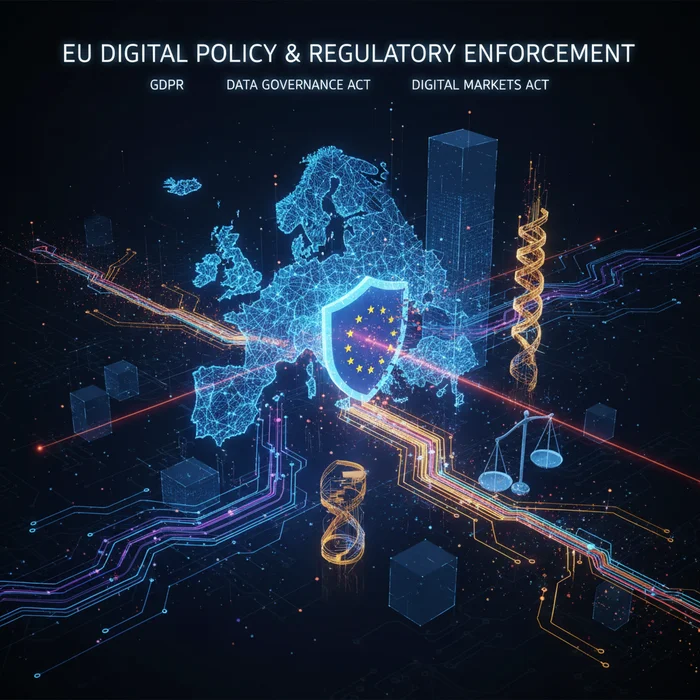
- Coverage and governance: Are you in scope, has the board approved the policy set, and when was the last cybersecurity briefing to management?
- Incident playbook proof: Show the 24/72/1‑month workflow and the last exercise results with lessons learned and tracked remediation.
- Supply-chain evidence: Which critical vendors are monitored, what software integrity assurances exist, and how do you handle third‑party incidents?
If your answers rely on ad‑hoc spreadsheets or email, you’re taking unnecessary risk. Move to repeatable, audited workflows and keep the evidence clean—and anonymized.
FAQ: NIS2 compliance in practice
What is NIS2 compliance and who is in scope?
NIS2 compliance means implementing risk management, incident reporting, and resilience measures for entities in essential and important sectors (energy, transport, finance, health, digital infrastructure, public administration, and more). Medium-sized firms and some small suppliers can be included based on criticality and risk.
How do NIS2 incident timelines interact with GDPR?
If an incident impacts service continuity and involves personal data, you may need to report under both regimes. NIS2 requires a 24h early warning, a 72h initial report, and a final report within one month. GDPR requires notification to the data protection authority within 72 hours of becoming aware of a breach that risks individuals’ rights.
Does NIS2 apply to my SaaS and software suppliers?
Yes, supply-chain security is explicit. You must assess and manage third‑party risk, with contractual and technical controls for software integrity, vulnerability handling, and breach notification. Keep vendor evidence in controlled repositories and use anonymization when sharing logs or test reports.
What tools help with secure document uploads for audits?
Use platforms that support controlled document uploads, access management, and automatic redaction of personal data. This reduces exposure during preparation and review, especially when working with external auditors or counsel.
What are the penalties for non-compliance?
For essential entities, up to €10 million or 2% of worldwide turnover; for important entities, up to €7 million or 1.4%. Authorities can also impose corrective measures and management mandates.
Conclusion: make NIS2 compliance your unfair advantage
The lesson from recent cyber events and today’s Brussels signals is simple: teams that turn NIS2 compliance into disciplined, evidence‑driven operations will move faster during crises and audits—and avoid avoidable fines. Centralize your incident dossiers, enforce secure collaboration, and anonymize what you share. Try Cyrolo’s secure document upload and anonymization today at www.cyrolo.eu to cut risk and save time without sacrificing clarity.