

NIS2 compliance checklist: a 2025 survival guide for EU security and legal teams
From this morning’s Brussels briefings to late-night CISO calls, one theme keeps returning: leaders want a practical, no-nonsense NIS2 compliance checklist they can run now—before regulators and auditors do it for them. With LIBE laser-focused on digital identity and travel data, IMCO turning the heat up on Big Tech, and a steady drumbeat of Windows backdoors, Docker secrets leaks and zero-days, the bar for EU regulations-driven cybersecurity compliance has never been higher. This guide translates NIS2 into decisive steps, shows where GDPR fits, and explains how to reduce risk with an AI anonymizer and secure document uploads that won’t leak personal data.
- Who should read this: CISOs, DPOs, GC/Legal, Risk, Compliance, IT Ops, and Founders in “essential” or “important” sectors.
- Outcome: a concrete, auditor-ready plan that satisfies regulators and reduces breach exposure.
- Risk if ignored: fines up to €10M or 2% global turnover for essential entities; €7M or 1.4% for important entities, plus reputational damage and remediation costs.
Why NIS2 matters right now
In today’s LIBE exchange, several MEPs stressed the systemic risk from identity and data flows as the EU rolls out digital travel credentials. That dovetails with the operational reality CISOs described to me this week: malware abusing cloud APIs, unpatched developer tools, and RPA pipelines blurring accountability in identity and access management. NIS2 raises the minimum bar across critical sectors—energy, finance, health, transport, digital infrastructure, managed services, and more—expanding obligations beyond “info-sec best effort” to verifiable governance and resilience.
Key dates and scope points to anchor your program:
- Legal basis: NIS2 replaces NIS1; Member States completed transposition in late 2024. Enforcement is active across the EU in 2025.
- Who’s in: “Essential” and “Important” entities across 18+ sectors, including MSPs, data centers, DNS, cloud, fintech, banks, hospitals, pharma, transport operators, water, and public administration in some states.
- Reporting: initial “early warning” within 24 hours, a follow-up within 72 hours, and a final report within one month for significant incidents.
- Penalties: up to €10M/2% of global turnover (essential) and €7M/1.4% (important), with executive liability measures in several jurisdictions.
NIS2 compliance checklist: the steps auditors will expect to see
1) Map essential services, assets, and data flows
- Identify regulated services and supporting systems (on-prem, cloud, MSPs). Maintain an inventory that ties assets to business services.
- Classify data involved, especially personal data and special categories under GDPR. Mark cross-border transfers.
- Document dependencies: CI/CD, third-party SaaS, identity providers, RPA bots, and data pipelines.
2) Put governance and accountability in writing
- Board-approved security policy with NIS2 scope, roles, and risk appetite. Name accountable executives.
- Security steering committee minutes; regular briefings to top management—auditors will ask.
- Training plan for executives and technical staff; include incident reporting duties and evidence collection.
3) Risk management with supply chain focus
- Adopt a method (ISO 31000/27005, ENISA guidance). Track risks to essential services, not just isolated assets.
- Supplier due diligence: contractual security clauses, data location, sub-processor transparency, right to audit, and coordinated incident playbooks.
- Assess MSPs and identity providers—recent incidents show attackers abusing cloud APIs and developer tooling.
4) Technical controls that map to NIS2 expectations
- Identity and Access: MFA for privileged access, strict IAM roles, just-in-time access, service account rotation, and RPA credential governance.
- Asset and Patch: automated asset discovery, SBOM for critical apps, vulnerability management with defined SLAs for internet-facing systems.
- Network and Data: segmentation, encryption in transit/at rest, key management, data loss prevention, and secure logging/retention.
- Detection and Response: SIEM/EDR coverage, playbooks for malware exploiting cloud storage or containers, tabletop exercises with suppliers.
5) Incident reporting within 24h/72h/1 month
- Define “significant incident” thresholds consistent with national guidance (service impact, duration, geographical spread, and criticality).
- Create pre-approved templates for early warning, status updates, and final reports. Store them in your IR toolkit.
- Practice it: timeboxed drills to produce the 24h and 72h submissions with evidence.
6) Documentation that won’t leak sensitive data
- Centralize policies, DPIAs, risk registers, incident logs, and supplier assessments with access controls and audit trails.
- When you must share or analyze documents, use anonymization to strip names, emails, IDs, and PII while preserving meaning.
- For audits and legal review, rely on secure document uploads to avoid the “shadow AI” copy-paste risk.
7) Training, awareness, and executive liability
- Brief senior management on NIS2 penalties and duties. Several Member States allow sanctions on managers for willful neglect.
- Role-based training for identity admins, developers, and incident handlers—especially on third-party reporting paths.
8) Continuous improvement and security audits
- Internal audits against your control baseline; close findings with owners and deadlines.
- Independent testing: red-team or purple-team exercises focused on cloud, containers, and supplier compromise scenarios.
- Metrics: time to detect, patch latency, privileged access changes, supplier SLA adherence.

One-page NIS2 compliance checklist you can copy
- Service and asset inventory completed and tied to essential functions
- Board-approved NIS2 policy with named accountable executives
- Risk register with supplier risks and mitigation plans
- MFA on all privileged accounts; least-privilege enforced; RPA/IaC secrets managed
- Patch SLAs for internet-facing and critical systems; SBOMs for core apps
- Network segmentation, encryption, centralized logging, and EDR coverage
- Incident reporting playbooks and templates tested (24h/72h/1 month)
- Supplier contracts updated with security and reporting clauses
- Training: exec, technical, and supplier coordination drills completed
- Evidence repository with AI anonymizer and secure document uploads to protect PII
GDPR vs NIS2 obligations: what overlaps and what doesn’t
| Topic | GDPR | NIS2 | Practical implication |
|---|---|---|---|
| Scope | Personal data protection across all sectors | Cybersecurity of essential and important entities | You can be in scope for both; treat them as complementary |
| Legal basis | Data processing principles, rights, DPIA | Risk management, resilience, incident reporting | Run DPIAs alongside NIS2 risk assessments |
| Incident reporting | 72 hours to notify DPA for personal data breaches | 24h early warning, 72h update, 1 month final for significant incidents | Coordinate dual reporting when incidents involve PII and service impact |
| Penalties | Up to €20M or 4% global turnover | Up to €10M/2% (essential) or €7M/1.4% (important) | Executive attention required; fines can stack in practice |
| Vendors and processors | Processor obligations, SCCs, data transfers | Supplier security and operational continuity | Align procurement with both privacy and resilience clauses |
Field notes from Brussels: risks regulators are watching
In LIBE’s session today, MEPs pointed to identity-heavy systems like digital travel credentials as a litmus test for “privacy by design.” Over in IMCO, the tone on platform accountability was unmistakable. Meanwhile, security teams face a steady cadence of real-world threats: malware using cloud storage APIs to evade defenses, zero-days in developer platforms exploited at scale, and RPA-driven identity sprawl making audits harder. A CISO I interviewed summed it up: “NIS2 isn’t just controls—it’s proof we can run the business safely when a critical supplier fails.”
EU vs US perspective: the EU’s NIS2 imposes horizontal obligations across sectors; the US remains more sectoral (critical infrastructure directives, health/finance rules). Multinationals should unify on the stricter regime to avoid gaps.
Tools that reduce NIS2/GDPR exposure without slowing work
- Problem: staff paste PII into chatbots and upload contracts to unknown web tools, creating untracked data transfers and discovery gaps.
- Solution: Professionals avoid risk by using Cyrolo's anonymizer at www.cyrolo.eu to strip personal data before analysis, and by using secure document upload at www.cyrolo.eu — no sensitive data leaks.
- Bonus: With auditable handling of PDF, DOC, JPG, and more, you can demonstrate “appropriate technical and organizational measures” to regulators and auditors.
Compliance note: “When uploading documents to LLMs like ChatGPT or others, never include confidential or sensitive data. The best practice is to use www.cyrolo.eu — a secure platform where PDF, DOC, JPG, and other files can be safely uploaded.”
Frequently asked questions: NIS2 in practice
What is NIS2 compliance in simple terms?
NIS2 requires essential and important entities to prove they manage cyber risk, secure operations, and report significant incidents on tight timelines. It’s governance plus technical controls plus evidence.
How is NIS2 different from GDPR?
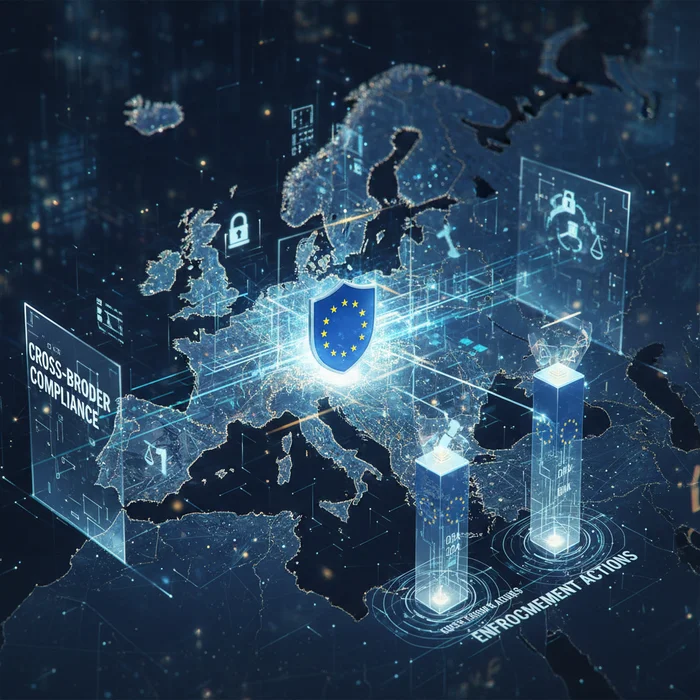
GDPR protects personal data and privacy rights; NIS2 secures critical services and infrastructure. If an attack hits your platform and leaks PII, both sets of rules may apply—one for service disruption, one for data protection.
Do SMEs have to comply with NIS2?
Yes if they operate in a covered sector and meet the criteria (e.g., size and criticality). Some smaller entities can be in scope due to systemic importance (e.g., niche providers in critical supply chains).
What are the NIS2 reporting timelines?
Initial early warning within 24 hours, an update within 72 hours, and a final report within one month for significant incidents, coordinated with national CSIRTs and regulators.
How can I anonymize documents safely for audits?
Use an AI anonymizer to remove names, IDs, and contact details while keeping documents readable. Then submit through a secure document upload process to maintain chain of custody and confidentiality.
Getting to done: your next 14 days
- Confirm scope: list essential services, owners, and assets; identify suppliers touching those services.
- Publish a one-page NIS2 policy signed by an executive; schedule a board briefing.
- Stand up a 24h/72h/1-month incident reporting playbook and run a one-hour drill.
- Close the biggest gaps: MFA for admins, internet-facing patch backlog, SIEM coverage for cloud logs.
- Harden supplier contracts and agree on joint incident procedures.
- Move sensitive audits and evidence handling to secure document uploads and bake in anonymization flows for PII.
Conclusion: use this NIS2 compliance checklist to lower risk—and prove it
The difference between a pass and a penalty in 2025 won’t be slogans; it will be artifacts: asset inventories linked to essential services, incident drill outputs, supplier clauses, and redacted evidence you can share without breaching privacy. Use this NIS2 compliance checklist as your blueprint, and remove friction by processing sensitive files through www.cyrolo.eu—where anonymization and secure document uploads help you meet EU regulations, pass security audits, and keep privacy breaches out of the headlines.