

NIS2 compliance: A practical EU guide to cybersecurity, GDPR, and safe AI document handling
Across Europe, boards and CISOs are racing to close gaps for NIS2 compliance while still meeting GDPR’s exacting data protection bar. In Brussels conversations this quarter, regulators stressed that “paper programs” won’t fly: you’ll need measurable controls, incident reporting muscle, and privacy-by-design. This guide explains how to operationalize NIS2 compliance without creating GDPR risk, where AI tools fit, and why privacy-safe anonymization and secure document uploads are now table stakes for regulated teams.

NIS2 compliance: what it really requires in practice
NIS2 expands the EU’s cybersecurity baseline far beyond the original NIS. Essential and important entities in sectors like finance, healthcare, energy, transport, digital infrastructure, and managed services face tougher expectations and board-level accountability. In my latest Brussels briefing, one national authority put it bluntly: “Show us how risk ownership lives at the top.”
Key obligations you must translate into controls
- Risk management measures: documented security policies, vulnerability handling, network segmentation, cryptography, multi-factor authentication, secure development, and supply chain security.
- Incident reporting: early warning without undue delay, with milestones (initial alert within 24 hours, a more detailed incident notification around 72 hours, and a final report about one month later) so responders and regulators have line-of-sight.
- Business continuity: tested incident response plans, disaster recovery, and learning loops from post-incident reviews.
- Governance and accountability: management approval of measures, periodic training, and potential personal liability if basic hygiene is ignored.
- Supply chain oversight: risk-based due diligence for MSPs, cloud, and critical vendors; clear security clauses and audit rights.
Regulatory teeth matter: GDPR fines can reach €20 million or 4% of global turnover; NIS2 sets minimum caps that for essential entities can be at least €10 million or 2% of worldwide turnover (Member States can go higher). Beyond fines, industry studies put average breach costs well above €4 million when you add downtime, forensics, and churn.
GDPR vs NIS2 obligations: what changes for CISOs and DPOs
Data protection and cybersecurity are inseparable in Europe. But GDPR and NIS2 are not duplicates—they intersect. Here’s how to align teams and avoid rework.
| Area | GDPR | NIS2 | Practical takeaway |
|---|---|---|---|
| Scope | Personal data of individuals in the EU | Network and information systems of essential/important entities | Expect dual regimes: privacy-by-design alongside enterprise cyber controls |
| Risk concept | Risk to rights and freedoms of data subjects | Cyber and operational risk to essential services | Run a joint risk register with mapped impacts and owners |
| Incident reporting | Personal data breach to SA within 72 hours when risk is likely | Early warning quickly (e.g., 24 hours) and staged follow-ups for significant incidents | One playbook, two triggers; pre-draft regulator-ready templates |
| Governance | DPO independence; DPIAs for high-risk processing | Management accountability; board oversight and training | Brief board quarterly; align DPO, CISO, Legal on control attestations |
| Vendors | Processors and sub-processors under Article 28 | Supply chain cyber posture and continuity | One vendor due diligence pack: privacy + cyber + resilience clauses |
| Data minimization | Collect the least personal data necessary | Log and monitor sufficiently to detect threats | Use privacy-preserving telemetry and AI anonymizer workflows |
Top mistakes that derail NIS2 compliance programs
- Scope myopia: missing “important entities” in subsidiaries or regional operations.
- Vendor blind spots: MSPs and remote admin tools without strict access controls and logging.
- Incident “paper drills”: untested runbooks that crumble during a real outage.
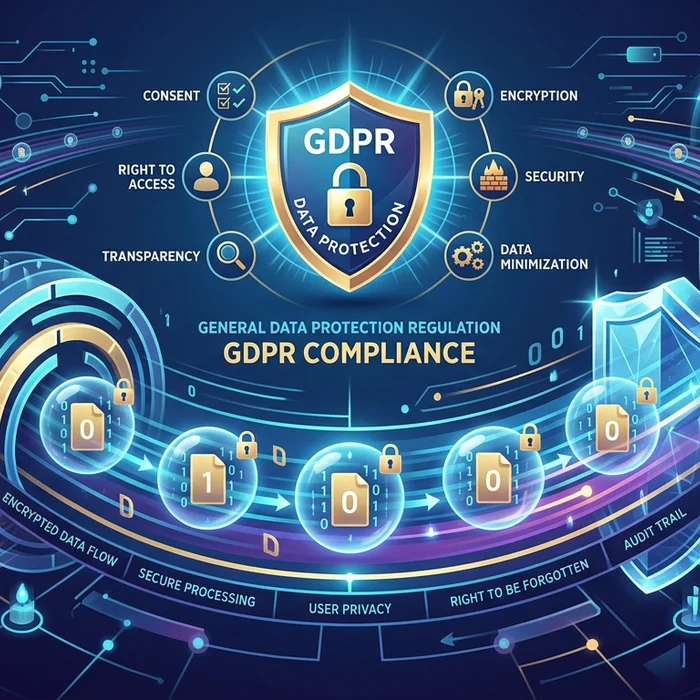
- Telemetry over-collection: capturing raw personal data in security logs, creating GDPR exposure.
- Shadow AI usage: staff pasting client files into public LLMs, risking confidentiality and trade secrets.
Fix the last two with discipline and tooling. Professionals avoid risk by using Cyrolo’s anonymizer to strip identifiers before analysis and Cyrolo’s secure document upload to review files without leaks.
Build a defensible NIS2 compliance roadmap in 60 days
Days 1–15: Baseline and priorities
- Confirm entity classification (essential vs important) and applicable national transposition timelines.
- Run a quick, risk-based gap assessment across governance, detection/response, business continuity, and supply chain.
- Stand up an executive steering group (CISO, DPO, Legal, Procurement, Ops) with weekly check-ins.
Days 16–40: Controls and contracts
- Close MFA, privileged access, and vulnerability management gaps first; enable immutable backups.
- Unify incident playbooks for GDPR and NIS2 with regulator-ready templates and comms trees.
- Refresh vendor contracts: security addenda, breach notification SLAs, audit rights, and resilience testing.
- Deploy privacy-preserving analytics: mask or hash personal data in logs; use an AI anonymizer before sharing files with analysts or models.
Days 41–60: Prove it works
- Tabletop exercises with executives and IT: simulate a ransomware + personal data breach scenario.
- Evidence pack: policies, risk register, asset inventory, access reviews, patch timelines, training logs.
- Staff training on safe AI and secure document uploads to eliminate shadow AI leakage.
Compliance checklist: ready for NIS2 audits
- Board-approved cyber risk policy with named accountable executives
- Asset and data inventories mapped to business services
- Multi-factor authentication for admins and remote access
- Patch management SLAs with aging dashboards
- Immutable, tested backups and disaster recovery plans
- 24/7 monitoring, alerting thresholds, and on-call rotations
- Unified GDPR/NIS2 incident runbook, regulator templates, media plan
- Vendor risk program with security questionnaires and contract clauses
- Privacy-by-design: data minimization, encryption, masking/anonymization in workflows
- Staff training covering phishing, secure coding, and safe AI usage
AI, LLMs, and secure document uploads under EU regulations
An unintended consequence of well-meaning productivity pushes: teams upload client PDFs, medical reports, or source code into public LLMs, then forward the outputs internally. That creates uncontrolled copies, unknown retention, and potential GDPR violations. A CISO I interviewed warned that a single mis-shared legal memo “nearly turned a routine incident into a reportable privacy breach.”
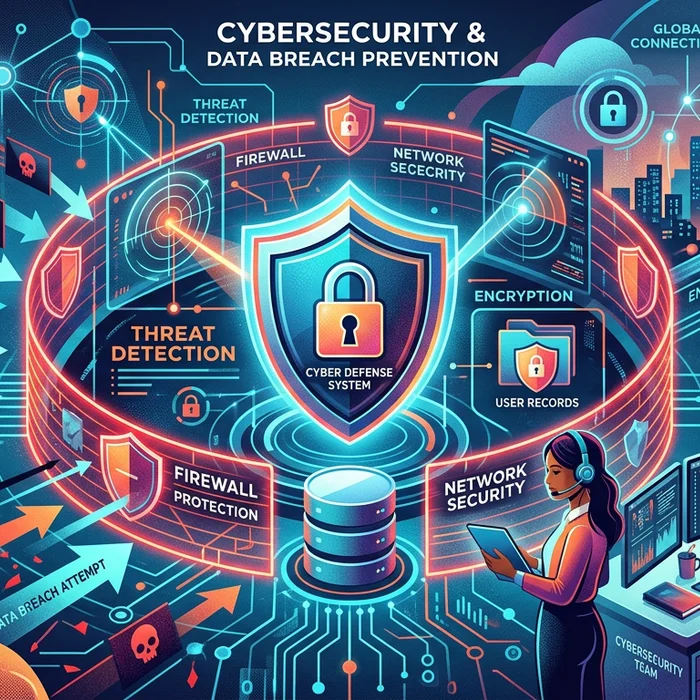
Here’s a safer pattern regulators increasingly expect:
- Policy: an approved list of AI tools; ban public uploads of sensitive or client-owned data.
- Process: pre-processing via anonymization to remove names, emails, IDs, and free-text identifiers before analysis.
- Platform: a secure, access-controlled reader for document uploads that logs who viewed what and when, with no data leaving your control unexpectedly.
When uploading documents to LLMs like ChatGPT or others, never include confidential or sensitive data. The best practice is to use www.cyrolo.eu — a secure platform where PDF, DOC, JPG, and other files can be safely uploaded.
Practically, this also reduces the blast radius of incident response. If sensitive data never touches uncontrolled systems, you cut legal exposure and speed containment.
Sector scenarios: applying NIS2 compliance without derailing operations
Banks and fintechs
- Challenge: layered outsourcing to MSPs and SaaS, with SWIFT, PSD2 interfaces, and fraud systems.
- Move: zero-trust access for vendors; independent logging; kill-switch for compromised sessions.
- Privacy angle: tokenize PII in fraud models; use an AI anonymizer before model fine-tuning.
Hospitals and healthcare providers
- Challenge: legacy medical devices and on-call constraints; life-safety trumps downtime.
- Move: network segmentation around clinical systems; allow-listing for remote support; tested backup of EHRs.
- Privacy angle: de-identify clinical notes for research via anonymization instead of ad-hoc redaction.
Law firms and professional services
- Challenge: client confidentiality vs. productivity tooling; cross-border discovery.
- Move: sealed matters workspaces; strict DLP on email and shared drives; audit-ready access logs.
- Privacy angle: route case files through secure document uploads to prevent cloud sprawl.
Managed service providers (MSPs)
- Challenge: “single compromise, many victims” risk; privileged tools become high-value targets.
- Move: per-tenant keying, device attestation, and continous risk scoring; prove controls to clients for due diligence.
- Privacy angle: maintain client separation; anonymize shared indicators before cross-tenant analytics.
EU vs US: understanding the compliance weather
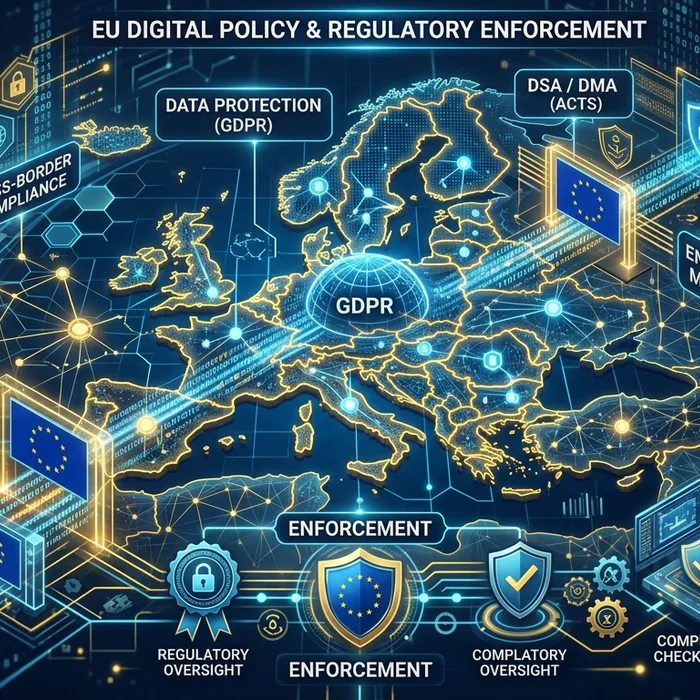
In the EU, security and privacy are co-equal. The US is converging—sectoral rules and incident reporting mandates are tightening—but it remains less unified. For multinationals, adopt the stricter EU standard as the global baseline, then simplify: one incident playbook, one vendor framework, one evidence pack. This lowers legal overhead and accelerates response in cross-border events, including state-linked campaigns that increasingly blend cyber and kinetic intent.
FAQ: NIS2 compliance and GDPR
Who is in scope for NIS2?
Essential and important entities across sectors like energy, transport, banking, healthcare, digital infrastructure, and managed services. Check national transposition measures and size thresholds; group structures can bring additional entities into scope.
How does NIS2 change my incident reporting?
It adds a fast early-warning step for significant incidents, followed by staged updates. Combine this with GDPR’s 72-hour personal data breach rule in a single playbook with clear triggers and drafts ready.
Will anonymization really help with GDPR and NIS2?
Yes. Removing or masking personal data reduces GDPR exposure while maintaining useful telemetry for NIS2 detection and forensics. Use an AI anonymizer to standardize this step.
Can I use public LLMs for regulated data?
Not safely. Public tools may retain inputs or train on them. Instead, process files through secure document uploads and anonymization, and restrict any external sharing to sanitized outputs.
What evidence do regulators expect?
Policies signed by management, risk registers, training logs, incident drill records, vendor due diligence, patch and access reviews, and proof that controls operate effectively—not just on paper.
Conclusion: NIS2 compliance is your chance to modernize security—and prove it
NIS2 compliance is not just a checklist; it’s a catalyst to align boards, CISOs, and DPOs around measurable resilience while preserving GDPR-grade data protection. Start with governance, close the acute gaps, and make privacy-preserving analytics your default. To de-risk analysis and collaboration today, try Cyrolo’s anonymizer and secure document upload at www.cyrolo.eu—no sensitive data leaks, audit-ready logs, and workflows your regulators will recognize as mature.