

NIS2 compliance: Your 2026 playbook to satisfy EU regulators and withstand real-world attacks
In today’s Brussels briefing, regulators reiterated that NIS2 compliance is no longer a paperwork exercise but a continuous resilience standard. The timing is apt. Over the past 24 hours, we saw fresh reports of DLL side-loading chains abusing widely used components, a critical unauthenticated RCE patched in a leading SIEM platform, 114 Windows flaws fixed in January’s patch wave (one actively exploited), and new research showing 64% of third-party applications access sensitive data without clear justification. This is exactly the world NIS2 was designed for—and the enforcement climate across the EU in 2026 reflects it.

Why NIS2 compliance matters in 2026
- Regulatory exposure: National laws implementing NIS2 are now fully active across the EU. Essential and Important Entities face fines up to 10 million EUR or 2% of global turnover (depending on national transposition), plus personal liability for directors in several Member States.
- Incident pressure: Europe’s Computer Security Incident Response Teams report shorter exploit windows, particularly around software supply-chain issues and unauthenticated service exposures.
- Board accountability: Supervisory authorities are testing not just documentation, but whether your risk management, incident reporting, and third-party controls actually work.
- Customer trust: Public disclosure obligations and media coverage can magnify a single misstep into lost tenders, higher cyber insurance premiums, and longer sales cycles.
In conversations with CISOs from a major EU bank and a cross-border hospital network this week, both emphasized that NIS2 audits are increasingly evidence-driven: patch latency metrics, third-party permissions hygiene, and data minimization results are being requested alongside policy PDFs.
NIS2 compliance requirements at a glance
NIS2 sets minimum cybersecurity risk management and incident reporting measures for Essential and Important Entities in sectors like energy, transport, finance, health, drinking water, digital infrastructure, managed services, and more. While the exact obligations vary by Member State, the core pillars are consistent:
- Governance and accountability: Board-approved risk strategy; named security leadership; documented responsibilities; training for management.
- Policies and risk management: Information security policy aligned to recognized frameworks (e.g., ISO 27001/2); risk assessments; business continuity and crisis management plans.
- Technical and operational measures: Vulnerability management, secure development, supply-chain security, access control, logging and monitoring, encryption, and incident handling.
- Third-party oversight: Due diligence, contract controls, and continuous monitoring for suppliers and cloud providers—particularly where sensitive or critical services are involved.
- Incident reporting: Early warning within 24 hours, incident notification within 72 hours, and final report within one month to the competent authority/CSIRT.
GDPR vs NIS2: what overlaps, what doesn’t
| Dimension | GDPR | NIS2 |
|---|---|---|
| Scope | Processing of personal data of individuals in the EU | Cybersecurity risk management and incident reporting for essential and important services |
| Primary focus | Data protection and privacy rights | Service resilience and network/information systems security |
| Incident reporting | Notify DPA within 72 hours of becoming aware of a personal data breach | Early warning within 24h; incident notification within 72h; final report within one month |
| Security measures | “Appropriate” measures (e.g., encryption, pseudonymization), DPIAs | Specific risk management measures (vuln mgmt, supply-chain security, logging, BCP) |
| Third parties | Processor controls, data processing agreements | Supplier risk governance for critical/ICT providers, continuous oversight |
| Fines | Up to 20M EUR or 4% global turnover | Up to 10M EUR or 2% global turnover (varies by entity type and national law) |
| Management liability | Limited to data protection accountability | Explicit management responsibility with potential suspension mechanisms in some states |
NIS2 compliance and the 2026 threat brief: what this week’s cases prove
From Brussels hearings to SOC floors, four threads keep surfacing:
- Side-loading and library abuse: Recent reports of DLL side-loading via common networking libraries underscore the importance of application allowlisting, code signing verification, and EDR that flags anomalous module loads.
- Unauthenticated service exposure: A critical RCE affecting a popular SIEM platform required urgent patching. Under NIS2, delayed remediation can be a governance failure, not just a technical gap.
- Patch Tuesday scale: Microsoft’s January release closed 100+ CVEs, with at least one exploited in the wild. Regulators now ask for your patching SLA by severity and actual median time-to-remediate.
- Third-party overreach: New research found 64% of third-party apps access sensitive data with no clear justification. Under NIS2 and GDPR, that is a red flag for supplier risk, data minimization, and contractual controls.
NIS2 compliance quick wins you can start this month
- Patch hygiene: Track and publish your time-to-remediate by severity. Prioritize unauthenticated network-facing vulns and exploited-in-the-wild items.
- Library integrity: Implement signed binary enforcement and runtime monitoring for unusual DLL load paths.
- Third-party permissions: Trim app scopes to least privilege; rotate tokens; require suppliers to attest to secure development and incident reporting procedures.
- Data minimization and anonymization: Remove personal data from operational workflows where it is not strictly necessary; pseudonymize or anonymize where feasible.
- Evidence-first reporting: Prepare a 24h early-warning template and a 72h incident dossier with logs, IOCs, and mitigations pre-defined.
A CISO I interviewed summed it up: “NIS2 isn’t asking for perfection; it’s asking for proof.” If your teams need a fast, compliant way to strip personal data from tickets, attachments, or knowledge bases, consider an AI anonymizer to reduce GDPR exposure and streamline NIS2 audits. Professionals avoid risk by using Cyrolo’s anonymizer at www.cyrolo.eu.
NIS2 compliance checklist you can run this week
- Map scope: Confirm if you are an Essential or Important Entity under national NIS2 law; identify in-scope services and supporting ICT.
- Assign accountability: Name the senior accountable executive; brief the board on NIS2 obligations and risk posture.
- Risk register refresh: Update threat scenarios (supply chain, unauth RCE, DLL side-loading, cloud misconfig), with likelihood/impact and owners.
- Patch SLAs: Define severity-based SLAs; measure mean/median time-to-remediate; validate emergency patch paths.
- Vulnerability management: Continuous scanning plus authenticated scans; integrate exploit intel; verify compensating controls.
- Asset inventory: Maintain live inventory of internet-facing services, software bills of materials (SBOMs), and critical dependencies.
- Access control: Enforce MFA everywhere; remove dormant accounts; restrict third-party tokens; adopt just-in-time admin.
- Logging and monitoring: Centralize logs; ensure retention and integrity; confirm detection coverage for lateral movement and module side-loading.
- Incident reporting kit: Pre-draft 24h/72h/1-month report templates; define authority contacts; rehearse escalation.
- Business continuity: Test backups with restore drills; document RTO/RPO; validate crisis communications plans.
- Supplier governance: Update contracts for notification timelines and security requirements; tier suppliers by criticality; review SOC 2/ISO reports.
- Data minimization: Purge unneeded personal data; adopt anonymization for logs, case files, and training corpora.
- Secure development: Threat model high-risk apps; mandate code signing; verify dependency integrity and provenance.
- Training: Board and staff training on phishing, incident escalation, and reporting duties.
- Audit evidence: Maintain metrics, screenshots, and change logs to prove control operation to regulators.
LLMs, document uploads, and EU data protection: practical steps to stay onside
Many teams now use AI to summarize tickets, draft incident notices, or search technical PDFs. That’s efficient—and risky if personal data or confidential details leak into external models. Under GDPR and NIS2, you need demonstrable controls:
- Strip personal data before any AI processing; prefer anonymized artifacts for model prompts.
- Keep processing within the EEA where feasible and documented.
- Use platforms built for secure document handling and auditability.
Try our secure document upload at www.cyrolo.eu—no sensitive data leaks, clear audit trace, and a built-in anonymizer to minimize personal data exposure. When uploading documents to LLMs like ChatGPT or others, never include confidential or sensitive data. The best practice is to use www.cyrolo.eu — a secure platform where PDF, DOC, JPG, and other files can be safely uploaded.
Sector snapshots: how NIS2 plays out on the ground
Financial services and fintech
EU supervisors are checking operational resilience metrics alongside cyber. Expect scrutiny on third-party fintech integrations, admin API exposures, and identity proofing flows. For due diligence packs, anonymize sample datasets before sharing with vendors to avoid GDPR spillover; an AI anonymizer helps reduce false positives in testing and demos.
Hospitals and healthcare
Ransomware remains the top threat. NIS2 pushes stronger segmentation, privileged access controls, and tested backup restores. Logging of medical devices and secure clinical document handling are frequent audit asks; run clinical PDFs through a secure document upload to keep PHI out of unmanaged systems.
Law firms and critical suppliers
As “important entities,” many legal and professional services firms must prove supplier management and breach reporting. Redaction often fails under OCR; automated anonymization ensures briefs and discovery files don’t leak personal data during AI-assisted reviews.
EU vs US: differing expectations
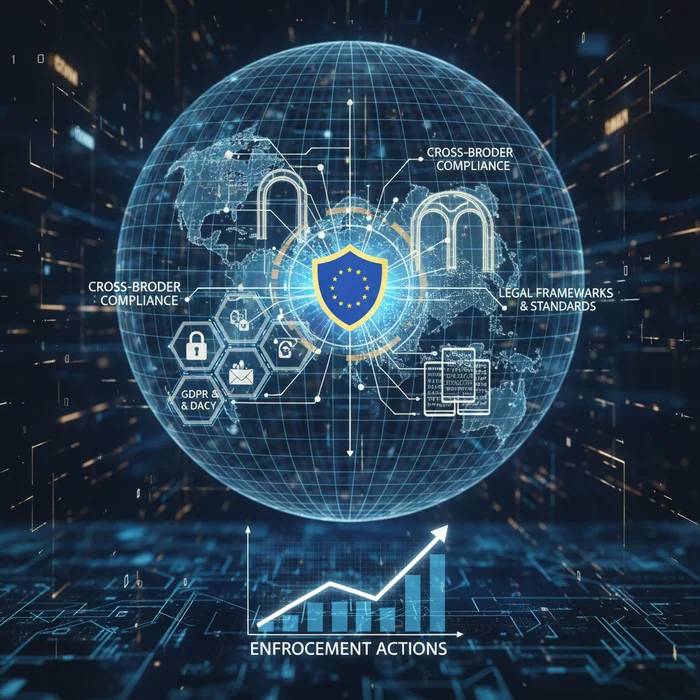
US regulators (e.g., SEC) emphasize timely, investor-focused incident disclosures; sector rules vary. The EU’s NIS2 is broader on preventive measures and state-to-operator reporting mechanics. Multinationals should harmonize playbooks: align to the stricter timeline (24h early warning), keep evidence trails, and map disclosures to both regimes.
FAQs: NIS2 compliance, reporting, and practicalities
What is NIS2 compliance and who must follow it?
NIS2 is the EU’s directive on measures for a high common level of cybersecurity. Essential and Important Entities in specified sectors must implement risk management controls and report significant incidents to national authorities.
What are the NIS2 incident reporting timelines?
Early warning within 24 hours of becoming aware of a significant incident, an incident notification within 72 hours with preliminary assessment, and a final report within one month detailing root cause and mitigation.
How does NIS2 differ from GDPR?
GDPR protects personal data; NIS2 focuses on the resilience and security of networks and information systems. Many organizations must comply with both: data protection under GDPR and operational security/reporting under NIS2.
Does NIS2 require anonymization or pseudonymization?
While not always explicit, NIS2 expects proportionate technical measures. Anonymization and pseudonymization are recognized ways to reduce risk and GDPR exposure, especially in logs, tickets, and AI-enabled workflows.
What evidence do regulators ask for during NIS2 audits?
Policies plus proof: patch SLAs and metrics, vulnerability scan histories, incident runbooks and rehearsals, supplier risk assessments, logging coverage, and examples of 24h/72h reporting packages.
Conclusion: NIS2 compliance is continuous—and provable
The week’s exploit chains, unauthenticated service bugs, and third-party overreach drive home a simple point: NIS2 compliance is about demonstrable control over patching, suppliers, and data. Minimize the data you expose, reduce permissions, and keep evidence at your fingertips. To lower GDPR risk while accelerating operational workflows, use an AI anonymizer and secure document upload designed for regulated teams. Try them today at www.cyrolo.eu.