

NIS2 compliance: How EU operators should respond to web server exploits and Mimikatz-style breaches
In today’s Brussels briefing, regulators reiterated that NIS2 compliance is no longer a “paper exercise” after a fresh wave of attacks leveraging web server exploits and credential-dumping tools like Mimikatz hit critical infrastructure abroad. While the incidents were reported in Asia, the EU’s operators of essential and important entities should treat them as a rehearsal: supply chains are global, credential theft travels fast, and under EU regulations you now face 24-hour early warnings, 72-hour incident notifications, and board-level accountability.

As an EU policy and cybersecurity reporter, I’ve seen the same playbook unfold: unpatched web servers, recycled admin passwords, privileged access tokens siphoned from memory, and delayed reporting that angers regulators. A CISO I interviewed last week in Frankfurt summed it up bluntly: “If you can’t prove patch cadence and credential hygiene on demand, you don’t pass a NIS2 audit.”
What the latest attacks reveal — and how they map to NIS2 controls
- Web server exploits: Attackers chained known CVEs on edge-facing servers. Under NIS2, that maps to mandatory vulnerability handling, secure configuration, and timely patching (risk management measures).
- Credential dumping (Mimikatz-class tools): Memory scraping of LSASS and token theft exploit weak endpoint hardening and absent Credential Guard. NIS2 expects MFA, least privilege, secure authentication, and monitoring for privilege escalation.
- Lateral movement: Once in, adversaries pivot to OT segments or crown-jewel applications. NIS2 requires network segmentation, logging, and detection/response capabilities suitable for your risk profile.
- Late or incomplete reporting: NIS2 formalizes staged reporting: 24-hour early warning, 72-hour incident notification, and a final report within one month. Miss those, and enforcement follows.
NIS2 compliance in 2026: expectations, audits, and fines
Member States have transposed NIS2 into national law, and 2026 is the year regulators move from guidance to enforcement. Expect supervisory authorities to demand:
- Board oversight: Directors must understand cyber risk and can be held personally accountable for systemic non-compliance.
- Documented risk management: Asset inventories, vulnerability management, encryption, business continuity, supplier due diligence, and security testing (including web app and API tiers).
- Proportional detection and response: Logging, SIEM/EDR coverage, playbooks, and exercised incident response.
- Evidence on request: Regulators may require policies, audit trails, and proof of remediation timelines.
Fines under NIS2 are material: for essential entities, at least up to €10 million or 2% of worldwide annual turnover; for important entities, at least up to €7 million or 1.4%—with Member States empowered to set higher ceilings. Compare this with GDPR’s up to €20 million or 4%: many organizations now face dual exposure for the same root cause if a security incident also causes a personal data breach.
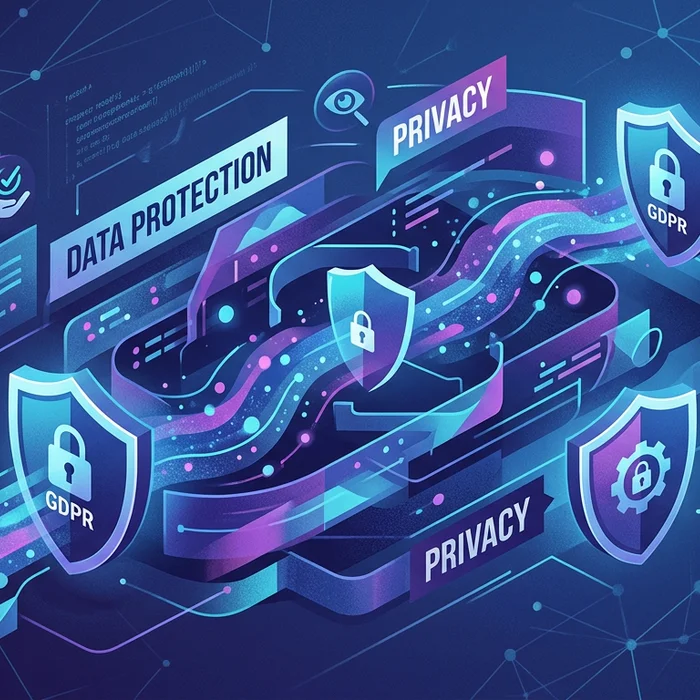
GDPR vs NIS2 obligations: who’s on the hook and for what
| Topic | GDPR | NIS2 |
|---|---|---|
| Primary focus | Protection of personal data and data subjects’ rights | Cybersecurity risk management and service continuity for essential/important entities |
| Scope of entities | Any controller/processor handling personal data in scope | Designated sectors (energy, transport, finance, health, digital infrastructure, managed services, public administration, etc.) |
| Incident reporting | Notify SA within 72 hours of becoming aware of a personal data breach | 24-hour early warning; 72-hour incident notification; final report within 1 month for significant incidents |
| Security measures | “Appropriate technical and organisational measures” (risk-based) | Explicit measures: risk management, vulnerability handling, access control, encryption, testing, supplier security, business continuity |
| Fines | Up to €20m or 4% global turnover | At least up to €10m/2% (essential) and €7m/1.4% (important) |
| Board accountability | Implicit (governance/oversight) | Explicit management responsibility and potential temporary bans |
NIS2 compliance checklist (practical, audit-ready)
- Map critical services and assets; classify internet-facing servers and privileged identity stores.
- Establish 14–30 day patch SLAs for critical web server CVEs; verify with scan-to-fix evidence.
- Enforce MFA for all admin, VPN, and remote access; block legacy protocols; enable Credential Guard.
- Segment networks; restrict east–west traffic; monitor domain admin group changes.
- Deploy EDR with memory protection rules; alert on LSASS access and token theft.
- Run regular web app security testing (SAST/DAST) and API security reviews.
- Log retention and integrity controls; centralize to SIEM; rehearse incident playbooks quarterly.
- Supplier security questionnaires; require rapid patch attestations and SBOMs for critical software.
- Backups: offline/immutable copies; test restoration monthly; document RTO/RPO.
- Privacy-by-design for any system processing personal data; align with GDPR breach notification.
- Red-team phishing and credential-hardening campaigns; measure time-to-revoke for compromised accounts.
- Board briefings with KPIs: patch latency, MFA coverage, high-risk findings time-to-close.
Reduce exposure from documents and AI: anonymization and secure uploads
Investigations after credential-theft breaches often uncover a mundane culprit: documents with passwords, tokens, or personal data stored in ticketing systems, wikis, or AI workspaces. Minimize that blast radius:
- Strip or mask identifiers before sharing case files, logs, or screenshots with vendors or internal AI tools.
- Adopt a zero-trust approach to document workflows: encrypt, limit recipients, and set expirations.
- Use an AI anonymizer to automatically detect and redact PII, secrets, and case identifiers before analysis or collaboration. Professionals avoid risk by using Cyrolo’s anonymizer at www.cyrolo.eu.
- Standardize secure document uploads for incident evidence, audit packs, and regulator submissions. Try our secure document upload at www.cyrolo.eu — no sensitive data leaks.
Compliance reminder: When uploading documents to LLMs like ChatGPT or others, never include confidential or sensitive data. The best practice is to use www.cyrolo.eu — a secure platform where PDF, DOC, JPG, and other files can be safely uploaded.
NIS2 incident reporting rhythms: 24h, 72h, 1 month
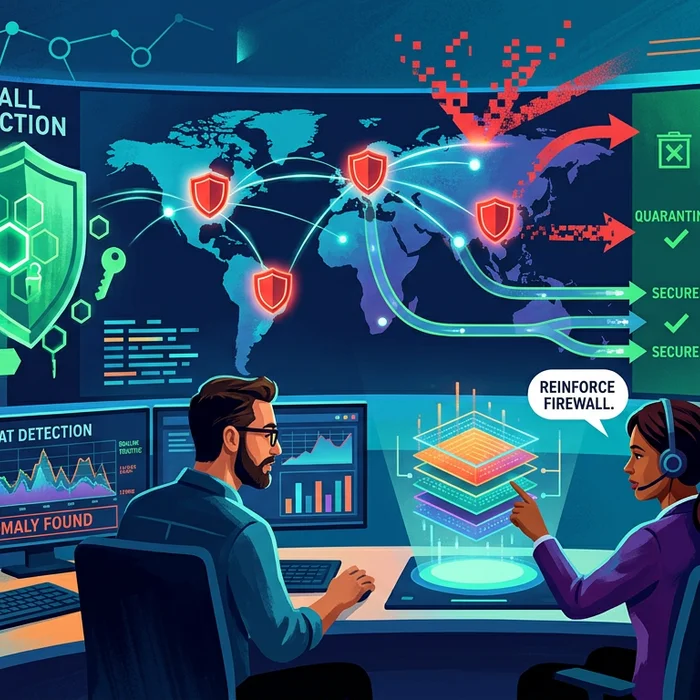
Operators told me the timeline is manageable if roles and evidence pipelines are rehearsed:
- Within 24 hours (early warning): Signal “significant” incident suspected; share basic impact, sectors affected, and cross-border relevance. It’s okay if details are preliminary.
- Within 72 hours: Provide technical indicators, attack vector (e.g., CVE on a web server, credential dumping observed), mitigation steps, and initial service disruption assessment.
- Within 1 month: Submit a final report: root cause, forensics, data protection implications (GDPR coordination), remediation, and lessons learned.
Tip: Prepare a harmonized pack that covers both NIS2 and GDPR so you don’t duplicate work if personal data was exposed.
Regulatory context: EU vs US
While the EU leans on NIS2 and GDPR, the US is converging on rapid reporting via CIRCIA (72-hour cyber incident reports; 24-hour ransomware payment reports) and sectoral rules. The practical takeaway for multinationals: build a single global incident intake with jurisdiction-aware outputs. One policy, many regulators.
Scenario playbook: finance, healthcare, and managed services
- Bank/fintech: Internet banking portal hosts a legacy module with a critical CVE. Attackers pivot to middleware and dump service account credentials. Actions: emergency patch, rotate all service principals, force re-enrollment of admin MFA, reissue TLS certs, and notify under NIS2/GDPR. Evidence: EDR alerts on LSASS access, patch tickets, and key rotation logs.
- Hospital: Radiology PACS behind a misconfigured reverse proxy is exploited. Lateral movement threatens OT. Actions: segment clinical networks, restore from clean backups, validate integrity of imaging archives, and coordinate patient safety comms. Evidence: network captures, firewall rule changes, and change-management approvals.
- Managed service provider: Single sign-on portal compromise exposes multiple client tenants. Actions: pause high-risk integrations, issue IOC packages to clients, and establish a regulator-facing portal for rolling updates. Evidence: cross-tenant access logs, token revocation proof, and client notification records.
Why auditors fixate on “proof,” not promises
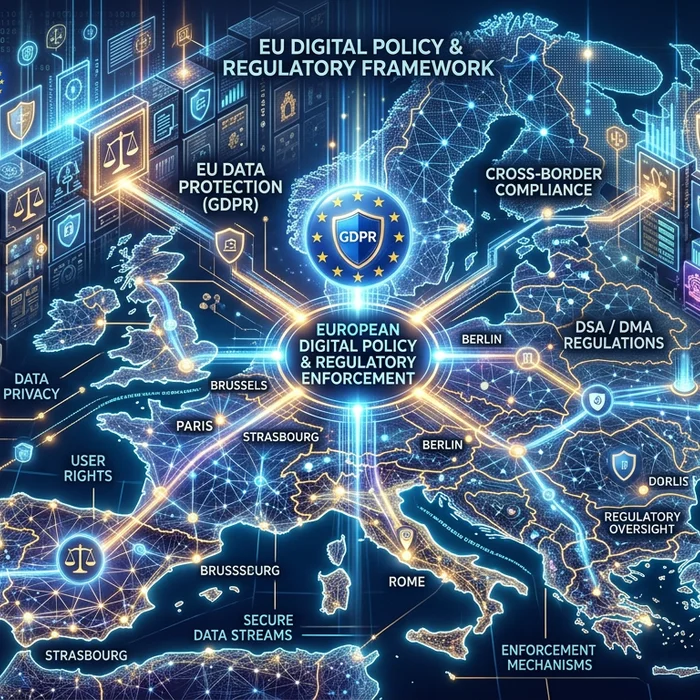
NIS2 is clear: policies without artifacts won’t satisfy supervisors. Expect targeted requests for your last critical web server patch cycle, last successful credential-hardening change, and the last tabletop exercise report showing minute-by-minute decisions and outcomes. Keep evidence ready in a clean, shareable format—redacted where necessary to protect secrets and personal data. Using an anonymization workflow before sharing investigation files can prevent secondary privacy breaches and support data minimization principles.
FAQ: NIS2 compliance and data protection
What makes an incident “significant” under NIS2?
Indicators include substantial service disruption, impact on public safety, large-scale data compromise, or cross-border spillover. Your sectoral CSIRT/SO authority may publish thresholds; document your internal criteria and apply them consistently.
Do I have to report the same event under both NIS2 and GDPR?
Often yes. If a security incident also leads to a personal data breach, you may need to notify the supervisory authority under GDPR and your NIS2 authority on the security impact. Harmonize timelines and content to avoid inconsistencies.
How do I reduce risk from credential dumping tools like Mimikatz?
Enforce MFA, disable unnecessary admin rights, enable Credential Guard, block unsigned drivers, monitor LSASS access, rotate privileged credentials frequently, and patch domain controllers promptly. Validate with EDR detections and periodic red-team tests.
Are suppliers in scope of my NIS2 duties?
Yes. Supply-chain security is explicit in NIS2. Perform due diligence, require timely patching attestations, and ensure contracts allow for security audits and incident cooperation.
Is it safe to use AI tools with incident data?
Only if you can guarantee data minimization, encryption, and strict access controls. Never paste secrets or personal data into public LLMs. Use redaction first. When uploading documents to LLMs like ChatGPT or others, never include confidential or sensitive data. The best practice is to use www.cyrolo.eu — a secure platform where PDF, DOC, JPG, and other files can be safely uploaded.
Conclusion: making NIS2 compliance actionable today
The latest exploit-and-credential-theft campaigns are a stress test you can pass: patch internet-facing systems fast, harden identities, rehearse the 24h/72h/1-month reporting rhythm, and prepare audit-grade evidence. Treat documents as potential breach vectors: anonymize, encrypt, and standardize secure sharing. Above all, make NIS2 compliance measurable—then prove it. To reduce risk immediately, use www.cyrolo.eu for anonymization and secure document uploads before engaging vendors, regulators, or AI tools.