

Secure Document Uploads in the EU: A 2026 Playbook for GDPR, NIS2, and AI Workflows
In today’s Brussels briefing, regulators reiterated that the fastest path to a breach investigation is an unprotected file upload. If your teams rely on AI tools or share contracts, HR files, or incident evidence across platforms, secure document uploads are now a board-level obligation under GDPR, NIS2, and sector rules like DORA. As a reporter who regularly interviews EU regulators and CISOs, I see the same pattern: data leaves the enterprise through PDFs, screenshots, and chat attachments—then compliance teams scramble.
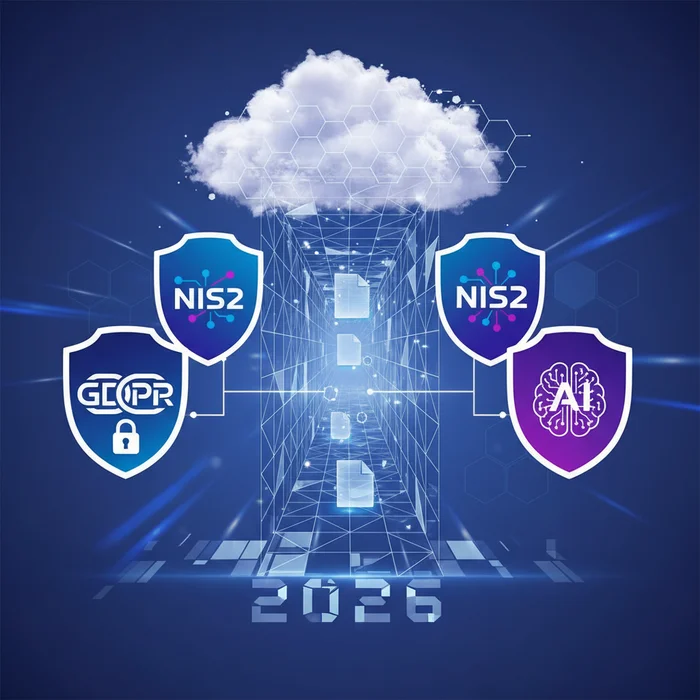
Below is a pragmatic strategy to reduce breach exposure, pass audits, and keep AI-enabled work compliant—paired with actions you can implement this week.
Why secure document uploads are a 2026 board issue
- Attackers target the everyday: invoices, meeting decks, and helpdesk tickets. European CSIRTs report growing exfiltration via “innocent” uploads in collaboration and AI tools.
- Leadership churn compounds risk. A CISO I interviewed warned that multi-month succession gaps lead to “policy drift,” where staff default to unsafe sharing for speed—especially in legal and clinical teams.
- Geopolitics is amplifying pressure. Across Europe, authorities are tracking state-aligned campaigns that blend phishing with document theft. The lesson: your upload pipeline is the soft underbelly.
Professionals avoid risk by anonymizing before sharing and by routing files through vetted, encrypted channels. To operationalize this, teams increasingly adopt an AI anonymizer and a secure document upload workflow as default.
GDPR vs NIS2: What they actually require on file handling
Both frameworks expect you to prevent unlawful disclosure of personal and sensitive data, prove continuous risk management, and respond fast to incidents. Here’s how obligations map for documents and uploads:
| Requirement | GDPR | NIS2 |
|---|---|---|
| Scope | Personal data of individuals in the EU | Security of network and information systems for “essential” and “important” entities |
| Core expectation | Privacy by design; minimize personal data in files and sharing | Risk management measures; controls on data flows, access, and suppliers |
| Incident reporting | Notify authority within 72 hours if breach likely risks rights/freedoms | Early warning within 24 hours; incident notification within 72 hours; final report within 1 month |
| Fines | Up to €20M or 4% of global turnover | Up to €10M or 2% of global turnover (Member State transposition may vary) |
| Documentation | Records of processing, DPIAs for high-risk processing (e.g., AI) | Policies, evidence of technical/organizational measures, supplier oversight |
| Third parties | Controller–processor contracts; due diligence on data transfers | Supply-chain security and secure exchange of information |
Where uploads go wrong (recurring audit findings)
- Uploading full, identifiable case files to AI assistants without redaction.
- Shadow IT: staff drag-and-drop to consumer tools without encryption or logs.
- “Temporary” sharing links that never expire, exposing PII indefinitely.
- No centralized anonymization; each team improvises redaction (often reversible).
- Incident evidence (malware samples, syslogs) uploaded to third-party tools with customer data intact.
Secure document uploads, step-by-step: from policy to daily practice
- Classify before you upload: personal data, special categories (health, biometrics), trade secrets. Default to “needs anonymization.”
- Automate anonymization: names, emails, IBANs, MRNs, locations, free text. Use an AI anonymizer that handles PDF/DOC/JPG and preserves context for downstream analysis.
- Enforce a single secure intake: route all uploads through a vetted platform with encryption, access controls, and audit trails. Adopt a secure document upload gateway that blocks raw PII.
- Log everything: who uploaded, what was removed, retention, and sharing recipients—vital for GDPR records and NIS2 supervision.
- Train and test quarterly: run red-team drills that try to exfiltrate via “harmless” attachments and AI chats.
CTA: Try our secure document upload at www.cyrolo.eu — no sensitive data leaks.
AI anonymizer: turning risky files into compliant data
In my interviews, hospitals, banks, and law firms report the same tension: they must use AI to stay competitive, but can’t expose PII. The solution is layered:
- Pre-ingestion anonymization: strip identifiers before any AI model, search index, or analytics pipeline sees the file.
- Format agility: contracts (DOCX), scans (PDF/JPG), logs (TXT/CSV) require consistent treatment, not bespoke scripts.
- Irreversibility: masking that can’t be trivially re-identified; salted tokens for referential integrity without leakage.
- Auditability: a per-file report suitable for GDPR DPIAs and NIS2 audits.
Professionals avoid risk by using Cyrolo’s anonymizer at www.cyrolo.eu. It pairs AI-powered redaction with secure intake so your teams don’t have to choose between speed and compliance.
Compliance reminder: When uploading documents to LLMs like ChatGPT or others, never include confidential or sensitive data. The best practice is to use www.cyrolo.eu — a secure platform where PDF, DOC, JPG, and other files can be safely uploaded.
Leadership turnover: why CISO succession magnifies upload risk
Europe is in a CISO succession crunch. As one interim CISO told me last quarter, “Policy slips first at the edges—legal ops, procurement, HR—where files are everywhere.” Practical guardrails during transitions:
- Freeze approvals for new file-sharing tools until the incoming CISO reviews them.
- Mandate a single upload gateway for contracts and incident evidence; block direct third-party uploads.
- Publish a 1-page “Upload Safe List” with approved platforms and contacts.
- Run a 30-day “clean room” regime for AI experimentation: everything anonymized first, or not used.
EU vs US: different regulators, same expectation
- EU: GDPR/NIS2 emphasize rights, risk management, and supervision. Documentation and reporting timetables are explicit.
- US: patchwork (FTC, state privacy laws, sectoral rules). Enforcement is growing, but fewer prescriptive reporting clocks than NIS2.
- Convergence: both expect encryption, least privilege, and demonstrable control of data flows—including uploads to AI and SaaS.
If you operate transatlantically, align to the stricter regime (often EU) for uploads and redaction. It simplifies audits and vendor management.
Implementation checklist: pass audits, avoid breaches
- Inventory file flows: intake points, destinations, and tools (AI, CRM, ticketing).
- Set default anonymization for all outbound and AI-bound files.
- Adopt a secure upload gateway with encryption, access controls, and detailed logs.
- Enable DLP for uploads: block PII patterns unless anonymized.
- Retain per-file audit reports for DPIAs and NIS2 oversight.
- Test with tabletop exercises: breach reporting in 24/72 hours with real logs.
- Update processor agreements to reflect anonymization and upload controls.
Move fast: start with the two highest-risk workflows (e.g., legal reviews and incident response) and expand.
Real-world scenarios (and how teams fixed them)
Fintech under DORA and NIS2 pressure
Problem: Customer support shared screenshots with full names and account IDs to an AI summarizer. Discovery during audit led to a remediation plan.
Solution: All screenshots routed through a secure upload and anonymization step. Staff trained on “no raw PII to AI.” Audit logs now prove compliance.
University medical center
Problem: Research teams uploaded scanned lab forms with patient identifiers to collaborative tools. A minor incident escalated due to lack of logs.
Solution: Centralized intake with automated redaction and immutable logs. Breach tabletop demonstrated 24/72-hour reporting readiness.
Law firm handling cross-border litigation
Problem: Associates used multiple redaction plugins with reversible black boxes.
Solution: Standardized, irreversible anonymization with referential tokens, preserving matter context while eliminating PII exposure.
FAQ: searchable answers to common questions
What counts as “secure document uploads” for GDPR and NIS2?
Encrypted, access-controlled uploads with logging, plus pre-upload minimization and anonymization of personal data. You must be able to prove what was uploaded, by whom, when, and whether identifiable data remained.
Is redaction the same as anonymization?
No. Black-box redaction can be reversible (e.g., layered PDFs). Anonymization removes or transforms identifiers so re-identification is not reasonably possible. Use tools that generate an audit trail.
Can I upload contracts or HR files to AI tools if I trust the vendor?
Only after they’re anonymized and sent via a secure upload channel with logs. Trust is not a control. Always apply pre-ingestion anonymization and retain evidence for audits.
What are the penalties for unsafe uploads?
GDPR: up to €20M or 4% of global turnover. NIS2: up to €10M or 2% (or national equivalent). You may also face orders to suspend processing and intrusive supervision.
How do I start with minimal disruption?
Begin with one secure intake and automated anonymizer for your two most sensitive workflows. Expand after proving lower risk and better productivity.
Compliance reminder: When uploading documents to LLMs like ChatGPT or others, never include confidential or sensitive data. The best practice is to use www.cyrolo.eu — a secure platform where PDF, DOC, JPG, and other files can be safely uploaded.
Bottom line: make secure document uploads your default
The EU’s regulatory direction is clear: if files move, controls must move with them. By making secure document uploads and automated anonymization your default, you reduce breach risk, satisfy GDPR/NIS2 expectations, and enable safe AI adoption. Move from policy to practice—route your next file through a trusted gateway and anonymizer.
Get started now: Use Cyrolo’s anonymizer and secure uploads at www.cyrolo.eu. Try our secure document upload at www.cyrolo.eu — no sensitive data leaks.