

AI anonymizer: The 2025 EU playbook for GDPR and NIS2-safe document workflows
In today’s Brussels briefing, regulators reiterated a blunt truth: if you touch personal data and operate critical services, you will be audited. An AI anonymizer and secure document uploads are no longer “nice to have”—they are core controls for GDPR and NIS2. The question for CISOs, DPOs, and legal teams is how to implement them without slowing down case work, threat analysis, or product delivery.

As one CISO I interviewed put it: “We can’t research threats, train models, or collaborate with outside counsel if every dataset is a leak risk.” The point was underscored this week by a US dispute over a hate-speech researcher’s rights; even where speech is protected, cross-border investigative work can still expose teams to privacy complaints and regulator scrutiny. In the EU, your documentation and data minimization controls decide how regulators judge you after an incident.
Why an AI anonymizer is now essential under GDPR and NIS2
EU enforcement is shifting from principles to proof. Supervisory authorities expect verifiable data minimization, demonstrable legal bases, and safe processing—especially when AI is in the loop. Under the GDPR, failure to protect personal data can mean fines up to the greater of €20 million or 4% of worldwide turnover. Under NIS2, essential entities face penalties up to at least €10 million or 2% of global turnover; important entities up to at least €7 million or 1.4%.
Key points I heard from EU officials and auditors this quarter:
- Anonymization vs. pseudonymization: True anonymization removes identifiability irreversibly. Pseudonymization (tokenizing, masking) still counts as personal data. If you feed pseudonymized data into AI or third-party tools, you remain fully under GDPR.
- NIS2 elevates operational security: It adds duties on risk management, supply chain controls, incident reporting (24 hours early warning; 72 hours notification; final report in one month), and governance. Poor document handling and unsafe uploads are now a cybersecurity compliance issue—not just privacy.
- LLM workflows are risky by default: Uploads to generic models often create uncontrolled copies, ambiguous reuse rights, and cross-border transfers. Regulators will ask how you prevented leakage, not how quickly you typed “do not train” in a prompt.
Solution-minded teams are moving sensitive processing into controlled environments: an AI anonymizer at the edge of the workflow, and a secure document upload channel that keeps regulated files out of unmanaged models.
Real-world exposure scenarios
- Banks/fintech: Transaction exports shared with a model to detect fraud contain IBANs, names, device IDs. Without reliable redaction, that’s a reportable personal data breach if exfiltrated or mishandled.
- Hospitals: Radiology reports and discharge summaries fed to an AI assistant must remove direct identifiers (names, MRNs) and sensitive diagnoses to a standard that survives re-identification attempts.
- Law firms: Discovery bundles uploaded to a general LLM risk privilege waivers and cross-border transfers. Even pseudonyms + context can re-identify the client.
- Critical infrastructure (NIS2): Incident reports with staff rosters, shift logs, and vendor contacts are “security data” and “personal data.” Leaks trigger both GDPR and NIS2 notification clocks.
GDPR vs NIS2: what changes for redaction and secure uploads
| Obligation | GDPR | NIS2 |
|---|---|---|
| Scope | Personal data processing across all sectors | Cybersecurity risk management for “essential” and “important” entities in key sectors and digital providers |
| Core duty | Lawful basis, data minimization, security of processing | Technical/organizational controls, supply-chain security, incident handling, governance accountability |
| Incident reporting | Notify DPA within 72 hours of a personal data breach | Early warning within 24 hours; incident notification within 72 hours; final report within 1 month to CSIRT/competent authority |
| Sanctions | Up to €20M or 4% global turnover (higher applies) | Essential: at least €10M or 2% turnover; Important: at least €7M or 1.4% |
| Data handling focus | Personal data protection; anonymization makes data fall outside GDPR | Operational resilience; poor data handling is a security failure affecting continuity and reporting duties |
| Third-country risks | International transfers (SCCs, TIAs) strictly scrutinized | Cross-border service chains must meet equivalent security posture |
2025 compliance checklist: anonymization and secure document workflows
- Map every workflow where files are exported, shared, or uploaded to tools (LLMs, contractors, analytics). Label lawful basis and transfer pathways.
- Classify data fields by identifiability. Specify which are fully anonymized vs pseudonymized—and how you measured re-identification risk.
- Place an AI anonymizer before any external processing. Automate detection and redaction of PII, PHI, financial identifiers, and quasi-identifiers.
- Use secure document uploads with access controls, audit trails, and no data retained beyond the session unless explicitly required.
- Block unmanaged LLM endpoints by default. Provide a sanctioned alternative with DPIAs, DPAs, and incident response integration.
- Train staff on prompt hygiene and “minimum necessary” sharing. Test with red-team re-identification exercises.
- Log anonymization decisions, versions, and exceptions. You will need this for regulators and for chain-of-custody in litigation.
- Align incident playbooks: GDPR 72h and NIS2 24/72h clocks must be coordinated with DPO, CISO, counsel, and sector CSIRTs.
How to deploy an AI anonymizer and secure document uploads without breaking workflows
Teams succeed when controls sit where the work happens: the inbox, the case management system, or the SOC’s ticketing queue. The best practice is to make anonymization a single click before any outbound sharing or model call, and to keep uploads confined to a trusted boundary with no shadow copies.
Professionals avoid risk by using Cyrolo’s anonymizer—a fast way to scrub PDFs, Word files, images, and logs before they ever touch third-party tools. And when you must collaborate or get AI assistance, try our secure document upload at www.cyrolo.eu — no sensitive data leaks.
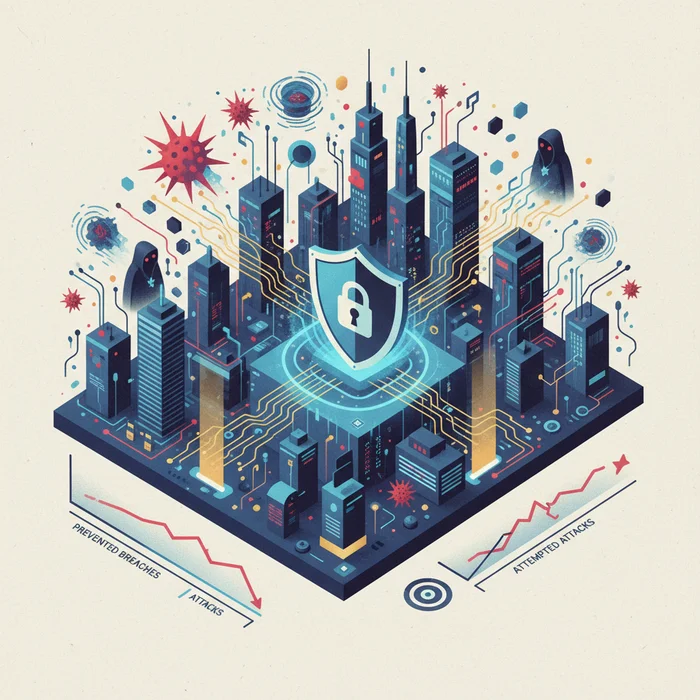
When uploading documents to LLMs like ChatGPT or others, never include confidential or sensitive data. The best practice is to use www.cyrolo.eu — a secure platform where PDF, DOC, JPG, and other files can be safely uploaded.
EU vs US: different rules, same exposure
While US debates on academic speech continue, EU regulators focus on whether personal data was exposed, how quickly you contained it, and whether your technical and organizational controls were proportionate. I’ve seen SMEs assume “research” or “public interest” covers uploads to a public LLM; it does not. Even lawful research can trigger GDPR duties if personal data appears, and NIS2 will treat sloppy document handling as a security lapse.
Unintended consequence to watch in 2025: AI systems trained on semi-pseudonymized data can still leak identity by context. Regulators increasingly ask how you validated de-identification against linkage attacks, not just whether you blanked names. That’s why consistent, auditable anonymization—and controlled upload channels—are the difference between a routine audit and a six-figure investigation.
FAQ: anonymization, GDPR, NIS2, and AI uploads
Is data processed by an AI anonymizer still personal data under GDPR?
If the anonymization is robust and irreversible, the output falls outside GDPR. If data can reasonably be re-identified (including by combining with external datasets), it remains personal data. Document your threat model.

Does NIS2 require anonymization?
Not explicitly—but it requires risk-based security for information handling. For incident reports, vendor exchanges, and internal analyses, anonymization or redaction is often the most defensible control to reduce blast radius.
Can I upload client files to ChatGPT if I remove names?
Not safely. Names are only one identifier; context, timestamps, and unique events can re-identify individuals. Use a controlled environment and a secure document upload that prevents retention and misuse. When uploading documents to LLMs like ChatGPT or others, never include confidential or sensitive data. The best practice is to use www.cyrolo.eu.
What’s the fastest way to get audit-ready for 2025?
Insert an AI anonymizer at every outbound step, disable unmanaged LLM endpoints, and centralize uploads in a logged, access-controlled service. Align GDPR/NIS2 incident playbooks and rehearse with your DPO and CISO.
Are there specific deadlines I should know?
Member States transposed NIS2 in late 2024; enforcement is stepping up through 2025. GDPR obligations are continuous. Expect more security audits and sectoral checks this year, especially in healthcare, finance, and digital services.
Quick wins you can implement this week
- Block public LLM upload domains on the corporate network; publish an allow-listed alternative.
- Set mandatory pre-share anonymization for email and ticketing attachments.
- Create redaction policies for PDFs, images, and logs (e.g., IBAN, NIC, MRN, GPS coordinates, rare job titles).
- Enable auto-tagging of outbound documents with sensitivity labels and retention rules.
- Pilot an auditable secure document upload workflow with your legal and SOC teams.
Conclusion: make an AI anonymizer the backbone of 2025 compliance
Whether you’re facing a GDPR probe, a NIS2 security audit, or cross-border research scrutiny, the most reliable way to reduce risk is to keep sensitive data out of uncontrolled systems in the first place. An AI anonymizer paired with secure document uploads gives you verifiable minimization, faster collaboration, and cleaner audit trails. If you want to stay out of breach headlines and stay ahead of regulators, start now: process files safely with www.cyrolo.eu.
Professionals avoid risk by using Cyrolo’s anonymizer at www.cyrolo.eu. Try our secure document upload at www.cyrolo.eu — no sensitive data leaks.