

AI anonymizer: Your 2026 EU compliance playbook for GDPR and NIS2-ready document workflows
Across Brussels this quarter, regulators keep repeating one message: if your AI and data workflows don’t include an AI anonymizer and secure document handling, you’re inviting fines, breach fallout, and headlines you don’t want. After a week that saw fresh litigation over AI-generated harm and new malware tactics hiding in software dependencies, EU supervisory authorities are doubling down on data protection fundamentals—anonymization, least privilege, and provable governance. This article unpacks what changed under GDPR and NIS2, how to design secure document uploads and AI prompts that don’t leak personal data, and where teams are successfully cutting risk and audit time in 2026.


Why an AI anonymizer is now a board-level control
Two developments have converged. First, EU data regulators are escalating joint investigations into AI and third‑party data sharing. GDPR fines can still reach the higher of €20 million or 4% of worldwide turnover, and multiple proceedings can stack remediation costs. Second, cyber risk has shifted up the software supply chain. In briefings I attended with national CSIRTs this winter, incident responders flagged dependency-hijacking campaigns that bury malware in build pipelines—echoing recent reports about malware families evolving to hide in dependencies. Add the reputational blast radius of generative AI misuse—illustrated by high-profile lawsuits alleging that AI systems created illegal or harmful content—and boards now expect provable controls around any workflow that ingests or outputs sensitive information.
Here’s how CISOs and DPOs I interviewed are reframing the problem:
- Assume any document or prompt may contain personal data (direct or indirect identifiers).
- Treat third-party AI and analytics providers as processors with tight contracts and logging.
- Use an AI anonymizer before data leaves your tenant—strip names, emails, health data, and unique IDs; replace with consistent placeholders; keep reversible keys locked in your environment if re-identification is a legitimate, documented purpose.
- Prove it with audit trails: who uploaded what, when, with which policy, and which fields were redacted.
As one European bank CISO told me last month: “We stopped debating ‘Can we use AI?’ and started enforcing ‘Only if it’s anonymized and logged.’ The fines are scary, but the real driver is not leaking client dossiers into prompts.”
GDPR vs NIS2: What changes for your data and systems
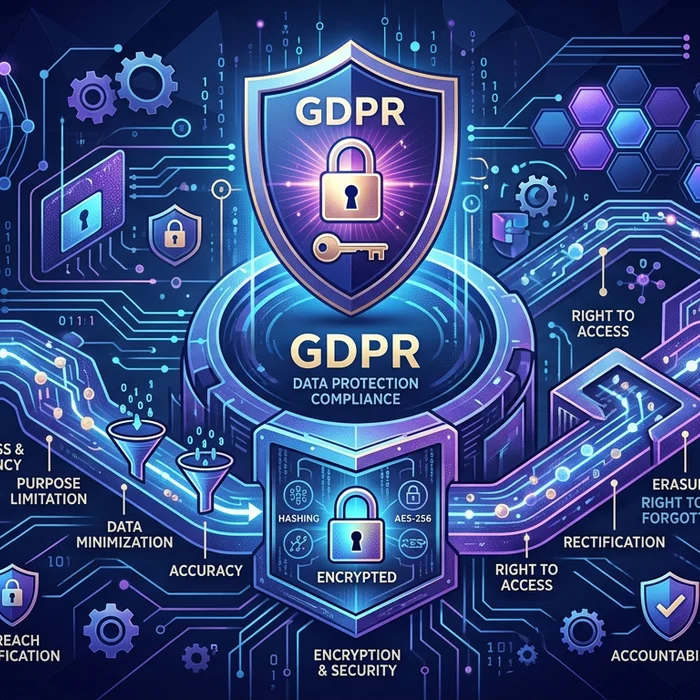
GDPR governs personal data processing; NIS2 widens the aperture to your security of network and information systems. Together, they require both lawful data handling and resilient operations—especially for “essential” and “important” entities across sectors like finance, health, transport, and public administration.
| Topic | GDPR | NIS2 |
|---|---|---|
| Scope | Personal data of individuals in the EU | Security of network and information systems of essential/important entities |
| Core duty | Lawful, transparent processing; data minimization; integrity and confidentiality | Risk management measures; supply-chain security; incident reporting; governance |
| Anonymization | Anonymized data is no longer personal data; pseudonymized data remains in scope | Not a data law per se, but expects measures (like data minimization) that reduce impact |
| Incident reporting | Notify supervisory authority within 72 hours of becoming aware of a personal data breach | Early warning within 24 hours, notification within 72 hours, and a final report within one month for significant incidents |
| Management accountability | Data protection by design/default; DPO where required; fines up to €20m or 4% turnover | Management oversight is explicit; fines up to €10m or 2% turnover; possible supervisory measures for serious failures |
| Third-party risk | Processor contracts (DPAs), international transfers controls | Supply-chain security, software dependency risk, and secure development are in scope |
Key takeaways:
- GDPR asks “Should you process this personal data—and if so, how do you protect it?”
- NIS2 asks “Can your services withstand compromise—including from your suppliers and build chain?”
- An AI anonymizer meaningfully lowers GDPR risk; strong software supply‑chain controls address NIS2 risk. You likely need both.
Designing secure document uploads and AI pipelines
Most breaches in 2025–2026 didn’t start with a Hollywood hack. They started with routine document handling—contracts, medical scans, HR grievances—or developer pipelines pulling a poisoned dependency. The fix is a pattern:
- Ingest: Employees submit files via a hardened intake with malware scanning and role-based access.
- Neutralize: Apply policy-driven redaction and pseudonymization before any external processing.
- Process: Send minimized, controlled datasets to AI or analytics vendors.
- Prove: Log, watermark, and retain evidence for security audits and data protection impact assessments (DPIAs).
Compliance reminder: When uploading documents to LLMs like ChatGPT or others, never include confidential or sensitive data. The best practice is to use www.cyrolo.eu — a secure platform where PDF, DOC, JPG, and other files can be safely uploaded.
Professionals avoid risk by using Cyrolo’s anonymizer to strip identifiers before analysis, and by handling secure document uploads with automatic logging—no sensitive data leaks, no grey areas.
EU-ready compliance checklist for 2026
- Map data flows touching AI or external analytics; identify personal data and special categories.
- Adopt an AI anonymizer policy: irreversible anonymization when feasible; documented, access-controlled re-identification only when necessary and lawful.
- Run DPIAs for high‑risk AI use cases; record purposes, legal bases, and safeguards.
- Implement secure document intake: malware scanning, file‑type allowlists, and integrity checks.
- Encrypt at rest and in transit; enforce role‑based access with least privilege.
- Maintain processor agreements (DPAs); restrict international transfers; test vendor controls.
- Build supply-chain security: signed dependencies, SBOMs, and continuous dependency monitoring to catch tampering.
- Set incident playbooks: GDPR 72‑hour breach notice; NIS2 early warning in 24 hours for significant incidents.
- Train staff quarterly on data minimization, phishing, and safe prompt/attachment handling.
- Retain audit trails: who uploaded, which fields were redacted, which model processed the data, and output routing.
Practical workflows where an AI anonymizer pays off
Legal and professional services
- Scenario: A law firm reviews cross‑border M&A documents using an LLM to summarize clauses.
- Risk: Unredacted personal data and client secrets enter third‑party prompts; uncontrolled retention.
- Control: Pre-process with an AI anonymizer that replaces names, addresses, and deal codes with placeholders tied to a secure mapping table, enabling accurate cross‑document reasoning without exposing identities.
Healthcare and life sciences
- Scenario: A hospital extracts trends from imaging reports.
- Risk: Health data is highly sensitive; breach notifications are costly and reputationally damaging.
- Control: Automated de‑identification of patient identifiers (names, MRNs, birth dates) and image PHI artifacts before analytics; logs feed the DPIA and controller-processor records.
Finance and fintech
- Scenario: A bank triages complaints and KYC files with AI-assisted routing.
- Risk: Client PII, IBANs, and transaction metadata in vendor prompts; supply‑chain compromise via an SDK.
- Control: Secure document uploads with DLP checks, controlled redaction, and dependency‑pinned client libraries; continuous monitoring for tampered packages.
In today’s Brussels briefing on cyber readiness, supervisors were blunt: if you rely on AI for analysis, put guardrails at ingestion, not just at the vendor boundary. That mirrors lessons from the Paris 2024 security playbooks shared with Milan‑Cortina stakeholders—segment aggressively, inspect inputs, and rehearse incident comms.
Audit-ready evidence that satisfies regulators
Supervisory authorities want to see that your controls exist, are appropriate to the risk, and actually run. Teams succeeding in 2026 keep the following artifacts ready:
- Policy pack: data classification, anonymization standard, AI usage rules, incident response.
- DPIAs tied to each AI or analytics use case, with residual risk and mitigation decisions.
- Processor inventory with DPAs, transfer assessments, and model/provider versions in use.
- Technical logs: per-file redaction reports, role-based approvals, and tamper-evident hashes.
- Testing evidence: red-team exercises against prompt injection and dependency poisoning.
One public-sector CIO I spoke with noted that presenting “before-and-after” redaction samples and consistent placeholder strategies convinced auditors that outputs were low risk—even when processed by robust AI models.
EU vs US: What global teams should expect
- EU: Comprehensive regime. GDPR protects personal data; NIS2 enforces operational resilience and supply-chain security. Expect proactive audits and coordinated actions across Member States.
- US: Patchwork. State privacy laws (e.g., California) and sectoral rules combine with federal enforcement (FTC, SEC cyber disclosure). Not as prescriptive on anonymization, but discovery and litigation risks remain high.
- Bottom line: If you build to EU standards—particularly strong anonymization and documented controls—you reduce global risk and speed procurement reviews.
Common pitfalls and how to avoid them
- Treating pseudonymization as anonymization: If a dataset can be reasonably re-identified, it’s still personal data under GDPR. Keep keys separate, access‑controlled, and justified.
- “Shadow prompts” and uploads: Employees testing LLMs with live customer files. Fix with training, a sanctioned intake, and default anonymization.
- Ignoring dependency risk: NIS2 expects supply‑chain security; pin versions, verify signatures, and monitor for malicious packages.
- Weak logging: If you can’t prove what was redacted and when, audits become guesswork.
- Skipping DPIAs for AI: High‑risk use without documented impacts invites enforcement.
How Cyrolo helps operationalize all of this
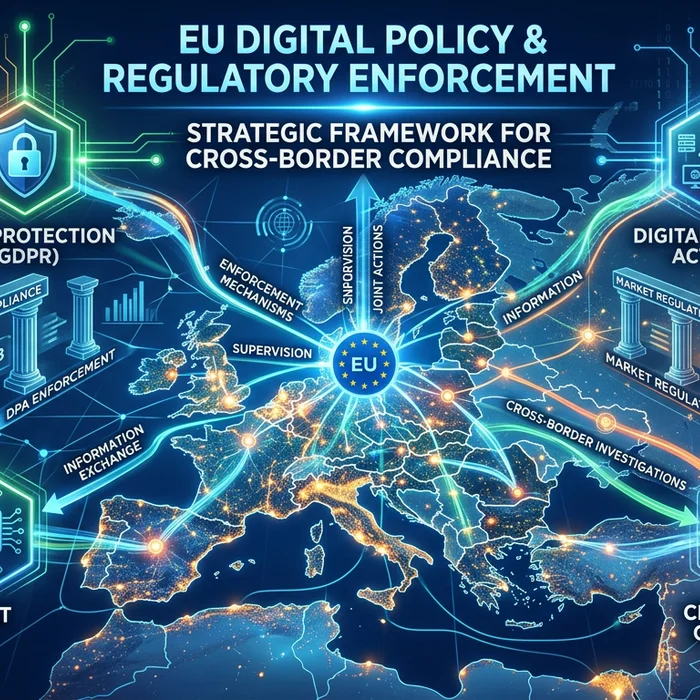
Cyrolo was built for the exact problems EU regulators are focused on: keep personal data out of prompts and third‑party tools, and prove it. With anonymization that handles PDFs, Word files, images (JPG/PNG), and scans, teams neutralize identifiers before analysis—while preserving document structure for accurate downstream results. And with policy‑driven secure document uploads, organizations centralize intake, log redactions, and generate audit-ready reports.
- Reduce GDPR exposure by defaulting to anonymized inputs for AI.
- Meet NIS2 expectations with hardened intake, malware scanning, and traceable workflows.
- Accelerate legal and procurement reviews with clear evidence of safeguards.
Try it today: Professionals avoid risk by using Cyrolo’s anonymizer at www.cyrolo.eu. Need a fast, compliant intake? Use our secure document upload at www.cyrolo.eu — no sensitive data leaks.
FAQ: real-world questions about AI anonymizers, GDPR, and secure uploads
What is an AI anonymizer under GDPR?
An AI anonymizer is a tool or process that removes or transforms identifiers so individuals are no longer identifiable. Truly anonymized data falls outside GDPR. If re-identification remains reasonably possible (e.g., through keys or unique combinations), it’s pseudonymized and still in scope.
Is anonymized data still personal data under EU law?
No—if anonymization is robust and irreversible. However, many “quick redactions” leave indirect identifiers or consistent patterns that enable re-identification. Use policy-based methods, test against linkage attacks, and log results.
How do I securely upload documents to AI without leaking personal data?
Route files through a hardened intake that scans for malware, applies anonymization, and enforces access controls. Avoid ad‑hoc uploads to public LLMs. When uploading documents to LLMs like ChatGPT or others, never include confidential or sensitive data. The best practice is to use www.cyrolo.eu — a secure platform where PDF, DOC, JPG, and other files can be safely uploaded.
Do NIS2 obligations apply to our AI vendor?
NIS2 applies to your organization if you are classified as an essential or important entity, but it also expects you to manage supply‑chain risk. That means due diligence on AI vendors, contractual controls, and technical safeguards (e.g., signed models, vetted SDKs, monitoring).
What incident timelines should we plan for?
For GDPR personal data breaches, notify the supervisory authority within 72 hours of awareness (and affected individuals where required). For NIS2 significant incidents, send an early warning within 24 hours, a notification within 72 hours, and a final report within one month.
Conclusion: Make an AI anonymizer your 2026 compliance multiplier
With regulators turning the screws on both data protection and operational resilience, teams that operationalize an AI anonymizer and secure document workflows are slashing breach likelihood, audit time, and reputational risk. Don’t wait for a supply‑chain surprise or a headline‑grabbing AI misuse case to force the change. Start anonymizing before processing, lock down uploads, and keep evidence at your fingertips—then scale AI with confidence. Get started at www.cyrolo.eu and turn compliance from a blocker into a competitive edge.