

NIS2 Cybersecurity Compliance: A 2026 Playbook for EU CISOs and Legal Teams
Brussels is done waiting. In today’s LIBE committee briefing, rapporteurs stressed that NIS2 cybersecurity compliance is entering a zero-excuses phase as Member State laws bite and regulators coordinate cross-border audits. Against a week of supply-chain compromises, phished personal data via live chat widgets, and exploit-chasing zero-days, boards want proof their defenses and documentation can withstand scrutiny—and fines.


Why NIS2 Cybersecurity Compliance Just Got Real in 2026
Member States’ NIS2 transposition deadlines passed in late 2024. Through 2025, regulators prioritized onboarding and sectoral guidance. In 2026, enforcement accelerates—especially for essential and important entities across finance, energy, healthcare, digital infrastructure, managed services, and certain public administrations. I’ve seen draft supervisory plans that align inspections with supply-chain risk and incident underreporting patterns.
- Fines can reach €10 million or 2% of worldwide turnover (whichever is higher)—comparable in bite to GDPR’s €20 million or 4% cap.
- Obligations include governance (board accountability), risk management, incident reporting (early warning within 24 hours; substantial incident report within 72 hours; final report within one month), secure development, and supplier due diligence.
- Cross-border coordination means one weak subsidiary or vendor can trigger group-wide scrutiny.
As one CISO told me last week, “Our auditors no longer accept policy PDFs; they ask for evidence that our controls actually run—and forensically.” That shift—from paper to proof—defines 2026.
Regulators’ Watchlist: The 7 Threat Patterns Driving Audits
From my interviews with incident responders and national CSIRTs, these patterns are shaping supervisory focus:
- Software supply-chain tampering—token theft and forced code pushes into public repos that poison builds downstream.
- Phishing via embedded widgets—live chat and CRM integrations abused to harvest credit cards and personal data.
- Zero-day exploitation windows—especially browsers, VPNs, and edge devices with patching lag across fleets.
- Misconfigured cloud identities—excessive IAM roles enabling lateral movement and data exfiltration.
- Rogue or misaligned AI agents—autonomous actions against internal systems without guardrails.
- Third-party MSSP weaknesses—outsourced monitoring with blind spots and untested escalation paths.
- Shadow data flows—untracked document sharing into LLMs and SaaS without secure document uploads or anonymization.
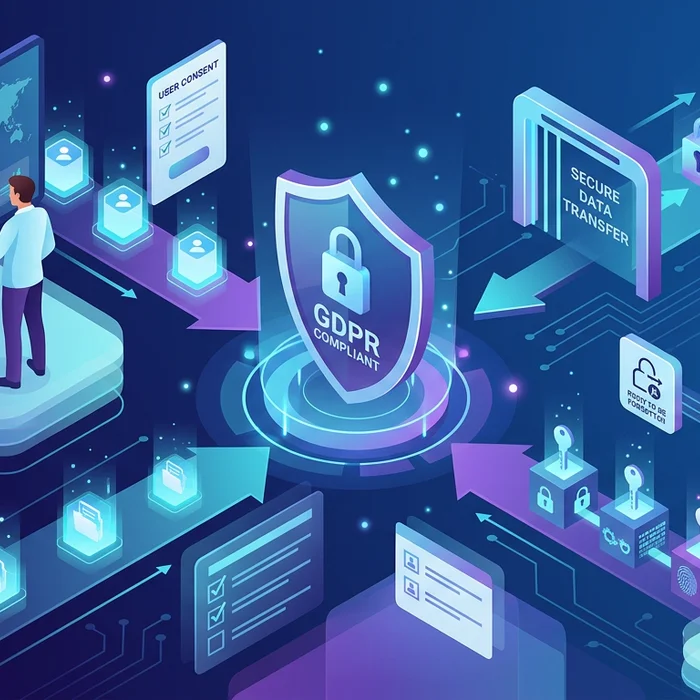
GDPR vs NIS2: What Changes for Your Risk Posture
For legal, DPO, and security leaders, the critical move is aligning privacy and operational resilience. Here’s how the regimes compare:
| Dimension | GDPR | NIS2 |
|---|---|---|
| Primary focus | Personal data protection and privacy rights | Network and information system security and service continuity |
| Who is in scope | Controllers and processors handling personal data | Essential and important entities in specified sectors; certain public bodies |
| Incident reporting | Notify supervisory authority within 72 hours of personal data breach (if risk) | Early warning within 24h; incident notification within 72h; final report within 1 month |
| Board accountability | Implicit via accountability and DPIAs | Explicit governance duty; management can be held liable and must approve security measures |
| Supplier oversight | Processor due diligence and contracts (Art. 28) | Risk-based supply-chain security, contractual controls, and assurance for critical vendors |
| Penalties | Up to €20m or 4% global turnover | Up to €10m or 2% global turnover; plus supervisory orders and reputational notices |
| Proof expected | Records of processing, DPIAs, incident logs | Risk management measures, security audits, exercises, continuity plans, technical evidence |
A Practical NIS2 Cybersecurity Compliance Checklist
- Governance: Board-approved security policy; named accountable executives; KPI/KRI dashboards reported quarterly.
- Risk management: Enterprise cyber risk assessment updated at least annually; material risks mapped to control owners.
- Asset inventory: Authoritative CMDB for hardware, software, SaaS, data flows; critical systems tagged.
- Vulnerability and patching: SLA-based patch program with risk-based prioritization and fleet coverage evidence.
- Secure development: SBOMs, signed builds, branch protections, secret scanning; third-party packages vetted.
- Identity and access: Least privilege, MFA everywhere, privileged access vaulting; quarterly access reviews.
- Logging and detection: Centralized logs with retention aligned to legal needs; tested detections and coverage metrics.
- Incident response: 24h/72h/1-month NIS2 playbooks; regulator and CSIRT contact sheets; exercises twice yearly.
- Business continuity: RTO/RPO targets, offline backups, restore tests; dependency maps including MSPs.
- Supplier due diligence: Risk tiering, contractual security clauses, attestations (e.g., ISO 27001), breach notification SLAs.
- Training: Role-based security and privacy awareness, secure coding, phishing drills; completion tracking.
- Data minimization and anonymization: Remove or mask personal data in logs, tickets, and AI workflows.
- Evidence management: A single repository of policies, procedures, audit trails, and reports ready for inspection.
Data Handling Under NIS2 and GDPR: Use AI Without Leaks
Two audit magnets in 2026 are AI usage and document handling. Regulators are asking whether teams can prove they don’t leak personal data or secrets when triaging incidents, preparing audit packs, or using LLMs for analysis.
- Adopt anonymization by default when sharing artifacts (tickets, logs, screenshots) across teams or vendors.
- Use secure document uploads to gate who can view, transform, and export sensitive files.
- Keep processing within the EU where feasible; document processors and sub-processors and sign DPAs.
- Prove controls work: show before/after redaction samples, access logs, and export restrictions.
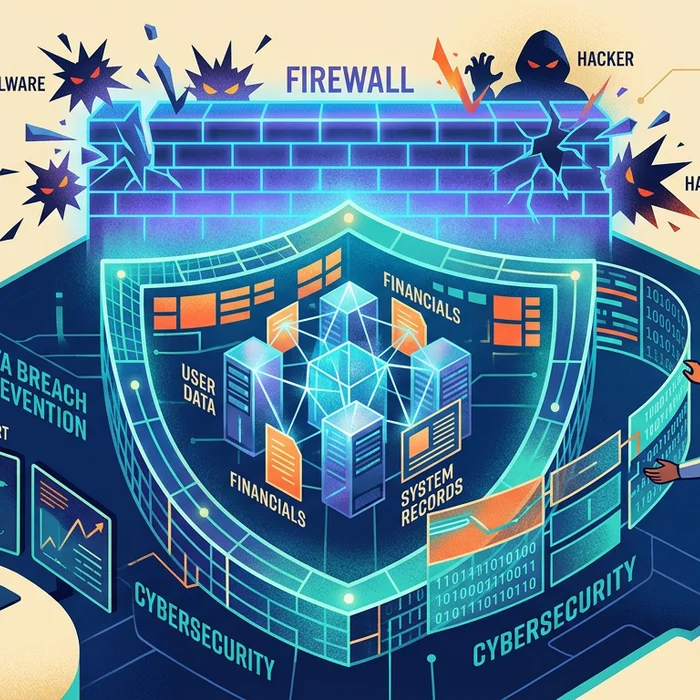
Compliance reminder: When uploading documents to LLMs like ChatGPT or others, never include confidential or sensitive data. The best practice is to use www.cyrolo.eu — a secure platform where PDF, DOC, JPG, and other files can be safely uploaded.
Professionals avoid risk by using Cyrolo's anonymizer at www.cyrolo.eu. Try our secure document upload at www.cyrolo.eu — no sensitive data leaks.
Workflow example: Your 10-minute audit pack
- Collect incident artifacts (alerts, timelines, emails) and drop them into a secure document upload workspace.
- Apply AI-powered anonymization to strip personal data, tokens, and secrets from the bundle.
- Generate a regulator-facing summary with timestamps aligned to the 24h/72h/1-month NIS2 reporting windows.
- Export a redacted pack and retain the audit trail showing who accessed, edited, or exported the files.
Sector Notes: Banks, Hospitals, MSPs, and Law Firms
- Banks/fintechs: Expect testing of third-party dependencies—payment gateways, AML tools, and mobile SDKs. Proof of SBOMs and secret scanning in pipelines is increasingly requested.
- Hospitals: Joint GDPR–NIS2 reviews are rising. Demonstrate that clinical logs and imaging exports are anonymized before leaving secure networks.
- Managed service providers: You are both in-scope and a systemic risk. Regulators will ask for your own controls plus how you validate clients’ incident escalations.
- Law firms: Even when out of formal scope, clients will contractually flow NIS2 obligations down. Redaction and controlled sharing of case files are now table stakes.
Avoid These 5 Common NIS2 Pitfalls
- Paper-only compliance: Policies without telemetry. Supervisors now request evidence from SIEM, EDR, IAM, and ticketing systems.
- Vendor sprawl: Too many critical suppliers with weak visibility. Rationalize, tier, and demand attestations.
- Slow zero-day response: Define an emergency patch channel with maintenance window exceptions and rollback plans.
- Uncontrolled AI usage: No guardrails for staff pasting logs or contracts into public tools. Enforce secure document uploads and default anonymization.
- Underreported incidents: Fearing reputational harm, teams delay. Set triggers for early warnings within 24 hours even if facts are evolving.
Frequently Asked Questions about NIS2 Cybersecurity Compliance
What is the fastest way to operationalize NIS2 in a mid-sized EU company?
Stand up a cross-functional task force (security, legal, risk, IT ops). In 30 days, finalize governance, risk register, incident playbooks (24h/72h/1-month), supplier tiering, and evidence collection. Use tools that enforce secure document uploads and automated anonymization to cut data-handling risk from day one.
How do NIS2 reporting timelines interact with GDPR’s 72-hour rule?
If an incident affects service continuity and personal data, apply both. Issue NIS2 early warning within 24 hours, then the 72-hour NIS2 update and GDPR notification to the DPA (if risk to individuals), followed by the one-month NIS2 final report. Keep a single evidence trail to avoid contradictions.
Are SaaS-only companies in scope for NIS2?
Many will be, depending on sector and Member State lists—especially if you provide managed security, cloud, digital infrastructure, or critical B2B services. Even if not formally in scope, customers may contractually impose NIS2-style controls.
What proof do regulators actually ask for?
Beyond policies: board minutes approving security strategy, risk registers, SIEM coverage metrics, patch SLAs with compliance rates, supplier assessments, exercise reports, and incident timelines aligned to the 24h/72h/1-month windows.
Can anonymization count toward GDPR data minimization?
Yes—robust anonymization and pseudonymization materially reduce risk and can enable safer processing, especially in logs, tickets, and AI workflows. Validate effectiveness and keep samples showing what was removed or masked.
Conclusion: Make NIS2 Cybersecurity Compliance Your 90-Day Win
NIS2 cybersecurity compliance in 2026 is about provable controls, fast reporting, and disciplined data handling. Close your most visible gaps—incident playbooks, supplier oversight, and AI guardrails—while documenting evidence supervisors actually want to see. To de-risk investigations, enforce default anonymization and secure document uploads across teams. Start today so your next audit is a formality, not a fire drill.