

AI Anonymizer: The 2026 Playbook for GDPR and NIS2 Compliance
Brussels is raising the temperature on digital enforcement. In today’s briefing with EU policymakers, I heard a familiar refrain: data minimisation, rapid incident reporting, and provable security controls will define the year. For legal, risk, and security teams, an AI anonymizer is no longer a “nice to have”—it’s a frontline control to cut exposure under GDPR and NIS2, reduce breach impact, and safely operationalise AI. If you handle personal data, confidential contracts, or regulated records, your next audit will probe how you anonymize and how you run secure document uploads.

Why an AI anonymizer is now non‑negotiable for EU compliance
Three converging trends explain why 2026 will reward teams that deploy an AI anonymizer and punish those that don’t:
- Harder enforcement. Parliament committee hearings on DSA implementation and protection of minors signal tougher expectations around real-time risk assessments, tamper-proof logging, and verifiable safeguards. That logic is bleeding into GDPR and NIS2 supervision.
- Rising fines and personal liability. GDPR penalties still peak at €20 million or 4% of global turnover. Under NIS2, essential entities face fines up to at least €10 million or 2% of global turnover; important entities up to at least €7 million or 1.4%. Supervisors want proof that you reduced personal data exposure before sharing or processing.
- AI-driven leak paths. Attackers increasingly mask infostealers as “AI tool installers,” and shadow AI usage inside firms is rampant. A CISO I interviewed last month put it bluntly: “Our riskiest data exfiltration vector is staff pasting client docs into helpful bots.”
Problem: personal data flows into apps, vendors, and models that you don’t fully control—escalating regulatory and breach risks. Solution: run documents through an AI anonymizer to remove or mask names, emails, IBANs, health data, addresses, and free-text identifiers before sharing; pair this with secure document uploads that enforce zero retention and auditability.
GDPR vs NIS2: what changes for your data workflows
Both laws touch data, but in different ways. GDPR focuses on personal data protection; NIS2 targets the resilience and incident readiness of essential/important entities and their suppliers. You need both.
| Topic | GDPR | NIS2 |
|---|---|---|
| Scope | Any controller/processor handling personal data of EU residents | Essential and important entities in sectors like energy, finance, health, transport, digital infrastructure, managed services |
| Core Focus | Lawfulness, fairness, transparency, data minimisation, security of processing | Cybersecurity risk management, supply-chain security, incident reporting, business continuity |
| Key Obligations | DPIAs for high-risk processing; data subject rights; records; breach notification within 72h | Risk management measures; 24h early warning, 72h notification, and final reports; board accountability; audits |
| Penalties | Up to €20m or 4% of worldwide turnover | At least up to €10m or 2% (essential); at least up to €7m or 1.4% (important) |
| Supervision | Data protection authorities (DPAs) | National competent authorities and CSIRTs |
| Role of Anonymization | Truly anonymized data is out of GDPR scope; pseudonymized data remains in scope | Reduces impact and reportability of incidents; supports “state of the art” security control expectations |
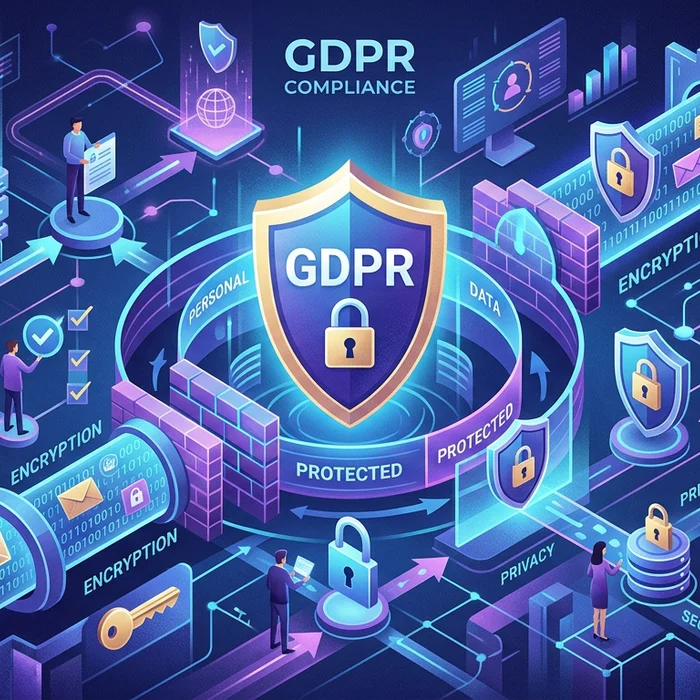
From policy to practice: secure document uploads and automated redaction
Here’s how leading teams operationalize privacy-by-design and security-by-default across common workflows:
1) Law firms and consultancies
- Problem: Associates upload client briefs to summarization tools; names, case numbers, and privileged content leak to vendors or logs.
- Practice: Route files via a secure document upload flow that scans and anonymizes. The AI anonymizer removes direct identifiers and masks quasi-identifiers; access is logged and time-bounded.
2) Hospitals and life sciences
- Problem: Researchers share discharge notes and lab reports for analytics; GDPR special category data triggers DPIA and breach severity.
- Practice: Apply automated de-identification with audit trails. Keep re-identification keys off the analytics platform; store mappings in a separate, encrypted enclave.
3) Banks and fintechs (DORA intersect)
- Problem: Third-party model validation needs transaction samples; raw IBANs, PANs, and PII raise DORA and GDPR red flags.
- Practice: Use format-preserving masking for financial identifiers; tokenize account numbers; swap rare outliers to curb re-identification risk while maintaining model utility.
4) SaaS vendors and support desks
- Problem: Customers attach logs and screenshots containing emails, API keys, and personal data to tickets that flow into multi-tenant systems.
- Practice: Enforce pre-ingestion redaction with per-field confidence thresholds and human-in-the-loop review for low-confidence items.
Professionals avoid risk by using Cyrolo’s anonymizer and zero-retention secure document uploads—practical controls that reduce GDPR scope, harden NIS2 posture, and create the evidence trail auditors ask for.
Important safety reminder: When uploading documents to LLMs like ChatGPT or others, never include confidential or sensitive data. The best practice is to use www.cyrolo.eu — a secure platform where PDF, DOC, JPG, and other files can be safely uploaded.
EU vs US: different enforcement cultures, similar risks
EU regulators are codifying data minimisation and security diligence across sectoral rules (GDPR, NIS2, DORA, the AI Act phasing in through 2026). In the US, privacy remains a patchwork (state laws like CCPA/CPRA; sectoral regimes like HIPAA/GLBA). Result: EU entities see more uniform audits and heavier top-line fines; US entities face fragmented obligations, but rising litigation and FTC scrutiny. Either way, if your AI workflows touch personal data, an AI anonymizer and provably secure document handling are fast becoming baseline.
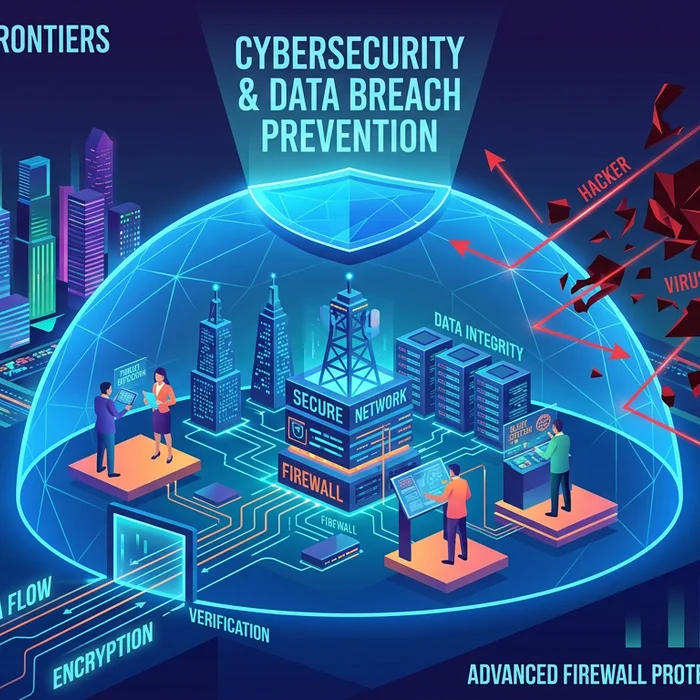
Compliance checklist for Q2–Q4 2026
- Map data flows: identify where personal data enters AI or external tools; classify by sensitivity (standard vs special category).
- Mandate pre-ingestion redaction: require an AI anonymizer step before any third-party processing, including vendors and LLMs.
- Choose zero-retention upload paths: ensure storage, caching, and telemetry are disabled or tightly time-limited with logs.
- Set thresholds: define confidence levels for redaction; trigger manual review for edge cases.
- Segregate keys: store re-identification keys separately with strict access control and purpose limitation.
- Document DPIAs: explicitly reference anonymization, data minimisation choices, and residual risk.
- Test and monitor: run periodic re-identification risk tests; validate that masking resists linkage attacks.
- Train staff: ban direct uploads of raw files to AI tools; update playbooks and enforce via DLP/Proxy policies.
- Prepare NIS2 reporting: pre-draft 24h early warning templates; include evidence of data minimisation to reduce impact classification.
- Vendor diligence: require contractual commitments on no-training/no-sharing, and evidence of deletion and access logs.
Hidden pitfalls regulators will look for in 2026
- “Pseudonymization” mislabeled as anonymization. If a person remains identifiable with reasonable effort, it’s still personal data under GDPR.
- Free-text leakage. Structured fields may be masked while narrative sections (emails, notes) still hold names, symptoms, or GPS trails.
- Shadow AI usage. Staff bypassing approved tools to “just try” a new bot—often the root cause of leak investigations.
- Model telemetry and logs. Even if outputs are safe, upstream logs or prompts may store raw PII by default.
- Insufficient proof. Controls that aren’t documented may as well not exist in an audit—keep evidence of configurations, tests, and approvals.
What “good” looks like: capability blueprint
- Detection: NER plus pattern and context rules for names, IDs, addresses, medical terms, financial identifiers, and quasi-identifiers.
- Action: Irreversible redaction for direct identifiers; k-anonymity style generalisation for outliers; format-preserving masking for structured fields.
- Governance: Policy-based routing (by data type and purpose), role-based access, immutable logs, and automatic deletion windows.
- Assurance: Red-team re-identification tests, DPIA references, and change control for model/version updates.
Ready to operationalize this blueprint? Try secure document upload and automated anonymization that slot into your intake flows without engineering heavy-lift.

FAQ: AI anonymizer, GDPR, and NIS2
Is anonymized data really outside GDPR?
Yes—if re-identification is not reasonably possible. That means stripping or sufficiently transforming direct and indirect identifiers, considering context and available auxiliary data. Pseudonymized data (e.g., tokenized but linkable) remains in scope.
How does an AI anonymizer help with NIS2 incident reporting?
If compromised datasets are pre-anonymized, you can reduce the assessed impact and associated obligations. You’ll still report significant incidents, but you can demonstrate risk mitigation and limit downstream notification burdens.
What’s the difference between redaction and masking?
Redaction permanently removes or replaces content (e.g., black boxes). Masking preserves structure for utility (e.g., IBAN format) while hiding the true value. Many programs combine both based on field sensitivity.
Can we safely use LLMs for contract review or summarization?
Yes, if you control inputs and vendors. Always run documents through an AI anonymizer first and use secure, no-retention upload paths with logging and deletion SLAs. When uploading documents to LLMs like ChatGPT or others, never include confidential or sensitive data. The best practice is to use www.cyrolo.eu — a secure platform where PDF, DOC, JPG, and other files can be safely uploaded.
What are typical compliance deadlines we should track in 2026?
NIS2 transposition completed in 2024, with national enforcement ramping through 2025–2026. The EU AI Act phases obligations during 2024–2026, with high-risk system requirements crystallizing in 2026. Expect regulators to verify practical controls—especially anonymization and secure intake—this year.
Conclusion: Make an AI anonymizer your first line of defense
The enforcement climate is clear: regulators want evidence that you minimised data before sharing, analysed, or automated it. An AI anonymizer plus secure document uploads shrink GDPR scope, harden NIS2 posture, and blunt breach fallout. Move first, prove control, and turn audits into a formality. Try Cyrolo today at www.cyrolo.eu—no sensitive data leaks, just fast, compliant workflows.