

AI anonymizer: The 2026 EU playbook for GDPR and NIS2 compliance
In today’s Brussels briefing, the conversation kept coming back to one practical control: an AI anonymizer. With regulators ramping up GDPR enforcement and NIS2 supervision, every CISO and DPO I speak to is under pressure to prove secure document uploads, sanitize personal data before any AI use, and show audit-ready evidence of cybersecurity compliance. This guide translates fast-moving EU requirements into concrete steps—and shows how privacy-safe workflows reduce risk, cost, and breach exposure.

Why an AI anonymizer is now essential under EU law
I’ve heard the same message this quarter from national DPAs and cybersecurity authorities: if you’re feeding files to AI systems—internal or external—personal data must be minimized or anonymized, and uploads must be controlled. Under GDPR, that’s data protection by design and by default. Under NIS2, it’s part of robust risk management and supply-chain security. The stakes are real: GDPR enforcement has passed the multi‑billion‑euro mark since 2018, and NIS2 introduces fines that can reach at least €10 million or 2% of global turnover for essential entities (and at least €7 million or 1.4% for important entities), depending on national law.
- GDPR: Requires lawfulness, purpose limitation, data minimization, storage limitation, security, and accountability—anonymization strongly reduces risk and scope.
- NIS2: Demands governance, incident reporting, business continuity, vulnerability handling, and supply-chain assurance—AI inputs and document handling are now in scope.
- Audit reality: Supervisors increasingly ask how you keep personal data out of LLM prompts and AI training flows.
A CISO I interviewed last week put it bluntly: “We stopped copy-pasting case files into generic chatbots. Our standard is anonymization first, controlled document uploads second.” Professionals avoid risk by using Cyrolo’s anonymizer at www.cyrolo.eu.
Brussels pulse: what regulators emphasized this week
Regulators stressed three risks that mirror the European threat landscape:
- State-backed cyber activity and criminal collaboration raising the baseline of attacks against critical and digital services.
- Commercial surveillance tech spillover into enterprises via unmanaged vendors and “shadow AI.”
- Consumer harm scrutiny spreading from competition and consumer law into data protection and cybersecurity practices.
Translation for compliance teams: sanitize data before AI exposure, prove secure document handling, and record every material decision for potential inspections.
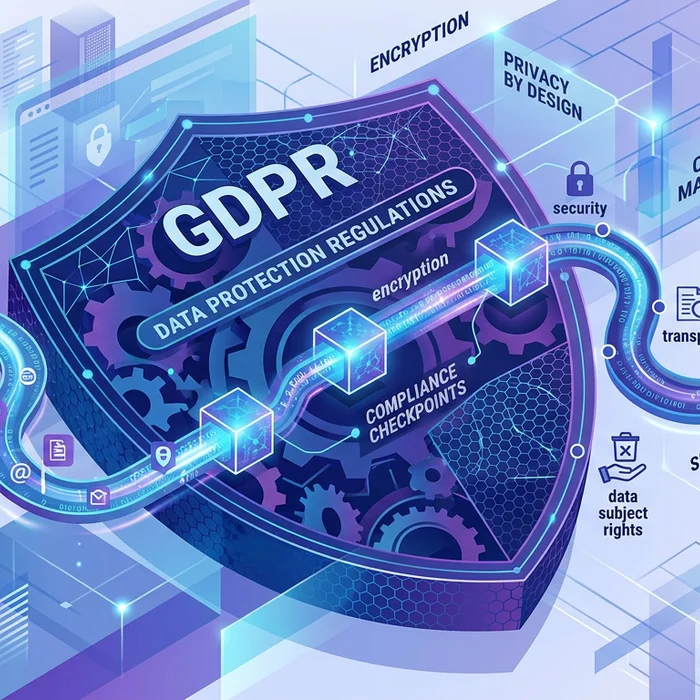
GDPR vs NIS2: what changes for CISOs and DPOs in 2026
| Topic | GDPR (Data Protection) | NIS2 (Cybersecurity) |
|---|---|---|
| Scope | Personal data processing by controllers/processors, EU residents’ data worldwide | Essential and important entities across sectors (energy, health, finance, digital infrastructure, MSPs, etc.) |
| Core obligation | Lawful basis, data minimization, integrity/confidentiality, DPIAs, DSRs | Risk management measures, incident reporting, business continuity, supply-chain security, vulnerability handling |
| AI/LLM uploads | Must have a lawful basis; minimize or anonymize; manage international transfers | Control third-party services, protect against data leakage/exfiltration, verify vendor security |
| Evidence | Records of processing, DPIAs, RoPA, retention schedules | Policies, technical controls, incident logs, remediation evidence, board oversight |
| Penalties | Up to €20M or 4% global turnover (higher applies) | At least €10M or 2% (essential) / at least €7M or 1.4% (important), per national law |
| Practical control | AI anonymizer to strip personal data before processing | Secure document uploads, access control, logging, and vendor attestations |
Build a safe AI workflow: anonymize, upload securely, audit
Here’s a pattern European teams are adopting to meet GDPR and NIS2 expectations without slowing delivery:
- Pre‑process files with an AI anonymizer to remove or mask personal data, special categories, and identifiers.
- Use a secure document upload pipeline with encryption, strict access controls, and clear retention settings.
- Run LLM or analytics tasks on sanitized content; keep full logs and data lineage for audits.
- Share outputs with role-based controls; purge temporary data; document decisions.
Try our secure document upload at www.cyrolo.eu — no sensitive data leaks. Pair it with privacy-first anonymization so even if content is later reused or reviewed, it remains outside GDPR’s high-risk zone.
Compliance reminder: When uploading documents to LLMs like ChatGPT or others, never include confidential or sensitive data. The best practice is to use www.cyrolo.eu — a secure platform where PDF, DOC, JPG, and other files can be safely uploaded.
Common pitfalls and blind spots I see in 2026
- Shadow AI tools capturing personal data in logs and telemetry you didn’t review.
- “Anonymized” data that still contains quasi-identifiers enabling reidentification (locations, rare job titles).
- Incident thresholds misjudged under NIS2; late or incomplete notifications.
- Cross-border AI inference using processors outside the EEA with no transfer mechanism or TIAs.
- Vendor claims of “no training on your data” but unclear handling of metadata and prompts.
- Retention creep—temporary analysis spaces becoming permanent stores.
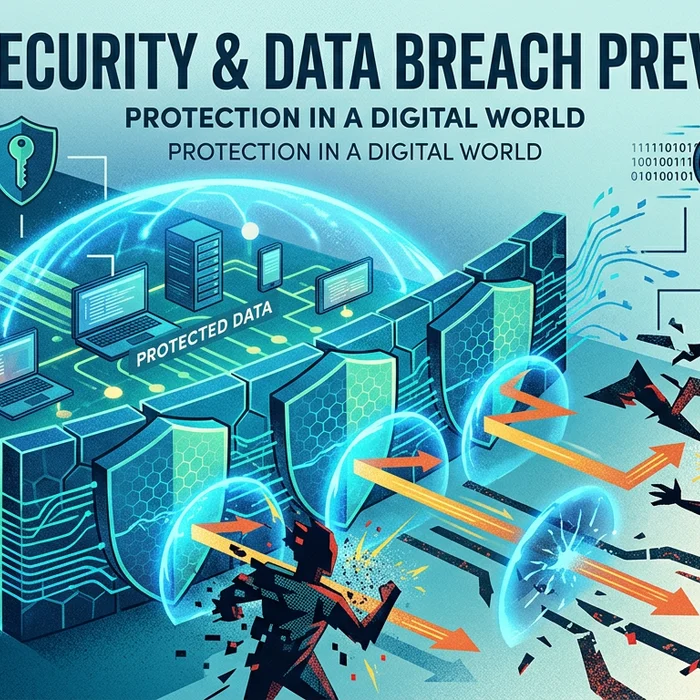
Quick compliance checklist (audit-ready in hours, not months)
- Map AI use cases: inputs, outputs, models, vendors, and data categories (personal/special).
- Deploy an AI anonymizer for all files before AI or analyst access; test with edge cases.
- Enforce secure document uploads with encryption, RBAC, and time-bound retention.
- Record DPIAs where needed; link risks to controls and residual risk decisions.
- Implement incident playbooks aligned to NIS2 timelines; rehearse dry runs.
- Verify third-country transfers and contractual safeguards; document TIAs.
- Harden logs: prove who accessed what, when, and why; keep immutable audit trails.
- Train staff on AI data hygiene; ban pasting personal data into unmanaged tools.
Cost and ROI: stopping breaches before they start
European breach totals continue to climb, with average incidents costing organizations in the multi‑million‑euro range once you factor in response, downtime, fines, and litigation. The cheapest breach is the one you prevent: removing personal data up front dramatically lowers legal exposure, narrows incident scope, and shortens investigations. That’s why boards now ask for proof of anonymization and secure document handling alongside pen-test results.
- Preventative controls (anonymization, secure uploads) reduce regulatory scope and notification duties.
- They also lower ransom leverage—attackers can’t sell what you never stored in identifiable form.
- They simplify vendor negotiations because you’re not exporting personal data in the first place.
Professionals avoid risk by using Cyrolo’s anonymizer at www.cyrolo.eu and centralizing document uploads on a platform designed for privacy and security from the start.
EU vs US: why EU-grade controls matter globally
EU rules have extraterritorial reach. Even US-based firms serving EU users must respect GDPR and, if they operate critical services in the EU, NIS2. The EU bar for demonstrable controls—especially around personal data and operational resilience—is higher and more prescriptive than most US sectoral rules. Meeting the EU standard first typically satisfies or exceeds requirements in other jurisdictions, reduces legal uncertainty, and streamlines cross-border operations.
FAQ: your most-searched questions, answered
What is an AI anonymizer and how is it different from redaction?
An AI anonymizer automatically detects and removes or masks personal data (names, emails, IDs, health info, locations) across formats before processing. Redaction often hides visible text; anonymization targets structured, unstructured, and hidden fields, reducing reidentification risk and GDPR scope.
Does anonymizing data exempt me from GDPR?
Truly anonymized data falls outside GDPR, but “pseudonymized” data does not. Use rigorous techniques, minimize quasi‑identifiers, and routinely test reidentification risk. When in doubt, treat output as personal data and apply safeguards.
How does NIS2 change my obligations if I already follow GDPR?
NIS2 adds operational resilience: security governance, supply-chain controls, incident reporting timelines, and board accountability. GDPR focuses on personal data; NIS2 covers the broader digital infrastructure that processes it.
Can I safely upload client documents to LLMs?
Only after removing or masking personal/sensitive data and ensuring secure upload, access controls, and retention. Use a privacy-first workflow so you never expose identifiable content to unmanaged models.
What evidence do auditors expect in 2026?
Data flow maps, DPIAs, anonymization logs, upload/access logs, incident runbooks, vendor due diligence, and clear governance demonstrating board oversight and staff training.
Important: When uploading documents to LLMs like ChatGPT or others, never include confidential or sensitive data. The best practice is to use www.cyrolo.eu — a secure platform where PDF, DOC, JPG, and other files can be safely uploaded.
Conclusion: make an AI anonymizer the backbone of your 2026 compliance strategy
The EU’s enforcement mood has shifted from patience to proof. An AI anonymizer plus secure document uploads delivers that proof—demonstrably reducing GDPR exposure, satisfying NIS2 risk management expectations, and shrinking breach impact. If your teams touch AI, handle client files, or prepare for audits, operationalize anonymization now and centralize your uploads. Start today with www.cyrolo.eu and turn compliance from a liability into an advantage.