

NIS2 compliance checklist: your 2026 EU cybersecurity playbook for GDPR, AI, and secure document workflows
In today’s Brussels briefing, several regulators reminded operators that “soft-launch mode” for NIS2 is over. With national transpositions in force across the EU, audits and penalties are rising in 2026. This article delivers a practical NIS2 compliance checklist, connects it with GDPR duties, and shows how to de-risk AI-era workflows with secure document uploads and an AI anonymizer—without slowing your security operations or legal work.
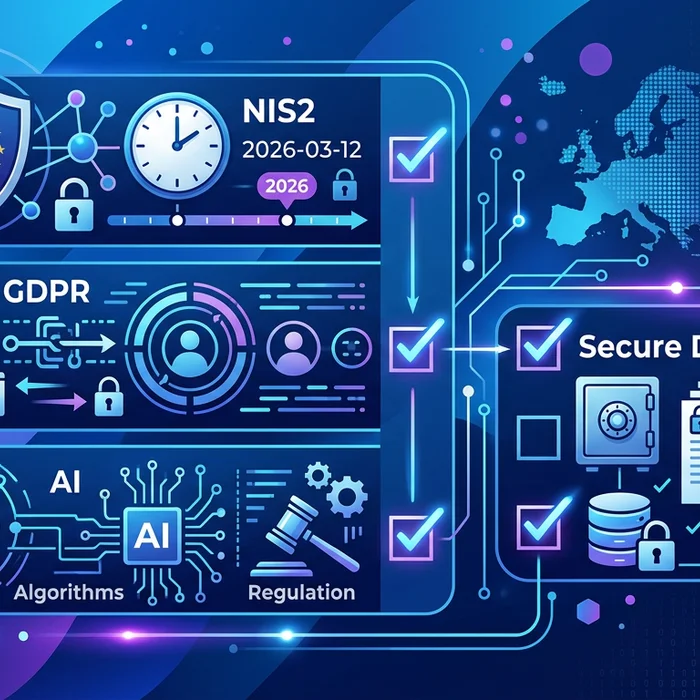
I’m Siena Novak, reporting from Brussels. After a joint parliamentary hearing on “Democracy and elections in the AI era,” and a week of CISO calls about phishing workload spikes and EDR evasion, one truth is clear: compliance and defense must now move at the speed of attackers. Below is how leading banks, fintechs, hospitals, utilities, and law firms are adapting—before regulators or adversaries force their hand.
Why NIS2 matters now: audits, accountability, and AI spillover
- Broader scope: Essential and Important entities across energy, health, transport, finance, digital infrastructure, public administration, and more.
- Management liability: NIS2 expects directors to approve cybersecurity risk measures and undergo training—no “paper compliance.”
- Fast incident reporting: Early warning within 24 hours, detailed notification within 72 hours, and a final report within one month.
- Penalties with bite: Administrative fines can reach up to EUR 10 million or 2% of worldwide annual turnover (member-state law applies).
- Supply chain duty: You must assess and manage third‑party and ICT supplier risks—not just your own perimeter.
Compared with the U.S., where regulators focus on market disclosures and sectoral rules (for example, 4‑business‑day SEC cyber incident disclosures for material events), the EU’s NIS2 drives operational security maturity and board accountability across sectors. Combined with GDPR’s personal data regime, this makes privacy and resilience two halves of one compliance strategy.
What your NIS2 compliance checklist must include
- Board-approved cybersecurity risk management policy aligned to NIS2 Articles on governance, training, and oversight.
- Documented asset inventory and business service mapping: know what is critical, where personal data resides, and which suppliers touch it.
- Threat-led controls: MFA, patching SLAs, EDR/XDR, network segmentation, backup/restore drills, and phishing-resistant authentication.
- Formal incident response runbooks: 24h early warning, 72h notification, one‑month final report workflows clearly rehearsed.
- Supplier risk management: risk-tiering, security clauses, audit rights, SBOM/patch transparency, exit plans, and concentration risk checks.
- Logging and monitoring: immutable logs, centralized SIEM, and alert triage capable of scaling during phishing surges.
- Business continuity and disaster recovery: tested RTO/RPO targets; ransomware tabletop exercises.
- Security awareness: role-based training for staff, executives, and administrators; simulations for social engineering and deepfake scenarios.
- Data protection by design: align security controls with GDPR principles (minimization, purpose limitation, storage limitation, DPIAs).
- AI and LLM usage policy: strict rules for prompts and documents; use an AI anonymizer and secure document uploads to prevent privacy breaches.
Professionals avoid risk by using Cyrolo’s anonymizer at www.cyrolo.eu. Try our secure document upload at www.cyrolo.eu — no sensitive data leaks.
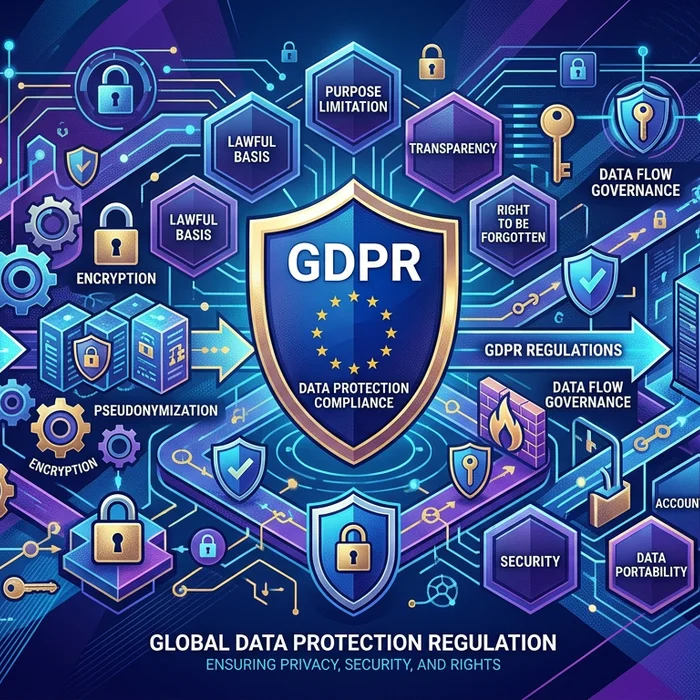
GDPR vs NIS2: who does what?
| Topic | GDPR | NIS2 |
|---|---|---|
| Core objective | Protect personal data and individuals’ rights | Ensure cybersecurity and service resilience of essential/important entities |
| Scope trigger | Processing of personal data | Entity falls within listed sectors and size thresholds (with some exceptions) |
| Incident reporting | Notify supervisory authority within 72 hours of becoming aware of a personal data breach | Early warning within 24h; incident notification within 72h; final report within 1 month |
| Fines | Up to €20m or 4% of global turnover | Up to €10m or 2% of global turnover (per national law) |
| Governance roles | DPO where required; DPIAs; privacy by design/default | Management accountability; security risk management; board training |
| Supply chain | Processor/controller contracts, international transfers | Explicit supplier and ICT service risk management and assurance |
| AI and tooling | Must avoid unlawful processing; data minimization and anonymization encouraged | Must secure AI/ICT systems; incident readiness and logging emphasized |
Secure document workflows: the fastest risk reduction you can deploy this week
Three things repeatedly derail audits and post‑incident reviews: uncontrolled document sharing, ad‑hoc LLM usage, and “temporary” workarounds that become permanent. In interviews, one CISO warned that “prompting an LLM with raw contracts or patient records has become the new shadow IT.” That is a privacy and security incident waiting to happen under both GDPR and NIS2.
- Use an AI anonymizer to strip personal data before analysis or sharing.
- Enforce a secure document upload path that logs access and prevents data exfiltration.
- Standardize redaction for discovery, due diligence, and vendor exchanges.
To operationalize this safely, use www.cyrolo.eu for anonymization and www.cyrolo.eu for secure document uploads—one route, auditable and compliant. This reduces breach likelihood, speeds up legal reviews, and proves “data protection by design” to regulators.
Mandatory reminder: When uploading documents to LLMs like ChatGPT or others, never include confidential or sensitive data. The best practice is to use www.cyrolo.eu — a secure platform where PDF, DOC, JPG, and other files can be safely uploaded.
Incident readiness essentials for 2026
Reporting clock: 24h, 72h, one month
- Pre-assign responsibilities for early warning (24h) and in-depth notification (72h).
- Automate evidence capture: immutable logs, case timelines, indicators of compromise.
- Prepare regulator-ready templates and contact lists per Member State.
Scaling your SOC against phishing workload
- Automate triage for lookalike domains, OAuth traps, and MFA fatigue campaigns.
- Quarantine dubious files; render content safely; block ZIP-based evasion patterns.
- Run playbooks for “EDR killer” techniques and identity compromise.
Third‑party and AI supplier controls
- Risk-rate SaaS/LLM providers; demand security attestations and incident SLAs.
- Require data localization, encryption, and deletion commitments.
- Prohibit unvetted genAI use on regulated or special-category data; route via anonymization.
Sector snapshots: how peers are executing
- Banks/fintech: mapping critical services end-to-end, red-teaming payment rails, and anonymizing KYC packets before analytics sharing.
- Hospitals: network segmentation around imaging and EHR, rehearsed ransomware isolation, and redaction prior to external clinical AI use.
- Law firms: standardized intake via secure uploads, contract anonymization before LLM-assisted review, and strict case-by-case logging.
- Utilities: supplier kill-switch plans, out-of-band backups, and public communication templates aligned with NIS2 reporting steps.
Roadmap for CISOs and DPOs: 90-day plan
- Week 1–2: Gap assessment against NIS2 controls and GDPR data flows; identify quick wins.
- Week 3–4: Approve IR runbooks with legal; set 24/72/30-day reporting timers; test comms.
- Week 5–6: Centralize document handling via secure uploads; deploy AI anonymizer guardrails.
- Week 7–8: Supplier reviews; add security clauses and minimum control baselines.
- Week 9–10: Drill ransomware and identity-compromise scenarios end-to-end.
- Week 11–12: Board training and sign-off; finalize KPI dashboard for continuous audit-readiness.
FAQ: practical NIS2 and GDPR questions
What is included in a strong NIS2 compliance checklist?
Governance with board sign-off, asset and supplier mapping, layered technical controls, incident reporting workflows (24h/72h/1 month), tested continuity plans, role-based training, and an AI/document policy with anonymization and secure uploads.
Does NIS2 apply to small businesses?
NIS2 generally targets medium and large entities in listed sectors, but smaller firms can be included based on criticality. Check your national transposition; regulators can designate entities regardless of size if societal impact is high.
How do GDPR and NIS2 interact when there’s a breach?
If personal data is involved, GDPR’s 72-hour notification applies. If the incident impacts service provision or security of covered entities, NIS2’s 24/72/one‑month timeline applies. Many organizations must do both, coordinated through legal and the CISO.
What are NIS2 incident reporting timelines?
Early warning within 24 hours, a detailed incident notification within 72 hours, and a final report within one month. Prepare templates and contacts now.
How can I safely use AI for document review under EU regulations?
Never upload raw confidential or personal data to general LLMs. Anonymize first and use a secure, audited upload pipeline. The best practice is to use www.cyrolo.eu for both anonymization and secure document uploads.
Conclusion: make your NIS2 compliance checklist operational—and provable
NIS2 is not a binder on a shelf; it’s a live operating model that regulators will test in 2026. Pair your NIS2 compliance checklist with GDPR-aligned data protection, enforce secure document uploads, and standardize anonymization before any AI or third-party processing. That’s how you cut breach risk, pass audits, and keep services resilient.
Ready to de-risk today? Use Cyrolo’s anonymizer and secure upload at www.cyrolo.eu. It’s the fastest, safest way to modernize compliance without throttling productivity.