

NIS2 compliance checklist: a 2026 field guide to GDPR alignment, secure document uploads, and AI anonymization
In today’s Brussels briefing, regulators emphasized that NIS2 enforcement is moving from guidance to hard audits—just as headlines about government-grade iPhone exploits and fresh Android zero-days remind us how fast the threat landscape evolves. If you run a network or deliver digital services in the EU, you need a practical, verifiable NIS2 compliance checklist that also dovetails with GDPR. This guide breaks down what to do now, how to avoid privacy breaches, and why an AI anonymizer and secure document uploads should be standard in your cyber and data protection stack.
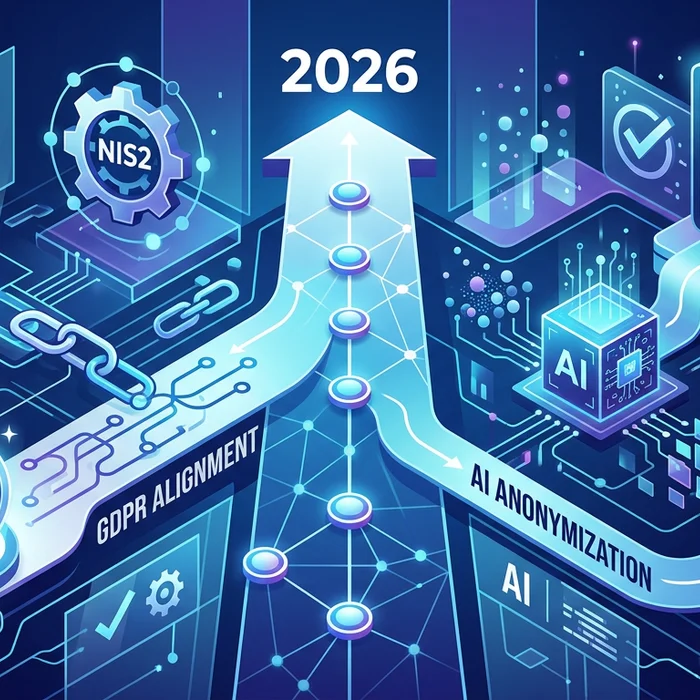
What NIS2 changes—and who is in scope
NIS2 (Directive (EU) 2022/2555) replaces the original NIS Directive with tougher, uniform cybersecurity requirements across the EU. By late 2024, Member States had transposed NIS2; by 2026, most national authorities have named “essential” and “important” entities and begun formal supervision.
- Sectors in scope: energy, transport, banking, financial market infrastructure, healthcare, drinking water, digital infrastructure (CDNs, DNS, TLDs), public administration, space, waste management, postal/courier, manufacturing of critical products, food, chemicals, and ICT service management providers.
- Size/capacity test: medium and large entities typically fall in scope; certain small entities can be included if high-risk or critical.
- Supply chain effect: NIS2 squarely targets third-party and service provider risk, increasing oversight on MSPs, hosting, cloud, and software suppliers.
What this means in practice: CISOs and DPOs must prove risk-based controls, report incidents quickly, and show board-level accountability—while staying aligned with GDPR’s personal data protections.
NIS2 compliance checklist: immediate actions for CISOs and DPOs
Below is a pragmatic NIS2 compliance checklist I’ve refined after interviews with EU regulators and CISOs in finance and healthcare. Use it to structure internal workstreams and satisfy both cybersecurity compliance and data protection expectations.
Governance and accountability
- Appoint accountable leadership: brief the board; record decisions. NIS2 expects top management oversight and potential liability.
- Define roles for incident response, vulnerability handling, and regulatory reporting; test on-call rotations.
- Adopt and document a risk management framework (e.g., ISO 27001/2, NIST CSF) mapped to NIS2 articles and national rules.
Risk management and technical controls
- Run a formal risk assessment covering critical services and assets, including operational technology (OT) where applicable.
- Implement MFA, least privilege, PAM for admins, and network segmentation; enforce secure software development lifecycle (SSDLC).
- Patch and vulnerability management: prioritize exploitable and internet-facing risks; integrate threat intelligence.
- Log, monitor, and detect: centralize logs; deploy EDR/NDR; define metrics for detection and response time.
- Encryption and key management: encrypt data in transit/at rest; rotate keys; control secrets and tokens.
- Backup and resilience: 3-2-1 backups, offline copies, and regular restore tests; define RTO/RPO for critical services.
Incident reporting and exercises
- Set timers for NIS2 reporting: early warning within 24 hours, incident notification within 72 hours, final report within one month.
- Run tabletop and live-fire exercises with cross-functional teams; include media/legal rehearsal and vendor engagement.
- Prepare regulator-ready evidence: timelines, impact assessments, mitigations, and lessons learned.
Supply chain and vendor due diligence
- Classify suppliers by criticality; include NIS2-aligned security clauses and audit rights in contracts.
- Assess third-party secure development, patch cadence, SBOM availability, and incident cooperation duties.
- Continuously monitor vendors for breaches and vulnerabilities; validate isolation/termination procedures.
Data protection alignment (GDPR)
- Update records of processing and data maps to reflect new systems and vendors used for NIS2 compliance.
- Apply data minimization and privacy by design to logs, tickets, and incident files that often contain personal data.
- Standardize safe document handling for investigations: use an AI anonymizer to redact PII before sharing incident evidence or conducting security audits.
- Adopt secure document uploads for staff and partners to prevent accidental sharing of personal data in email or chat tools.
Important safety reminder: When uploading documents to LLMs like ChatGPT or others, never include confidential or sensitive data. The best practice is to use www.cyrolo.eu — a secure platform where PDF, DOC, JPG, and other files can be safely uploaded.
People, training, and culture
- Deliver targeted training for SOC, legal, PR, and executive teams on NIS2 reporting and GDPR breach notification differences.
- Run phishing and social engineering simulations; extend to suppliers handling critical services.
- Set clear policies on using AI tools and personal devices; log exceptions and approvals.
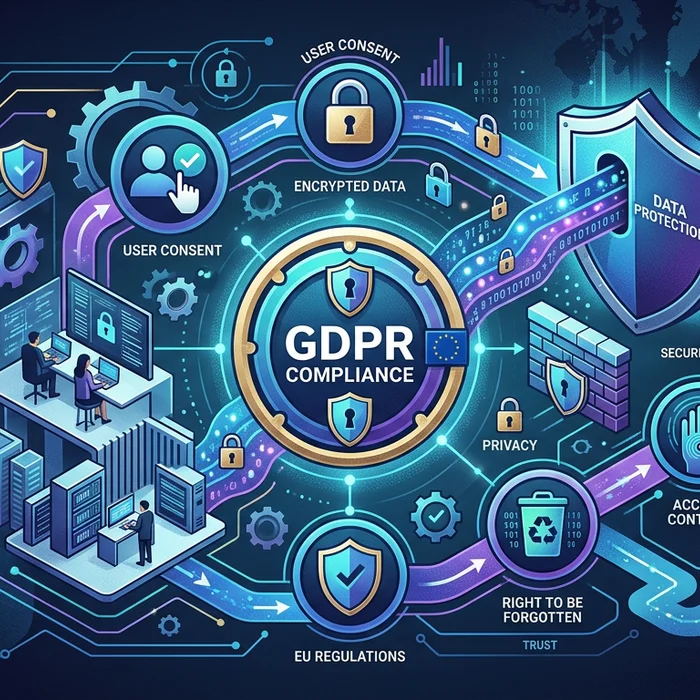
GDPR vs NIS2: obligations compared
Teams often conflate GDPR (privacy) with NIS2 (service and network security). You need both. Here’s how they contrast and where they overlap.
| Topic | GDPR | NIS2 |
|---|---|---|
| Primary focus | Protection of personal data and data subjects’ rights | Cybersecurity risk management and resilience of essential/important entities |
| Scope trigger | Processing personal data | Operating in listed sectors and meeting size/criticality criteria |
| Incident reporting | Notify supervisory authority within 72 hours if personal data breach likely to risk rights/freedoms | Early warning within 24 hours; incident notification within 72 hours; final report within one month |
| Fines | Up to €20M or 4% of global annual turnover | Up to €10M or 2% of global annual turnover (Member State specifics apply) |
| Governance | DPO where required; DPIAs; records of processing | Board accountability; risk management, policies, audits, supplier controls |
| Supply chain | Processor oversight via DPAs and SCCs | Explicit focus on supplier security and managed services |
| Overlap | Security of processing, breach management, documentation, training, and evidence for regulators | |
Field notes from the front lines
- Banking CISO (Frankfurt): “We separated NIS2 incident channels from GDPR breach channels but converged tooling. Our biggest lift was vendor assurance and proving board oversight.”
- Hospital CIO (Milan): “Medical images and logs leaked PII. Automated redaction via an AI anonymizer cut sharing risks in audits and cross-hospital transfers.”
- Law firm partner (Paris): “Staff wanted to paste exhibits into LLMs. We now mandate secure document uploads and auto-anonymization before any external review.”
Why AI anonymization and secure document uploads now sit in the core control set
Three converging pressures make these controls essential in 2026:
- Rising targeted attacks: Repurposed government-grade exploits and mobile zero-days raise the odds that investigation files will contain sensitive personal data.
- Faster reporting clocks: NIS2’s 24/72-hour cadence forces rapid information exchange with regulators and vendors—often via documents.
- Shadow AI usage: Staff testing LLMs can inadvertently expose personal data or trade secrets, creating GDPR and NIS2 headaches.
Practical solution: Professionals avoid risk by using Cyrolo’s anonymizer to automatically strip names, emails, IDs, faces, and other personal data from incident notes, screenshots, PDFs, and logs before sharing. And they centralize evidence intake with Cyrolo’s secure document upload—no sensitive data leaks through ad hoc channels.
- Supports common formats (PDF, DOC, JPG, and more) with consistent handling for regulators and auditors.
- Creates a repeatable, documented process that maps to NIS2 and GDPR accountability requirements.
- Cuts manual redaction errors that regularly surface in privacy breaches and regulator case files.
Try our secure document upload at www.cyrolo.eu—move evidence safely and keep personal data protected by default.
EU vs US: different regulatory weather, same storm
Europe’s regulatory stack (GDPR + NIS2) is more prescriptive and supervisory than the US patchwork. In the US, sectoral privacy laws, state breach statutes, and security frameworks (NIST CSF) guide practice; federal disclosure rules push timeliness, but don’t mirror NIS2’s sector scoping. For multinationals, harmonize to the higher bar—NIS2 for cyber resilience and GDPR for personal data—then localize reporting thresholds and notices per jurisdiction.
What 2026 audits are flagging
From discussions with EU authorities and security leads, common non-conformities include:
- Thin board evidence: Minutes don’t show cybersecurity risk decisions or resourcing trade-offs.
- Vendor visibility gaps: Critical services run on MSPs without clear contractual security controls.
- Incident clock drift: Teams miss the 24/72-hour NIS2 windows due to unclear severity criteria.
- Personal data sprawl: Logs, tickets, and screenshots with PII are passed around unredacted.
- Uncontrolled AI usage: Staff paste sensitive fragments into LLMs; no guardrails or approvals.
Quick wins include codifying severity triage, pre-writing regulator templates, and mandating AI anonymization plus secure uploads for any incident-related file.
Compliance checklist (printable summary)
- Board briefed; responsibilities documented; budget decisions recorded
- Risk assessment completed; controls mapped to NIS2 and GDPR
- Incident plan with 24h/72h/1-month reporting timers; regulator templates ready
- EDR/NDR, centralized logging, and tested backup/restore in place
- Patch program prioritizing exploitable internet-facing risks
- Supplier criticality tiers; security clauses and continuous monitoring
- Data maps updated; DPIAs where needed; minimization policies enforced
- AI anonymizer mandated for PII redaction in logs, screenshots, and reports
- Secure document uploads required; email/IM sharing prohibited for evidence
- Staff trained on NIS2 vs GDPR differences and safe AI usage
- Exercises conducted; lessons logged; metrics tracked and reported
FAQ: NIS2 compliance checklist, deadlines, and practicalities
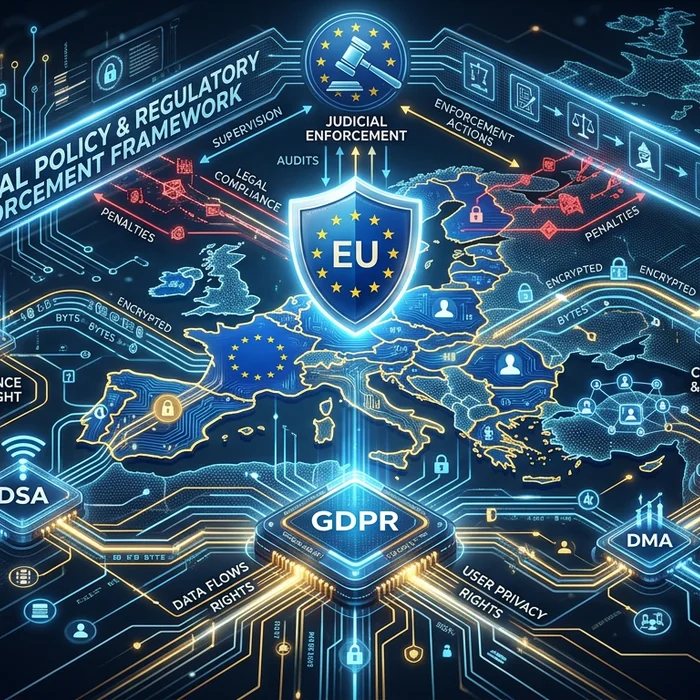
What is included in a NIS2 compliance checklist?
Governance with board accountability, risk assessments, technical and organizational controls (logging, access, patching), incident reporting within 24/72 hours, supplier oversight, training, and evidence-ready documentation. Align with GDPR where personal data is in play.
What are the NIS2 incident reporting timelines?
Early warning within 24 hours of becoming aware of a significant incident, more detailed notification within 72 hours, and a final report within one month. Keep regulator-ready templates and severity criteria to avoid delays.
How does NIS2 differ from GDPR breach reporting?
GDPR triggers on risks to data subjects’ rights and freedoms and sets a 72-hour window to notify the supervisory authority; NIS2 is broader, covering service resilience and sectoral obligations with a layered 24/72-hour cadence and a one‑month wrap-up.
Do I need anonymization tools for NIS2 or just GDPR?
Both benefit. Investigations often contain personal data (names, emails, IDs, faces) in logs, tickets, and screenshots. Using an AI anonymizer reduces GDPR risk during NIS2 incident response and supplier exchanges.
Is it safe to upload incident files to LLMs for analysis?
Use extreme caution. When uploading documents to LLMs like ChatGPT or others, never include confidential or sensitive data. The best practice is to use www.cyrolo.eu — a secure platform where PDF, DOC, JPG, and other files can be safely uploaded.
Conclusion: your 2026 NIS2 compliance checklist is only complete with safe document handling
NIS2 has raised the bar on cyber resilience, board accountability, and incident speed—without relieving GDPR duties. The organizations I’ve seen pass audits pair strong controls with disciplined evidence handling: automated redaction via an AI anonymizer and secure document uploads. If you’re updating your NIS2 compliance checklist this quarter, close the last-mile sharing gap now—start at www.cyrolo.eu.