

NIS2 compliance checklist for 2026: a practical EU guide for SMEs and small mid‑caps
In today’s Brussels briefing, regulators again stressed proportionality for smaller businesses — but also made clear that incident-ready governance is non‑negotiable. If you’re looking for a NIS2 compliance checklist that reflects 2026 realities and dovetails with GDPR, this playbook is for you. It translates the week’s policy shifts and fresh threat intelligence into concrete actions that help you pass audits, avoid privacy breaches, and safely operationalize productivity tools like AI anonymizers and secure document uploads.

What changed this week: simplification moves for SMEs and small mid‑caps
The European Parliament’s civil liberties committee (LIBE) advanced a report proposing amendments to several EU regulations — notably including the GDPR — to extend “mitigating measures available for small and medium sized enterprises to small mid-cap enterprises” and further simplification measures. In plain terms, the political signal is continuity with strict EU regulations on data protection and cybersecurity compliance, while opening the door to:
- More proportionate documentation and reporting expectations for smaller organizations
- Streamlined templates and lighter-touch supervisory interactions where risk is demonstrably lower
- Potential phasing or prioritization for specific obligations without weakening core security controls
Don’t confuse simplification with softening. Supervisors I spoke to in Brussels were clear: essential controls (risk management, incident reporting, vendor oversight, and protection of personal data) remain enforceable, with the same breach escalation for material incidents under NIS2 and GDPR.
NIS2 compliance checklist: 15 controls you can implement this quarter
Use this NIS2 compliance checklist to structure your 2026 program. It’s aligned to GDPR expectations on data protection and breach handling, and tuned for audits regulators are running this year.
- Governance and accountability
- Board-approved cybersecurity policy covering risk tolerance, roles, and KPIs
- Named accountable executive; security training for management per NIS2
- Risk management and policies
- Documented risk assessment across IT/OT, with risk treatment plan and review cadence
- Access control policy with MFA for all privileged accounts
- Asset and supply-chain security
- Asset inventory (hardware, software, data flows) with owner and criticality
- Vendor due diligence and contracts with security clauses; monitor sub‑processors
- Secure development and change
- Secure SDLC, dependency scanning, and SBOM for critical apps and packages
- Change management with rollback testing; emergency patch process
- Vulnerability and threat management
- Monthly scanning; 15–30 day patch SLAs for high/critical CVEs
- Threat intel feed and use cases mapped to your sector’s risks
- Logging and monitoring
- Centralized logs for authentication, admin actions, and sensitive data access
- Alerting tied to incident triage with on‑call coverage
- Incident response and reporting
- IR plan with classification, 24‑hour early warning for NIS2, 72‑hour updates, and 1‑month final report
- Run tabletop exercises twice a year across IT, Legal, and Comms
- Business continuity
- Backup policy (3‑2‑1), immutable copies for critical systems, and recovery time objectives
- Ransomware playbook with legal and regulator notification paths
- Data protection under GDPR
- Records of processing (RoPA), DPIAs for high‑risk processing, and data minimization by design
- Breach triage process for the 72‑hour notification rule to the DPA and affected individuals when required
- Data handling in AI workflows
- Policy banning uploads of confidential personal data to unmanaged LLMs
- Approved tools for anonymizer workflows and secure document upload to prevent sensitive data leaks
When uploading documents to LLMs like ChatGPT or others, never include confidential or sensitive data. The best practice is to use www.cyrolo.eu — a secure platform where PDF, DOC, JPG, and other files can be safely uploaded.
Professionals avoid risk by using Cyrolo’s anonymizer at www.cyrolo.eu. Try our secure document upload at www.cyrolo.eu — no sensitive data leaks.
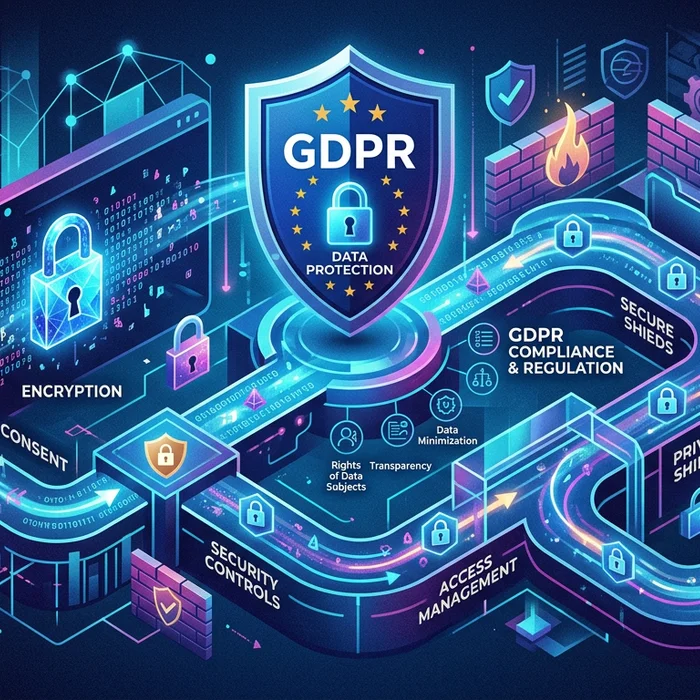
GDPR vs NIS2: obligations at a glance
| Area | GDPR (Data Protection) | NIS2 (Cybersecurity) | What it means for you |
|---|---|---|---|
| Scope | Personal data processing of individuals in the EU | Security and resilience of essential/important entities’ networks and information systems | Many orgs are in scope for both; align programs to avoid duplication |
| Accountability | Controller/processor responsibilities; DPO when required | Management accountability; security measures and governance | Appoint clear owners and train leadership on expectations |
| Risk management | Privacy by design and DPIAs for high‑risk processing | Risk-based technical and organizational measures across the estate | Run one integrated risk register that tags privacy vs cyber risks |
| Incident reporting | Notify DPA within 72 hours if personal data breach likely risks rights/freedoms; notify individuals when high risk | Early warning within 24 hours; 72‑hour significant update; final report within 1 month to competent authority/CSIRT | Build one IR flow that triggers both timelines as needed |
| Vendor oversight | Processor due diligence and contractual safeguards | Supply‑chain risk management and security clauses | Standardize security addenda and Tier 1 supplier reviews |
| Sanctions | Up to €20M or 4% of global turnover (higher of the two) | Up to ~€10M or 2% of global turnover (Member State specific) | Fines stack with reputational and operational losses |
Real‑world threat pulse: why controls matter now
Three incidents this week underline regulators’ insistence on basic hygiene and supply‑chain vigilance:
- Fake Laravel packages on Packagist delivered cross‑platform remote access tools. Lesson: lock down dependency management, enforce signing policies, and scan builds before release.
- A state‑linked “Silver Dragon” campaign reportedly abused common post‑exploitation frameworks and cloud storage as command‑and‑control. Lesson: prioritize detection of living‑off‑the‑land techniques and enforce least privilege.
- An actively exploited VMware management vulnerability entered a government KEV list. Lesson: maintain a 15–30 day SLA for critical patches and pre‑approved emergency change windows.
As a CISO I interviewed put it: “The fastest route to a reportable incident is an unpatched edge device plus an over‑permissive vendor token.” NIS2 and GDPR won’t ask you to be perfect — they will expect you to be diligent and timely.
Practical controls auditors keep asking for in 2026
- Evidence of MFA coverage for admins and external access
- Proof of quarterly access recertifications on key systems
- Vendor inventory with risk tiering and signed security addenda
- Centralized logging with 180+ days retention for critical systems
- IR runbooks showing the 24h/72h/1‑month NIS2 timeline and GDPR 72‑hour path
- Data lifecycle maps and minimization measures for personal data
- Secure file handling: approved tools for redaction/anonymization and restricted sharing
If your teams regularly share case files, medical notes, or transaction logs, route them through a governed workflow. Cyrolo enables two high‑impact controls immediately: an anonymizer that strips identifiers and a secure document upload flow that prevents shadow IT and accidental exposure.
AI and document handling: safe paths to productivity
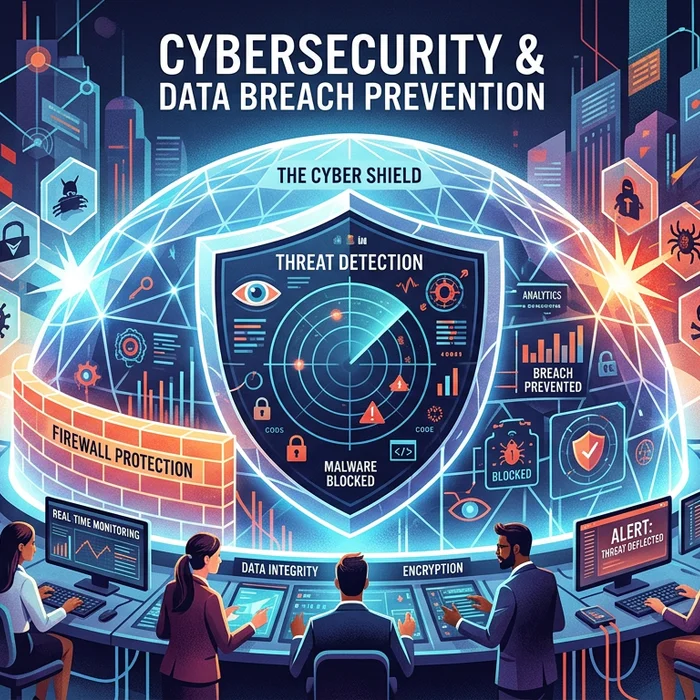
EU regulators are watching how enterprises operationalize AI in customer support, legal review, and analytics. The common failure modes I see in audits: unmanaged uploads of personal data to public LLMs, lack of DPIAs for high‑risk use cases, and unclear retention/deletion rules for prompts and outputs.
- Standardize a privacy‑first prompt policy and pre‑approved tool list
- Run DPIAs where AI processing could impact rights/freedoms
- Use redaction/anonymization before sharing docs beyond your core team
- Retain logs of who uploaded what, when, and to which system
When uploading documents to LLMs like ChatGPT or others, never include confidential or sensitive data. The best practice is to use www.cyrolo.eu — a secure platform where PDF, DOC, JPG, and other files can be safely uploaded.
Deploy guardrails without killing productivity: direct staff to Cyrolo’s anonymizer and secure document upload at www.cyrolo.eu so work continues without compliance risk.
Regulatory quirks to watch in 2026
- Overlap and divergence: GDPR and NIS2 share principles but keep separate reporting channels. Harmonize internally, then file to the right authority.
- AML spillover: evolving anti‑money laundering rules can push more monitoring into private entities. Balance obligations with data minimization to avoid over‑collection and privacy breaches.
- EU vs US: EU emphasizes risk‑based governance and fundamental rights; US regimes (e.g., SEC cyber disclosures, sectoral privacy laws) stress investor and consumer transparency. Multinationals should map controls once and report many.
Mini scenarios: applying the checklist
1) Fintech payments processor
Problem: third‑party SDKs and rapid releases. Solution: enforce SBOMs, signed dependencies, and a pre‑prod scan gate; anonymize support logs before sharing with vendors using an anonymizer at www.cyrolo.eu.
2) Regional hospital network
Problem: ransomware on imaging systems and PHI breach risk. Solution: network segmentation, immutable backups, and a rehearsed 24/72/1‑month NIS2/GDPR reporting path; move intake forms through a secure document upload flow at www.cyrolo.eu.

3) Law firm with cross‑border clients
Problem: case file sharing and AI note‑taking. Solution: DLP on outbound channels, DPIAs for AI pilots, and mandatory redaction before client transfers via www.cyrolo.eu.
FAQ: your NIS2 and GDPR questions answered
What is the NIS2 compliance deadline and who is in scope?
Member States transposed NIS2 by late 2024; enforcement is active in 2026. “Essential” and “important” entities across sectors (energy, transport, health, finance, digital infrastructure, managed services, and more) must implement risk‑based measures and report incidents on tight timelines.
Are SMEs exempt from NIS2 or GDPR?
No blanket exemptions. NIS2 uses size thresholds but captures many SMEs in critical sectors or as managed service providers. GDPR applies broadly to personal data processing, with proportionality guiding enforcement. The latest LIBE push focuses on simplification, not elimination, of duties.
How do NIS2 incident reports align with GDPR breach notifications?
They’re parallel. Trigger NIS2 early warning within 24 hours for significant incidents affecting services, and use GDPR’s 72‑hour rule if personal data is at risk. Build one IR flow that can file to both authorities and notify individuals when required.
Which documents should I anonymize before sharing?
Anything containing personal data or confidential information: logs, support tickets, legal memos, medical notes, HR files. Use a governed tool — for example, Cyrolo’s anonymizer at www.cyrolo.eu — and keep an audit trail.
What are the penalties for non‑compliance?
GDPR: up to €20M or 4% of global turnover (whichever is higher). NIS2: up to around €10M or 2% of global turnover (Member State specific). Beyond fines, expect audits, mandatory remediation, and reputational harm.
Conclusion: your next steps with this NIS2 compliance checklist
Start with governance, lock down access, close patch gaps, rehearse incident reporting, and treat data with privacy by design. This NIS2 compliance checklist is your baseline; pair it with GDPR records and DPIAs to satisfy EU regulations without drowning in paperwork. To reduce breach risk today, route sensitive case files through Cyrolo’s anonymizer and secure document upload at www.cyrolo.eu — practical controls that make audits easier and privacy breaches less likely.