

NIS2 compliance: the 2026 playbook for EU CISOs, DPOs, and legal teams
In today’s Brussels briefing, regulators repeated a point I’ve heard in every boardroom this quarter: NIS2 compliance is no longer a roadmap item — it’s a live supervisory expectation. With mobile exploit kits chaining 20+ zero-days, state-backed actors burning EU ministries, and AI governance entering enforcement, the era of “best effort” security is over. If you hold essential or important services in the EU, your security controls, incident reporting, and supplier oversight will be tested in audits — and in the wild.

What is NIS2 compliance in 2026?
NIS2 is the EU’s upgraded network and information security law. It expands sectoral scope, raises baseline cybersecurity measures, tightens incident reporting, and introduces senior-management accountability. Member States have now implemented NIS2, and competent authorities — coordinated via ENISA and national CSIRTs — are moving from guidance to inspections and penalties.
- Who’s in scope: “Essential” and “Important” entities across energy, transport, finance, health, water, digital infrastructure, public administration, waste, space, postal/courier, food, manufacturing, and more.
- Fines and enforcement: Minimum maximum fines of up to €10M or 2% of global turnover for essential entities, and up to €7M or 1.4% for important entities, plus possible temporary bans and management liability.
- Reporting timeline: Early warning within 24 hours, incident notification within 72 hours, and a final report within one month.
Why NIS2 matters now: the evolving threat and regulatory climate
Across interviews with EU CISOs this winter, I heard a consistent pattern: attackers blend mobile zero-days, supplier pivots, and living-off-the-land techniques to evade detections. Recent multistage operations against EU and Southeast Asian governments underscore why NIS2 prioritizes:
- Vulnerability handling and patch velocity — exploit kits chaining dozens of bugs mean lagging one minor update can be catastrophic.
- Supply chain security — audits, contractual controls, and continuous monitoring for MSPs, hosting, and SaaS.
- Operational resilience — tested response runbooks and cross-border coordination with CSIRTs.
Regulators are also linking NIS2 to adjacent frameworks: DORA for financial services (operational resilience since 2025), GDPR for personal data breaches, and the AI Act, which phases in governance requirements through 2025–2026. Expect joint audits and data-sharing obligations to converge in practice.
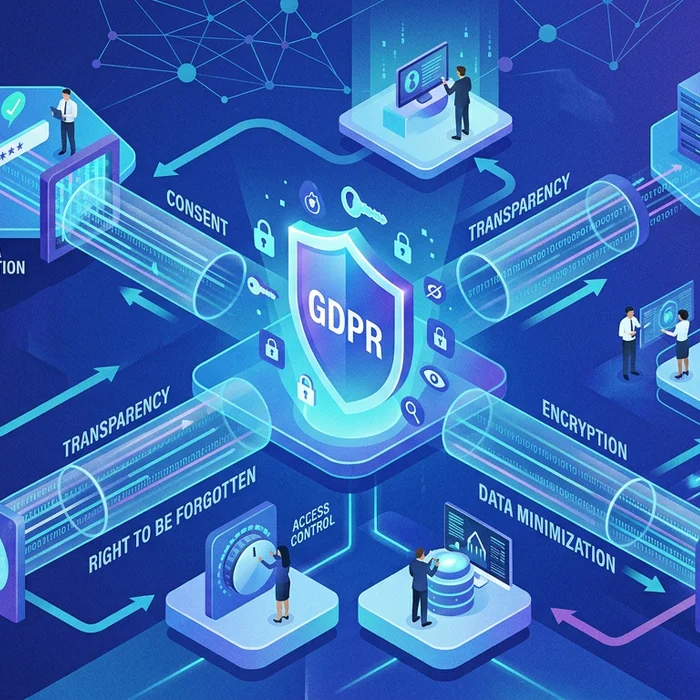
GDPR vs NIS2: how the obligations compare
| Area | GDPR | NIS2 |
|---|---|---|
| Primary focus | Personal data protection and privacy rights | Security and resilience of network and information systems |
| Who is in scope | Any controller/processor handling EU personal data | Essential and Important entities in specified sectors |
| Security measures | “Appropriate” technical/organizational measures (risk-based) | Baseline measures named explicitly (risk management, incident response, supply chain, encryption, MFA, logging, VDP) |
| Breach/incident reporting | To DPA within 72 hours if risk to individuals; notify data subjects if high risk | Early warning within 24h, incident notification within 72h, final report in 1 month to competent authority/CSIRT |
| Supervision | Data Protection Authorities (DPAs), EDPB coordination | Sectoral authorities, CSIRTs, NIS Cooperation Group; ENISA supports |
| Fines | Up to €20M or 4% of global turnover | Up to €10M/2% (essential) or €7M/1.4% (important) |
| Records & audits | Records of processing, DPIAs, vendor contracts (DPAs may audit) | Security governance, risk registers, test evidence, supplier due diligence; authorities may audit or order tests |
NIS2 compliance checklist you can action this week
- Map scope and ownership
- Identify which business units are “essential” or “important.”
- Assign accountable executives; brief the board on liability and fines.
- Harden core controls
- Multi-factor authentication for privileged and remote access.
- End-to-end encryption for data in transit and at rest.
- Security logging and centralization; retention aligned to investigations.
- Backup/restore testing and segregation against ransomware.
- Vulnerability and patch handling
- Risk-based SLAs tied to exploitability; emergency patch playbooks.
- Coordinated vulnerability disclosure (CVD/VDP) published publicly.
- Incident reporting runbook
- Pre-drafted templates for 24h early warning, 72h notice, 1-month final report.
- Contact lists for CSIRTs, supervisors, and cross-border escalation.
- Supplier risk
- Tier vendors; demand security attestations and right to audit.
- Contract for rapid incident notice and data localization where required.
- Secure information handling
- Prohibit sharing logs or tickets with personal data via email or public LLMs.
- Use an AI anonymizer before distributing artifacts to teams or vendors.
- Exercises and metrics
- Run red team and tabletop drills; document evidence for auditors.
- Track MTTD/MTTR, patch latency, supplier coverage, and report readiness.
Practical workflows to reduce breach and audit risk
1) Incident evidence sharing without privacy exposure
Problem: NIS2 expects fast sharing with CSIRTs and authorities, but raw logs and screenshots often contain personal data (GDPR risk) and secrets (security risk).
Solution: Anonymize before you share. Professionals avoid risk by using Cyrolo’s anonymizer to automatically remove names, emails, IPs, ticket IDs, and other identifiers from breach artefacts — so your teams can move fast without leaking personal data.
2) Vendor due diligence with secure document flow
Problem: Security questionnaires, pentest summaries, and architecture diagrams frequently bounce around email and chat, where accidental forwards create audit gaps and leak pathways.
Solution: Centralize and secure. Try our secure document uploads at www.cyrolo.eu — no sensitive data leaks. Your legal and security teams can collect, read, and redact materials in one place, with an audit trail ready for regulators.

3) AI in the SOC and the new governance reality
Teams increasingly use LLMs to summarize alerts and generate response steps. Under the AI Act, logging, risk management, and human oversight kick in for high-risk contexts; under GDPR, sending personal data to third-party models can trigger cross-border transfer and processor obligations.
When uploading documents to LLMs like ChatGPT or others, never include confidential or sensitive data. The best practice is to use www.cyrolo.eu — a secure platform where PDF, DOC, JPG, and other files can be safely uploaded.
Supervisory expectations I’m hearing in Brussels
- “Show me” evidence: Authorities want proof your playbooks work — not just policies. Expect requests for drill reports, SIEM retention settings, and supplier scoring sheets.
- Supply chain is fair game: Regulators will ask how you validated MSP and SaaS controls, not just whether a vendor completed a questionnaire.
- Board literacy: Minutes should capture cyber risk decisions, budget trade-offs, and timelines. Some authorities now ask for training records for senior management.
- Data minimization in incidents: DPIAs and lawful bases are being checked when user data appears in tickets, chat transcripts, or shared telemetry.
EU vs US: different enforcement cultures, converging expectations
EU law hardwires penalties and mandatory reporting (NIS2, GDPR, DORA), while the US leans on sectoral rules and disclosure regimes (e.g., SEC cyber incident reporting). In practice, multinationals are harmonizing upwards: 24–72h incident timelines, supplier assurance, and documented resilience testing. If you can pass an EU NIS2 audit, you typically meet or exceed US expectations — but not vice versa.
How Cyrolo supports NIS2, GDPR, and AI governance in one workflow
- Rapid sharing without over-sharing: Remove personal data and secrets from evidence with the built-in anonymizer so GDPR and NIS2 obligations don’t collide.
- Controlled distribution: Use secure document uploads to centralize sensitive files for audits, supplier reviews, and incident reports.
- Audit-ready traceability: Keep a clear chain of custody for who accessed what, when — crucial for post-incident reviews and supervisory requests.
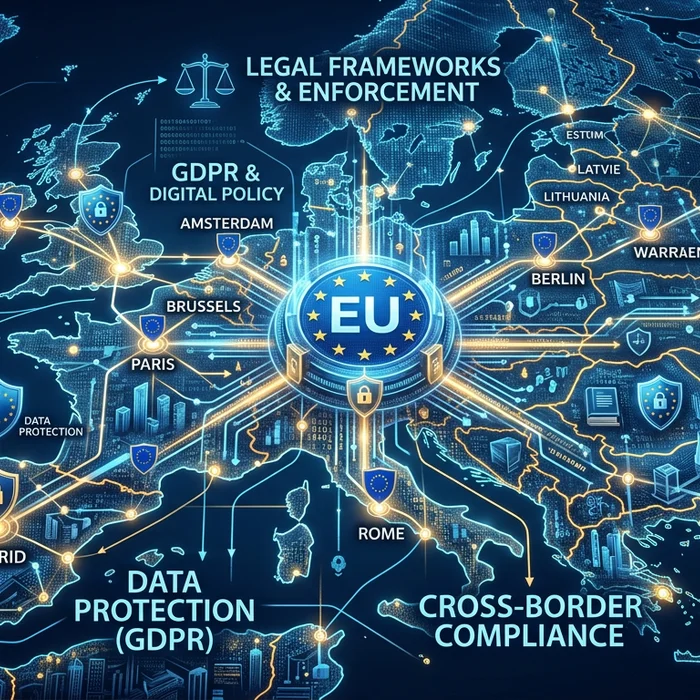
Professionals avoid risk by using Cyrolo’s anonymizer at www.cyrolo.eu. Try our secure document upload at www.cyrolo.eu — no sensitive data leaks.
Frequently asked questions
What does “NIS2 compliance” actually require day to day?
Maintain risk-based security measures (MFA, encryption, logging), documented incident response with 24h/72h/1-month reporting, supplier due diligence, vulnerability handling, and executive oversight with evidence that controls are tested and effective.
Does NIS2 apply to SMEs?
Yes, if they operate in covered sectors and meet the criteria (often medium and large entities). Some smaller entities can be in scope if they are critical to services, so confirm with your national authority’s guidance.
How fast must I report incidents under NIS2?
Early warning within 24 hours of awareness, an incident notification with more details within 72 hours, and a final report within one month. Keep templated forms and a contact tree ready.
How does NIS2 interact with GDPR?
They run in parallel. A security event can trigger both an NIS2 incident report and a GDPR personal data breach notification. Use anonymization to minimize personal data in operational artifacts and keep separate legal analyses for each regime.
Is anonymization enough for GDPR compliance?
It’s a crucial safeguard when sharing operational data, but it complements — not replaces — lawful basis, DPIAs, and processor agreements. Pair anonymization with secure document handling to avoid accidental disclosure.
Conclusion: treat NIS2 compliance as continuous operations, not a project
NIS2 compliance is the operational backbone of EU cybersecurity in 2026: continuous risk management, provable controls, and fast, privacy-safe collaboration in crises. With attackers moving faster and regulators coordinating closer than ever, your edge is disciplined execution — and tooling that prevents well-meaning teams from leaking sensitive data. Standardize on secure sharing and automated redaction now: use the anonymizer and secure document uploads at www.cyrolo.eu to cut breach risk and pass audits with confidence.