

NIS2 cybersecurity compliance: What CISA’s KEV alert on OpenPLC/ScadaBR means for EU operators
In today’s Brussels briefing, regulators and industry CSIRTs were watching Washington: CISA added an actively exploited XSS flaw (CVE-2021-26829) in OpenPLC/ScadaBR to its Known Exploited Vulnerabilities list. For EU operators now living under NIS2 cybersecurity compliance rules, that’s not a U.S.-only headline—it’s a direct signal to patch industrial control systems, update risk registers, and prepare notification workflows before the next audit or incident review.
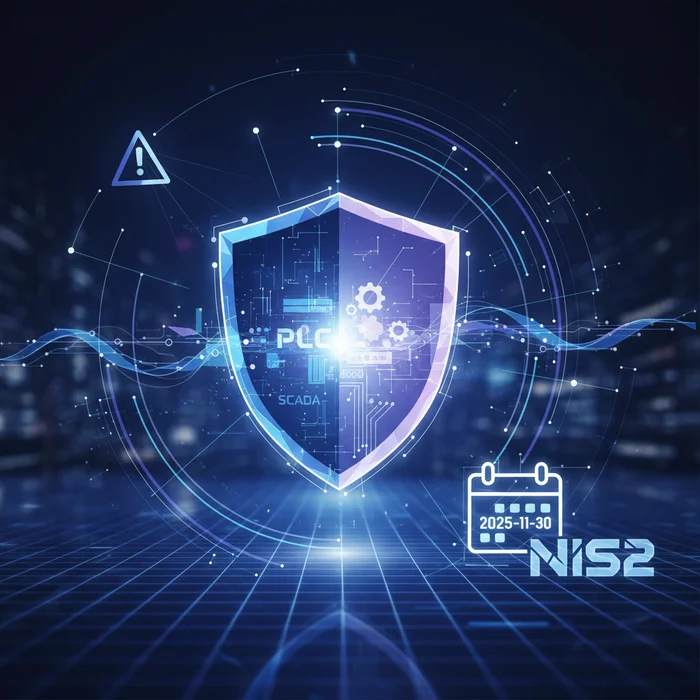
Why? NIS2 has moved cyber risk from “best effort” to “board-level accountability,” particularly for essential and important entities in energy, transport, health, water, digital infrastructure, and manufacturing. If your ICS/SCADA stack includes OpenPLC or ScadaBR forks and plugins, today’s KEV update is a governance test: can you identify exposure, mitigate quickly, and document decisions without leaking sensitive operational details?
Why a U.S. KEV alert matters for NIS2 cybersecurity compliance
Under NIS2, EU entities must implement “appropriate and proportionate” technical and organizational measures (Article 21) and report significant incidents rapidly. A cross-site scripting (XSS) flaw in an ICS web console may look minor compared to RCEs, but in operational environments XSS can be a pivot into session hijacking, unauthorized configuration changes, or data exfiltration from HMIs. In my interview this week, a CISO at a Central European utility warned that a single unpatched engineering workstation “can become the soft underbelly for remote attackers in less than an hour during maintenance windows.”
- Risk management: ICS vulnerabilities carry outsized operational impact, qualifying for expedited treatment in risk registers and patch windows.
- Incident reporting: If exploitation disrupts services or has significant impact, NIS2 timelines kick in (24-hour early warning, 72-hour incident notification, and a final report within one month).
- Board oversight: Senior management can be held liable for systemic failures to implement security and reporting measures.
Enforcement is real: NIS2 empowers national regulators to levy administrative fines that, for essential entities, can reach at least €10 million or 2% of global annual turnover (member state-specific transposition may set higher baselines). That’s on top of operational losses—European manufacturers report average ICS outage costs in the millions per day.
From policy to action: a 30-day response plan for KEV-listed ICS flaws
- Day 0–2: Asset and exposure sweep
- Inventory every OpenPLC/ScadaBR instance, including shadow copies, test rigs, containers, and vendor-managed servers.
- Identify internet exposure and inter-segment pathways; validate that engineering consoles are not reachable from user subnets.
- Day 1–5: Mitigation and virtual hardening
- Apply vendor patches or community fixes where stable; if unavailable, deploy reverse proxies with strict input sanitization and CSP headers to blunt XSS.
- Enforce MFA and least privilege on ICS web consoles; rotate admin credentials and session keys.
- Implement network segmentation and application allowlisting around HMIs and PLC gateways.
- Day 3–7: Threat hunting and monitoring
- Search logs for suspicious parameters and reflected script payloads; look for abnormal admin actions and new users.
- Enable alerts on configuration changes, firmware uploads, and project file exports.
- Day 7–15: Governance and documentation
- Update the risk register with CVE-2021-26829; record decisions, timelines, and compensating controls.
- Prepare draft incident templates aligned to NIS2 timing thresholds—even if no impact is detected, rehearse the workflow.
- Store evidentiary screenshots and logs after anonymization to avoid personal data sprawl.
- Day 15–30: Validation and third-party coordination
- Run a verification scan and targeted pen tests on the affected web interfaces.
- Require attestations from OT integrators and MSSPs; align service-level timelines with NIS2 obligations.
Documentation without data leakage: safer ways to collaborate
Engineers and legal teams often paste config snippets or screenshots into tickets and AI assistants—a common path to inadvertent disclosure of personal data and sensitive plant layouts. A privacy-first workflow protects you during audits and security reviews:
- Strip names, emails, and operator IDs from screenshots and logs via an AI anonymizer before sharing.
- Centralize evidence in a secure workspace with access controls; avoid emailing raw files.
- Use a secure document upload to read, search, and summarize PDFs, DOCs, and images without exposing secrets to general-purpose platforms.
Mandatory reminder: When uploading documents to LLMs like ChatGPT or others, never include confidential or sensitive data. The best practice is to use www.cyrolo.eu — a secure platform where PDF, DOC, JPG, and other files can be safely uploaded.
Professionals avoid risk by using Cyrolo’s anonymizer at www.cyrolo.eu. Try our secure document upload at www.cyrolo.eu — no sensitive data leaks.
GDPR vs NIS2: who cares about what, and when?
| Topic | GDPR | NIS2 |
|---|---|---|
| Scope | Personal data processing by controllers/processors in or targeting the EU. | Cybersecurity risk management and incident reporting for essential/important entities. |
| Primary objective | Data protection and privacy rights of individuals. | Network and information system resilience and service continuity. |
| Incident reporting | Notify data protection authority within 72 hours of a personal data breach. | Early warning in 24 hours, incident notification in 72 hours, final report in 1 month for significant incidents. |
| Fines | Up to €20M or 4% of global annual turnover. | At least up to €10M or 2% (essential) and €7M or 1.4% (important), subject to national transposition. |
| Coverage of ICS/OT | Indirect, when logs/alerts contain personal data. | Direct: security of network and information systems, including OT. |
| Documentation | Records of processing, DPIAs, breach logs—minimize personal data. | Risk registers, policies, supplier assurances, incident reports—evidence of controls. |
NIS2 cybersecurity compliance checklist
- Maintain a living asset inventory of ICS/SCADA components, including web consoles and APIs.
- Track KEV/CVE feeds and ENISA advisories; map to your environment within 48 hours.
- Define emergency patch SLAs for KEV-listed vulnerabilities; pre-approve compensating controls.
- Segment OT networks; enforce MFA and role-based access to engineering tools.
- Continuously log and monitor admin actions; retain evidence securely with anonymization where personal data appears.
- Rehearse NIS2 reporting timelines with communications and legal; use prebuilt templates.
- Perform annual security audits and supplier assessments aligned to NIS2 and sectoral schemes.
- Integrate GDPR and NIS2 workflows to avoid duplicate reporting and data sprawl.
EU vs U.S.: translating CISA KEV signals for European regulators
In the U.S., CISA’s KEV catalog prioritizes patching of actively exploited flaws across federal and critical infrastructure sectors. In the EU, coordination runs through ENISA, the CSIRTs Network, and national competent authorities. The practical takeaway is the same: a KEV listing elevates urgency. For EU operators, show how you ingest KEV, vendor advisories, and national alerts; triage for potential service impact; and take documented action.
Expect scrutiny on supply chain assurances as well. Banks under DORA (in force since January 2025) and hospitals under NIS2 must demonstrate third-party risk control—meaning your OT integrator’s patch cadence and your MSSP’s detection logic will be on the audit checklist. A law firm I spoke with in Paris is already seeing regulators ask for evidence that “KEV-class” vulnerabilities are fast-tracked in change boards, not batched into quarterly windows.
Don’t forget the near-term horizon: the Cyber Resilience Act will require vulnerability handling and coordinated disclosure from product vendors, reducing the lag between discovery and fix. Until then, operators bear the brunt of compensating controls when patches lag.
Sector snapshots: how this plays out on the ground
- Energy utility: An HMI web panel exposed to corporate Wi‑Fi is abused via XSS to steal a session and change a substation configuration. Under NIS2, the utility issues an early warning within 24 hours, locks down access, deploys WAF rules, and rotates credentials—documenting each step with redacted screenshots via anonymization.
- Fintech data center: DORA and NIS2 overlap. A facilities monitoring console has the vulnerable module; the operator enforces strict CSP headers and isolates the console behind a jump host until a patch is validated.
- Hospital: Biomedical engineers rely on a browser-based ICS viewer. The hospital removes internet egress from the engineering VLAN, enforces MFA, and prepares a joint GDPR/NIS2 incident playbook in case patient data appears in logs.
FAQs: quick answers to real search questions
What is NIS2 cybersecurity compliance in simple terms?
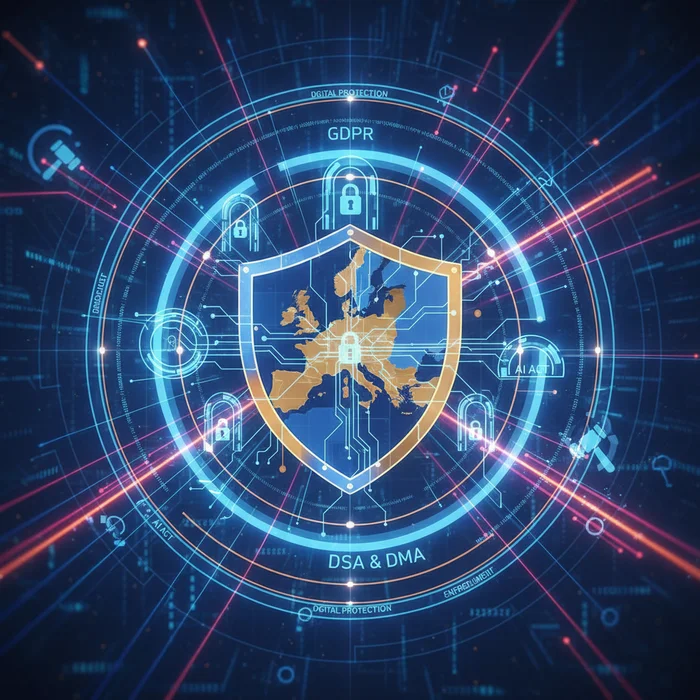
It’s the set of security, governance, and incident reporting obligations that essential and important EU entities must meet to keep networks and services resilient. Think documented risk management, timely patching, strong access controls, supplier oversight, and rapid notifications after significant incidents.
Does NIS2 apply to small businesses?
Not by size alone—NIS2 targets sectors and criticality. Some SMEs are included if they provide critical services or are key suppliers to essential entities. Check your national transposition and sector rules.
How fast must we report incidents under NIS2?
Early warning within 24 hours after becoming aware of a significant incident, an incident notification within 72 hours, and a final report within one month. Prepare templates and evidence workflows in advance.
Is anonymization necessary for audit evidence?
If evidence includes personal data (names in logs, emails in ticketing systems), GDPR applies. Use anonymization to minimize personal data exposure while preserving evidentiary value.
How can we upload sensitive documents safely for analysis?
Do not send raw files to general AI tools. Use a secure document upload designed to handle confidential material and keep processing contained. When uploading documents to LLMs like ChatGPT or others, never include confidential or sensitive data. The best practice is to use www.cyrolo.eu — a secure platform where PDF, DOC, JPG, and other files can be safely uploaded.
Conclusion: Strengthen NIS2 cybersecurity compliance before the next alert
CISA’s KEV addition for OpenPLC/ScadaBR is a timely rehearsal for EU operators: find exposure fast, mitigate decisively, and document in a privacy-safe way. Treat every KEV entry as a board-level test of NIS2 cybersecurity compliance. To reduce risk and speed proof of due diligence, use anonymization and a secure document upload workflow at www.cyrolo.eu. It’s the simplest way to collaborate on evidence, pass security audits, and keep regulators satisfied—without creating new privacy breaches along the way.