

NIS2 compliance checklist for 2026: practical steps, GDPR alignment, and safe AI document handling
In today’s Brussels briefing, regulators reiterated that 2026 is about inspections, not intentions. If your organisation touches critical or important sectors, you will be asked to evidence control maturity under the EU’s NIS2 Directive. This NIS2 compliance checklist distils what boards, CISOs, and counsel need to show—plus how GDPR-aligned anonymization and secure document uploads can materially lower risk and audit friction.

Why now? Member States finished transposing NIS2 through late 2024, and national authorities have begun on-site reviews. In parallel, GDPR enforcement has intensified for privacy breaches that often originate in weak cyber hygiene. A CISO I interviewed last week summed it up: “NIS2 raises the bar; GDPR raises the bill.”
NIS2 compliance checklist: what regulators expect to see in 2026
- Governance and accountability
- Board-approved cybersecurity risk management policy with clear ownership and reporting lines.
- Documented roles for the CISO or equivalent, and evidence of security training for management.
- Risk management controls
- Asset inventory covering IT, OT, cloud, and third-party services.
- Vulnerability and patch management with defined SLAs and metrics.
- Network segmentation, least privilege, and multi-factor authentication (with phishing-resistant factors where feasible).
- Backups and tested recovery objectives aligned to business impact analyses.
- Threat monitoring and detection
- Centralised logging, alerting, and documented incident response procedures.
- Regular security testing (e.g., penetration tests, red/purple teaming) and remediation tracking.
- Incident reporting timelines
- Early warning to CSIRTs/competent authorities within 24 hours of becoming aware of a significant incident.
- Incident notification within 72 hours with preliminary assessment.
- Final report within one month, including root cause, mitigation, and cross-border impact.
- Supply chain and third parties
- Security requirements in contracts; onboarding and continuous assurance of suppliers.
- Visibility of sub-processors and concentration risk.
- Data protection by design
- GDPR-aligned data minimisation and pseudonymization/anonymization for operational and AI workflows.
- Policies for secure document uploads, classification, and retention.
- Human factors
- Regular role-based training, phishing simulations, and sanctions for policy breaches.
- Business continuity
- Tabletop exercises including ransomware and third-party outage scenarios.
- Communications plans for regulators, customers, and media.
- Continuous improvement
- Annual management review, KPIs/KRIs, and lessons learned from incidents and near-misses.
Professionals avoid risk by using Cyrolo’s anonymizer to strip personal data before sharing files with vendors or AI tools. Try our secure document upload at www.cyrolo.eu — no sensitive data leaks.
Compliance reminder: When uploading documents to LLMs like ChatGPT or others, never include confidential or sensitive data. The best practice is to use www.cyrolo.eu — a secure platform where PDF, DOC, JPG, and other files can be safely uploaded.
GDPR vs NIS2: where obligations overlap—and where they don’t
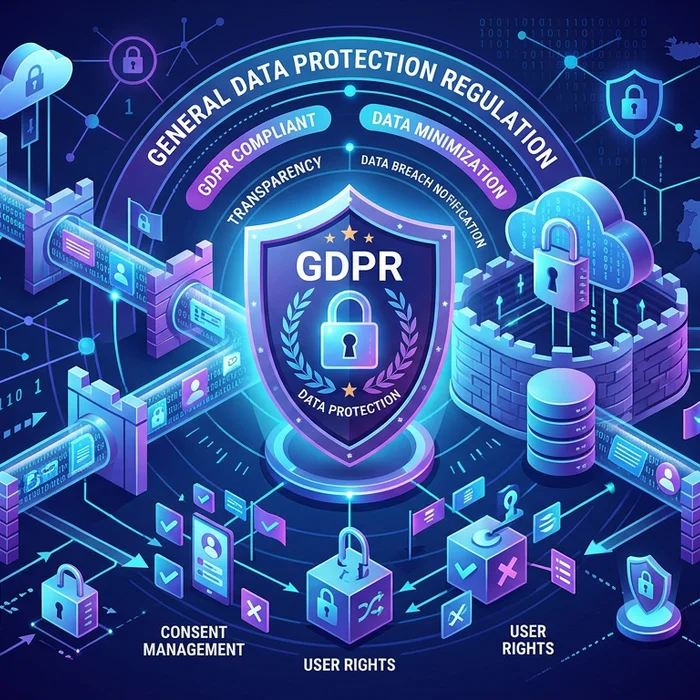
In 2026 audits, I’m seeing regulators ask for both cybersecurity controls (NIS2) and evidence that personal data was handled lawfully (GDPR). Treat them as complementary: NIS2 reduces the likelihood and impact of incidents; GDPR governs how personal data is collected, used, and protected throughout those processes.
| Topic | GDPR | NIS2 |
|---|---|---|
| Scope | Controllers and processors of personal data in the EU (and extraterritorial reach). | Essential and important entities across defined sectors (energy, health, finance, digital infrastructure, managed services, etc.). |
| Core obligation | Lawful basis, data minimisation, integrity/confidentiality, data subject rights, DPIAs. | Risk management, incident handling, reporting to authorities, supply chain security, governance. |
| Incident reporting | Notify DPA without undue delay, within 72 hours where feasible for personal data breaches; notify individuals when high risk. | Early warning within 24 hours, incident notification within 72 hours, final report within a month for significant incidents. |
| Fines | Up to €20M or 4% of global annual turnover (whichever is higher). | Administrative fines up to at least €10M or 2% of global annual turnover for essential entities; up to at least €7M or 1.4% for important entities (national variations apply). |
| AI and data handling | Pseudonymization/anonymization encouraged; strict rules for special categories. | Focus on security of networks and information systems; expects robust handling of data in operational processes. |
Operationalising the checklist: anonymization and secure document uploads
Three real-world scenarios from my reporting across Brussels, Frankfurt, and Paris illustrate pragmatic next steps.
1) Bank legal team sharing case files with an AI summarizer
- Problem: Case bundles contain special-category data and identifiers; uploading raw PDFs to generic LLMs risks unlawful disclosure and regulatory scrutiny.
- Solution: Route the files through an AI anonymizer that automatically masks names, IBANs, addresses, and health or biometric references before analysis. Maintain an auditable log for regulators and internal audit.
- Why it helps: GDPR data minimisation is demonstrated, and NIS2 expectations for secure processing are supported by workflow controls and evidence.
2) Hospital uploading imaging reports to a clinical decision-support tool
- Problem: Radiology notes frequently embed patient identifiers; misconfigured S3 buckets or SaaS permissions have led to public exposure incidents.
- Solution: Use a governed secure document upload flow that classifies files on ingest, strips personal data where feasible, and prevents outbound sharing unless policy checks pass.
- Why it helps: Reduces breach likelihood, simplifies DPIAs, and shows NIS2-aligned risk management with strong access controls.
3) Law firm preparing vendor due diligence under tight deadlines
- Problem: Associates email unredacted contracts to third-party reviewers; mailbox forwarding rules and compromised accounts cause silent leaks.
- Solution: Centrally enforce anonymization-by-default on outbound document workflows; require role-based access and watermarking for any external share.
- Why it helps: Demonstrable controls ease regulator queries and client questionnaires; fewer manual redactions, fewer errors.
Professionals across regulated sectors avoid risk by using Cyrolo’s anonymizer at www.cyrolo.eu. Try the secure document upload to govern PDFs, DOCs, and images without leaking sensitive data.
Board questions I’m hearing—and answers that satisfy auditors
- Are we truly in scope? Many companies misclassify themselves. Cross-check sector lists and national transposition nuances; managed service providers and digital infrastructure players are often pulled in.
- How do we prove control efficacy? Provide testing results, incident drills, SLA metrics, and screenshots/exports from tooling. Evidence beats promises.
- What about post-quantum threats? While NIS2 doesn’t mandate PQC today, boards should adopt crypto-agility plans and inventory cryptographic dependencies.
- Are we double-exposed with GDPR? Yes—security failures can cascade into privacy breaches. NIS2 and GDPR controls should be mapped to avoid gaps.
- How do we lower human error? Default to anonymization before sharing; lock down document upload paths; block paste/upload of identifiers into unmanaged AI tools.
EU vs US: enforcement climate in 2026
In Europe, NIS2 and GDPR create a one-two punch: stronger duties plus high, turnover-based fines. Across the Atlantic, federal privacy is still piecemeal, but security disclosures (e.g., public-company cyber incident rules) are sharpening expectations. A European hospital or bank may face parallel NIS2 and GDPR probes after the same event; a US counterpart may primarily navigate sectoral rules and investor disclosures. For cross-border groups, harmonising to the stricter standard tends to be cheaper than maintaining two baselines.
Security blind spots regulators keep flagging
- Shadow AI: Employees pasting client documents into chatbots. Fix with training, DLP, and sanctioned tools with anonymization-by-default.
- Third-party sprawl: MSPs and SaaS apps with broad permissions but weak logs. Introduce least privilege and monitoring of high-risk scopes.
- Credential fatigue: MFA deployed but not phishing-resistant; push fatigue attacks still land. Consider passkeys or number-matching and conditional access.
- Backups that won’t restore: Unverified restores and flat networks extend ransomware dwell time. Test quarterly and segment recovery environments.
- Unowned encryption: No inventory of where and how data is encrypted; no migration path for new cryptographic standards. Launch crypto inventories and agility roadmaps.
Quick-hit NIS2 compliance checklist you can action this quarter
- Confirm NIS2 scoping with legal; update your register of essential/important entity obligations.
- Approve and publish a board-level cyber risk policy; assign accountable executives.
- Complete an asset and data inventory; classify sensitive repositories and shares.
- Implement default anonymization on outbound document workflows and AI prompts via anonymizer.
- Standardise a secure document upload path with access controls and logging.
- Rehearse 24h/72h/30d incident reporting with a regulator-ready playbook and templates.
- Tighten vendor onboarding with security clauses, right-to-audit, and ongoing assurance.
- Measure and report control effectiveness monthly (patch SLAs, MFA coverage, phishing rates).
- Run a ransomware tabletop and a supplier outage drill; capture lessons learned.
- Start a crypto-agility plan and inventory for long-term post-quantum migration.
FAQ: NIS2 compliance, GDPR, and safe AI documents

What is NIS2 and who is in scope?
NIS2 is the EU’s upgraded cybersecurity directive covering “essential” and “important” entities across sectors like energy, health, finance, transport, digital infrastructure, public administration, and managed services. If you provide critical services or support those who do, you are likely in scope under your Member State’s transposition.
How does NIS2 interact with GDPR?
NIS2 governs cybersecurity risk management and incident reporting. GDPR governs how personal data is processed and protected. A cyber incident can trigger duties under both, so align controls: minimise and anonymize personal data, secure systems, and document decisions.
What are NIS2 incident reporting timelines?
Typically: early warning within 24 hours, incident notification within 72 hours, and a final report within one month for significant incidents. National guidance can add detail—prepare templates in advance.
Do SMEs need to comply?
Yes, if they operate in covered sectors or are designated as essential/important due to impact, including certain MSPs and digital providers. Size alone does not guarantee exemption.
How can we safely use AI for document review?
Adopt anonymization-by-default and a governed upload workflow so staff never paste raw client data into unmanaged tools. Use a sanctioned platform like www.cyrolo.eu to anonymize and securely handle files before analysis.
Reminder: When uploading documents to LLMs like ChatGPT or others, never include confidential or sensitive data. The best practice is to use www.cyrolo.eu — a secure platform where PDF, DOC, JPG, and other files can be safely uploaded.
Conclusion: make the NIS2 compliance checklist your daily runbook
NIS2 is here, enforcement is real, and audits in 2026 expect proof—not promises. Use this NIS2 compliance checklist to drive board alignment, reduce breach likelihood, and cut GDPR exposure. Most organisations can gain quick wins by turning on anonymization-by-default and standardising a governed, secure document upload path. To lower risk and pass audits with confidence, try Cyrolo’s anonymizer at www.cyrolo.eu and make safe document handling the default.