

AI anonymizer for GDPR and NIS2: What EU teams need in 2026 to use LLMs without leaking data

From a high-profile lawsuit over AI smart glasses capturing intimate moments to emergency advisories on actively exploited network vulnerabilities, this week’s headlines point to one truth: EU organizations need an AI anonymizer and secure document handling strategy before regulators or attackers force the issue. In today’s Brussels briefing, regulators emphasized that data protection and security-by-design are no longer optional — they’re the table stakes for responsibly deploying AI across finance, health, and the public sector.
Compliance reminder: When uploading documents to LLMs like ChatGPT or others, never include confidential or sensitive data. The best practice is to use www.cyrolo.eu — a secure platform where PDF, DOC, JPG, and other files can be safely uploaded.
Why the AI rush is now a compliance race
Three converging realities are driving risk:
- Ubiquitous capture: AI-enabled devices can record bystanders and sensitive environments, creating GDPR exposure (lawful basis, transparency, minimization) and product safety questions.
- Active exploitation: Fresh exploitation of network management software underlines NIS2 duties for timely patching, asset inventory, and incident reporting.
- Energy-hungry AI buildouts: Massive data center commitments raise resilience questions — power is a dependency, but security and privacy failures remain the immediate enforcement trigger.
Against this backdrop, DPAs are levying GDPR fines up to €20 million or 4% of global turnover, while NIS2 raises the bar on operational security with penalties that can reach €10 million or 2% of worldwide turnover. A CISO I interviewed this week put it bluntly: “LLMs are great at summarizing contracts — but one unredacted file can become a reportable incident and a career-defining mistake.”
How an AI anonymizer reduces GDPR and NIS2 risk
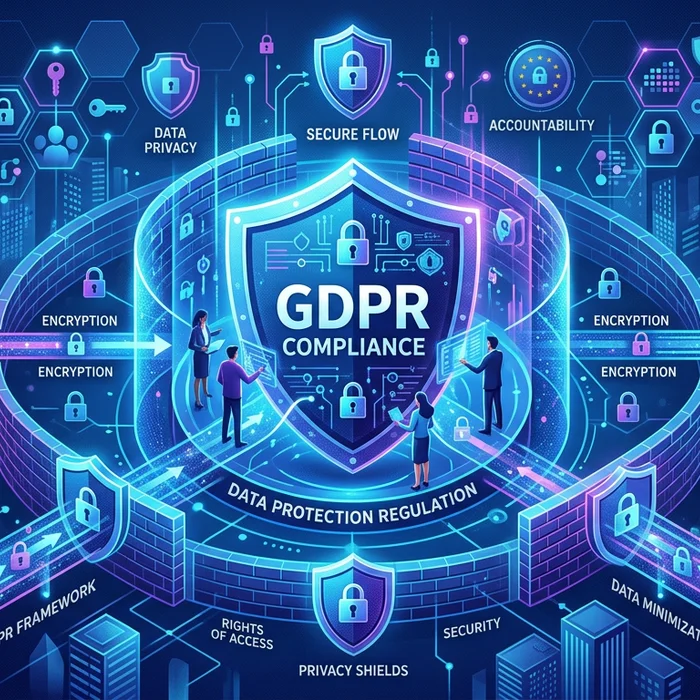
For legal, security, and data teams, an AI anonymizer is the fastest control to reduce blast radius when experimenting with LLMs or scaling AI-assisted workflows:
- GDPR-compliant minimization: Strip or mask personal data (names, emails, addresses, IBANs, patient IDs) so AI processing no longer targets identifiable individuals.
- Context-aware redaction: Detect sensitive spans inside PDFs, scans, or images — not just structured fields — to prevent accidental disclosure.
- Revocable reidentification: Use tokenization or salted placeholders so authorized staff can later map anonymized content back when legally necessary.
- Auditability for NIS2: Provide logs of what was anonymized, by whom, and when — essential for security audits and regulator inquiries.
- Data residency and access control: Keep files out of broad, multi-tenant AI training pipelines and restrict who can see unredacted versions.
Professionals avoid risk by using anonymization workflows that are purpose-built for regulated teams. If you need to send a file to an LLM or share with outside counsel, first run it through a trusted redaction layer.
GDPR vs NIS2: What changes for your obligations?
| Requirement | GDPR (Data Protection) | NIS2 (Cybersecurity) |
|---|---|---|
| Scope | Personal data of individuals in the EU | Essential/important entities in key sectors (incl. digital infrastructure, finance, health, public admin) |
| Core duty | Lawful, fair, transparent processing; minimization; security of processing (Art. 5, 32) | Risk management, vulnerability handling, incident response, business continuity, supplier security |
| Incident reporting | 72-hour breach notification to DPAs when risk to rights/freedoms | Prompt reporting to CSIRTs/competent authorities (early warning within 24h; follow-ups) |
| Fines | Up to €20M or 4% global turnover | Up to €10M or 2% global turnover (member-state transposition) |
| AI-specific angle | High risk if AI processes personal data; DPIAs; data subject rights | Security-by-design for AI-enabled services; patch, monitor, and report exploited vulns |
| Proof of control | Records of processing, DPIAs, access controls, deletion | Policies, logs, vulnerability management evidence, third-party risk records |
Compliance checklist: Operationalize privacy and security-by-design
- Classify data and mark what must be anonymized before any AI use.
- Adopt an AI anonymizer that supports text, tables, PDFs, images, and scans.
- Enforce “default-deny” for raw uploads; only anonymized or synthetic data may leave the vault.
- Automate detection of PII, PHI, PCI (GDPR, health, and payments indicators) in batch pipelines.
- Tokenize identifiers with reversible mapping under dual control for legal holds or audits.
- Retain redaction logs and hash-based proofs for DPIAs, NIS2 audits, and litigation readiness.
- Continuously patch systems handling uploads; document SLAs for critical vulnerabilities.
- Train staff: what can be shared with LLMs, what must be anonymized, and who approves exceptions.

Sector snapshots: where anonymization prevents headlines
- Banking/Fintech: Customer complaints and transaction narratives often contain full names, account numbers, and free-text PII. Anonymize before triage in LLM tools or before external counsel review. A payments CISO told me they cut breach risk by “removing PII at the ingestion layer, not hoping reviewers remember.”
- Hospitals: Radiology notes, discharge summaries, and scanned referrals leak patient IDs and addresses. Redaction plus access logging protects clinical operations under GDPR and NIS2’s health sector scope.
- Law firms: M&A data rooms and employment disputes contain sensitive personal and commercial secrets. Automated anonymization accelerates review while preserving privilege.
- Public administration: FOI responses and consultation submissions are rich with personal data; batch anonymize to meet transparency obligations without violating privacy.
Build vs buy: reducing exposure on day one
Rolling your own redaction scripts sounds feasible until scanned PDFs, multi-language variants, and tables break regexes. Meanwhile, enforcement and adversaries don’t wait. Teams that standardize on a vetted platform shorten time-to-compliance and gain audit-ready logs.
Try our secure document upload at www.cyrolo.eu — no sensitive data leaks. Professionals avoid risk by using Cyrolo’s anonymizer at www.cyrolo.eu.
EU vs US: different playbooks, same endgame
EU enforcement is principle-driven and extraterritorial: purpose limitation, minimization, user rights, and steep fines. The US remains sectoral and state-led, but litigation and class actions still punish sloppy AI data handling. For multinationals, the lowest-risk approach is to meet EU-grade standards everywhere: anonymize first, log everything, and keep control of raw inputs.
Frequently Asked Questions
What is an AI anonymizer and how does it help with GDPR?
An AI anonymizer detects and removes or masks personal data before content is processed by AI systems. This supports GDPR principles like data minimization and reduces the likelihood that processing targets identifiable individuals, lowering breach and enforcement risk.
Is anonymization alone enough under GDPR and NIS2?
No. It’s a core control, but you also need legal basis, DPIAs where required, access control, retention policies, incident response, and patch/vulnerability management to satisfy both GDPR and NIS2.
How do we handle scanned PDFs, images, or handwritten notes?
Use OCR-capable anonymization that recognizes PII in unstructured formats (images, scans) and across languages. Test with your real documents and verify detection rates before production use.
Will anonymization break downstream analytics or investigations?
Not if you use reversible tokenization for authorized reidentification. You can keep analytics value while ensuring only cleared personnel can map back to identities under strict controls.
What’s the safest way to share documents with LLMs?
Anonymize first, apply least-privilege access, and keep an audit trail. When uploading documents to LLMs like ChatGPT or others, never include confidential or sensitive data. The best practice is to use www.cyrolo.eu — a secure platform where PDF, DOC, JPG, and other files can be safely uploaded.
Conclusion: make the AI leap safely with an AI anonymizer
The enforcement climate has shifted: unfiltered inputs and unpatched systems now carry immediate legal, financial, and reputational costs. EU organizations can still move fast with AI — if they minimize first, log everything, and choose secure rails. Start with an AI anonymizer and a controlled upload workflow so sensitive data never leaves your guardrails. Try secure, compliant handling today at www.cyrolo.eu.